
At TheHealthBoard, we're committed to delivering accurate, trustworthy information. Our expert-authored content is rigorously fact-checked and sourced from credible authorities. Discover how we uphold the highest standards in providing you with reliable knowledge.
What is Collagen?
 Nicole Madison
Nicole Madison
Nicole Madison
Collagen is a type of protein. Fibrous in nature, it connects and supports other bodily tissues, such as skin, bone, tendons, muscles, and cartilage. It also supports the internal organs and is even present in teeth. There are more than 25 types of collagens that naturally occur in the body.
Collagen is one of the most plentiful proteins present in the bodies of mammals, including humans. In fact, it makes up about 25 percent of the total amount of proteins in the body. Some people refer to collagen as the glue that holds the body together. Without it, the body would, quite literally, fall apart.

Possessing great tensile strength, collagen functions in a manner that is very different from many other types of proteins. For example, it can be found both inside and outside of cells. Collagen fibers are important in contributing to the external structure of cells. However, they are present on the inside of some cells as well.
Collagen works hand-in-hand with elastin in supporting the body’s tissues. Basically, it gives body tissues form and provides firmness and strength; elastin gives the same body tissues much needed flexibility. This combination of collagen and elastin is very important in many parts of the body, including, but not limited to, the lungs, bones, and tendons. Even the blood vessels rely on both collagen and elastin.

Often, collagen is discussed in relation to the skin. It works with keratin to provide the skin with strength, flexibility, and resilience. As people age, however, collagen degradation occurs, leading to wrinkles. As such, it is an important substance for those looking for ways to fight the visible effects of aging on the skin. Some skincare professionals actually advise people on ways to stimulate the production of collagen in skin cells.

In addition to being so important in the body, collagen also has many medical uses. It is used in some cosmetic surgery procedures and is sold as a supplement created for joint mobility. It is even used in treating and managing serious burns. For this purpose, it is used in creating man-made skin substitutes.
Since collagens are so important within the body, it stands to reason that collagen deficiencies can be problematic. In fact, there are some genetic diseases that are associated with collagen deficiencies. For example, osteogenesis imperfecta, commonly referred to as brittle bone disease, results from a significantly decreased level of collagen. It can also result from the presence of collagen that is of lower quality than normal.
Nicole Madison
Nicole’s thirst for knowledge inspired her to become a TheHealthBoard writer, and she focuses primarily on topics such as homeschooling, parenting, health, science, and business. When not writing or spending time with her four children, Nicole enjoys reading, camping, and going to the beach.
Learn more...
Nicole Madison
Nicole’s thirst for knowledge inspired her to become a TheHealthBoard writer, and she focuses primarily on topics such as homeschooling, parenting, health, science, and business. When not writing or spending time with her four children, Nicole enjoys reading, camping, and going to the beach.
Learn more...AS FEATURED ON:
AS FEATURED ON:


-
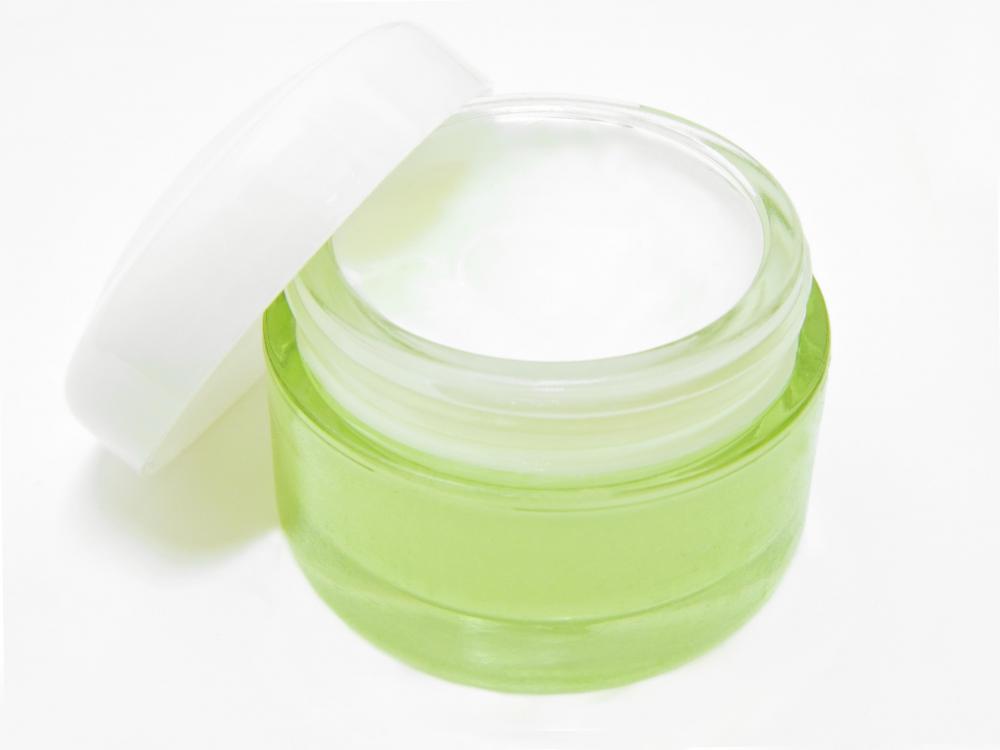
![A pot of collagen cream.]() By: Mi.Ti.A pot of collagen cream.
By: Mi.Ti.A pot of collagen cream. -
![A diagram of younger skin and older skin showing the decrease in collagen in older skin.]() By: AlilaA diagram of younger skin and older skin showing the decrease in collagen in older skin.
By: AlilaA diagram of younger skin and older skin showing the decrease in collagen in older skin. -
![Collagen provides cushioning and fills out the contours of the skin.]() By: Deyan GeorgievCollagen provides cushioning and fills out the contours of the skin.
By: Deyan GeorgievCollagen provides cushioning and fills out the contours of the skin. -
![Collagen supplements can be used to help maintain a youthful appearance.]() By: Syda ProductionsCollagen supplements can be used to help maintain a youthful appearance.
By: Syda ProductionsCollagen supplements can be used to help maintain a youthful appearance. -
![Some individuals find that collagen supplements help alleviate joint pain.]() By: Daria FiliminovaSome individuals find that collagen supplements help alleviate joint pain.
By: Daria FiliminovaSome individuals find that collagen supplements help alleviate joint pain. -
![Collagen degradation occurs as individuals age, causing wrinkles.]() By: Piotr MarcinskiCollagen degradation occurs as individuals age, causing wrinkles.
By: Piotr MarcinskiCollagen degradation occurs as individuals age, causing wrinkles.




Discussion Comments
I am 29 yeas.old and I have forehead wrinkles on my skin, but only one line. I guess the wrinkle is a result of having dry skin or something? Some says it can be treated with collagen. What kind/type of collagen should I buy for this? I am a thin bodied guy and also my skin is dry. I'm eating healthy foods, I don't have any vices such smoking and or drinking. Please tell me.
I have OI (osteogenis imperfecta) and above it talks about this product helping. Does anyone know how much it helps or if this could actually cure me?
I have tried many forms of collagen including (post 69) proto-col. The most important thing is that it is bovine, and taken in the right quantities. I now take powdered collagen (type 1 and 111) at night in water. The powder makes it easy and less pricey to take a larger dose. My pains from arthritis have more or less gone, and my vascular problems are heaps better. My skin and nails are stronger too.
It is not a magic cure, and you have to keep to a maintenance dose, but my life has improved considerably. I use Revitalise collagen powder by Xenca
As I mentioned in my previous post, Neocell Collagen I and III powder are the best I've found. I both see and feel the difference in my skin and lips when I take it and when I forget to take it. It also helps my joint and back pain.
I use Proto-col collagen and it is absolutely fantastic. It is great for skin, hair nails, joints, etc. They now do a product called Skin Plus which has hyaluronic acid which hydrates the skin.
There is no such thing that we can get collagen from outside. Collagen itself is produced by our bodies.
Is it true that collagen levels begin to decline around the age of 16?
I am 50 years old with stage II breast cancer. Is it safe for me to take collagen?
I've started taking the bovine ones from bioconcepts - chemist direct in the UK. I'm taking them because of a bad right knee. Resting does not work, but giving it some abuse does. I'm guessing cartilage wear from my years as a tradesman. I'm 42, 13 stone 6ft. I'm not interested in the beauty side; I just want my knee fixed.
Anyhow, I've only taken two 750mg capsules (1 morning one night) for two days, and my skin feels like it's had some silky cream over it. But I have a bad taste in my mouth that tastes like soap. I don't understand how biologists are saying on other forums its nonsense you can't digest it. I can feel it all over my skin - arms and legs especially. So surely it must be getting absorbed.
My knee is still the same. I'm playing squash which seems to help - even though you'd think it would finish it off. I know there are always idiots and marketers with these things, just thought I'd post my experience so far. Just hope it helps my knee - I don't want better skin; I'm a man.
I am a 49 year old male. I have had back pain for a few months. On investigation, the doctors found with an X-ray: 1. Partial socralisation of LVS
and 2.Compression fracture of body of LV1. Will taking collagen help me?
@Post 90: Building blocks are always better than ingesting finished product. Don't forget your zinc and O.J.
When I was 19 years old I tore both my achilles tendons. I am now 30 and recently tore my patella tendon and cartilage around my knee. My question is, is there something wrong with the collagen in my body?
My doctors when I was 19, said they've never seen anyone so young have these injuries. My recent doctor said there may be issues with the collagen in my body. Is there a way I can be tested to find out?
I am well informed that the collagen in this product is derived from the skin of the cow. Consequently, it may not find favor with vegetarians or those who, because of religious persuasion, would abstain from such derivatives.
In these circumstances, I hold the view that the label should clearly identify whether the source of the collagen and to state whether the product is suitable for vegetarians.
Instead of drinking collagen, drink Forever Living Aloe Vera Gel. God willing, it will help you. It is very beneficial for many skin conditions.
I am 73 and taking very costly sculptra injections to stimulate collagen in my face. Does anyone know if the body stops collagen stimulation after 70?
I've tried two types of collagen: I and III. The first one did nothing. The second made my dry skin beautiful and silky. I went back to the first brand and my skin grew dry. Back to the second brand, and my skin is again glowing and my lips are plumping up. My knee and back pain has diminished greatly, too (the reason I bought it).
I use Neocell Collagen I and III powder, available online.
Bone broth is better than any supplement for getting collagen. With this food you're also getting glycosaminoglycans which help to repair damaged cartilage and such. You're also going to get lots of minerals. Plus, it's tasty!
What is the recommended mg for collagen intake for 22 year old?
can you use collagen for skin, hair and nails while on high blood pressure medication?
I am Hafizah from Malaysia, age 23. I just dropped by here to find the benefits of collagen. So, I read all the questions and answers. Thanks so much for the info.
Anyway, I would like to share with all of you that my friend has introduced a collagen product named Hycoflex. It is so amazing because she just drinks one sachet of Hycoflex and the next day her joint pain disappeared. She just let me try the drink and I feel different, and especially my face looks younger.
i have a question for you: is collagen an elastic? .
Number 16 asks will collagen help with an arthritic knee? I am 70 years old and have arthritis in both knees and was suffering with a lot of pain especially going up and down stairs. I have been taking Bovine Collagen and amino acid for two months and no longer have any pain. I take one packet of amino acid 15 minutes before I eat breakfast and one teaspoon of collagen in my coffee (it's tasteless) and I have not experienced any side effects whatsoever.
To #23 about your incontinence. I am about 47 and used to have severe urine leakage, I am not sure if it is similar to your incontinence.
Anyway, I tried a family doctor and a specialist. They all say it was due to my age. However, last year, I got herbal medicine prescribed by a Chinese herbal medical doctor. After about three days, the incontinence was under control. So I continued to take the herbs about three months. The problem came back again about six months after I stopped taking the herbs. Just last month, my problem got worse and I can barely control my pee. So I started to take herbal medicine again for about two weeks. Now the problem gets under control again. I am not sure whether this is right forum. But I definitely want to share with you in case you are having a similar problem as me.
ì have scleroderma. i produce so much collagen. i want to take it off. what can i do? what eliminates the collagen of the body? please help me. thanks!
I am melinda from malaysia. i was diagnosed with breast cancer five years ago. can i take collagen? i really need some serious advice. Thanks and regards.
I have Dupuytrens and I want less not more collagen, since it is the source of the contracture in my fingers. Any suggestions to help this without surgery and or Xiaflex injections?
your body does make collagen. try eating foods rich in vitamin C, and looking at foods that will promote the body making collagen, rather than going for the quick-fix.
Re incontinence: one of the best ways to stop incontinence- remove all dairy and apple (including juice) from the diet. I don't know why, but I have seen this work. I learned this from a bowenwork bodywork training program.
My mother was 84 and when we tried this, replacing milk with hemp milk, and we were able to take her off of her detrol with no incontinence problems! worth researching and/or trying.
Collagen used in surgical and cosmetic procedures could be constructed from the patient's own cells but is usually bovine or porcine (cows and pigs).
I want to know if collagen that we consume is from what source? Because you said animals also have it, so is animal one of the collagen sources for human? ASAP. --sall
Information for 69. I know the product that you should try for your arthritis. My 2nd metacarpophalangeal joint on left hand was inflamed since Nov. 2009 and became normal just in 12 days of taking this product. I took it in June 2010. Now is November and there is no pain and no inflammation! I'll be glad to share information with you.
I bought Protocol collagen from Ideal World. I took it for six months and it did nothing for me. I then contacted Protocol direct and spoke directly to the MD, the man who presents on Ideal World. The guy is an utter egotistical moron and refused to accept that his collagen did not work. I am now searching for another product for help with arthritis.
I have discovered an amazing source of collagen from a really good british company, Proto-col. Its hailed by A list celebs and is also sold in Harrods and Harvey Nichols.
I know one of the best collagen sources in the market. I live in Malaysia. The collagen is from Japan and it's the only one on the market of emulsion type Collagen with Roselle and soluble pearl powder. High quality. The name of the collagen SPG Collagen. It's been tested in our Malaysia Poison Centre. Safe and reliable.
I have been using a great collagen product that you can drink. It has helped me with my sore shoulder that has been hurting for quite some time. It is called Fresh Face collagen. You can mix it in any liquid. I mix it with a fruit concentrate and water. There is no after taste. Great product.
at what age can you start collagen? is it good for acne. i want my son, 23, to drink it.
Number 23 and 11 asked about collagen and incontinence. I think number 11 has the collagen injection to plump up the detrusor muscle. I had that and it didn't work for me either.
Since then I have used a Kegel8 which stimulates this muscle to work as it should do. It is a slow process, but I am getting results and now have control over my incontinence. Good luck to you all.
Mention needs to be made in the article about the effect that overproduction of collagen can have on the body. Thanks. If that's not possible then I can do so through this comment forum as this is happening to me.
An over production of collagen in the body causes a disease called Scleroderma.
This is a debilitating disease that causes many problems such as connective tissue in bodily joints to contract making them bend e.g. fingers become claw like. That is just one of many symptoms of the disease. If it starts to affect the internal organs, then death will be imminent.
It happens because collagen is in almost every part of the human body in total about 30 percent.
So you shouldn't be surprised by the positive effects when taking a good quality collagen product.
Is collagen a glycoprotein? If so then what are the carb. molecules associated with it?
I have been using a powered product and noticed a filming in my bowels as well as a better over all feeling in my body. I was told it would repair my gut and I think it's working as well as clearing up psoriasis.
Collagen types 1 and 3 are available in animal collagen (bovine).
Actually, bovine collagen (animal) is one which tends to not cause any allergic reactions or other reactions. It is marine collagen that people tend to be allergic too.
Bovine collagen is one of the closest to human collagen you can get, this collagen type is great for replenishing our collagen levels.
i have been taking collagen+c for two days, three capsules twice daily and i have a lot of headaches. i have to stop drinking it. thank you very much.
So far, fish collagen type I looks like it fixes the problem for people allergic to fish or any other type of collagen but it has to be truly biologically active collagen as collagenelife colvita is not any type of gelatin, having nothing to do with real collagen.
Is it safe to consume Collagen C Types I and III? I am allergic to shellfish, where do type I and III collagen come from? I've been having a lot of pain in my knees because of osteoarthritis and I'm taking glucosamine and chondroitin without shellfish and feeling better. Is it safe to add Collagen I and III? Thanks
Therefore i believe fish collagen products are the safest alternatives to collagen supplementation because studies show no allergenic or side effects.
I came across studies and reports on research for collagen. There is wide range of collagen products which can be categorized into different types of collagen.
Consuming animal collagen, for example lamb, cow or pig is popular. These collagen products may appear in the tablet or injection form. Research shows that consumption of animal collagen may lead to serious side effects, such as allergic reactions and a risk of immunological reaction because there is poor stability for consumption of animal collagen with animal hormones on human body.
One must understand the structure and lifespan for collagen replacement in order to choose the most safest and effective product.
Had collagen treatment twice for incontinence and both failed.
I think the best is fish collagen because it doesn't have any side effects or allergy symptoms related to other forms of collagen.
I would like to ask, about collagen injectables. like injecting in the nose, lips, cheeks and chin. Are there no side effects?
will collagen improve our skin beauty? can diabetic symptom patients take collagen fitness coffee to reduce weight.
do you know if collagen helps to destroy dark spots on the face?
Hello, i take 7g of flexicol from purmega. This is hydraulic collaèn. Is this dangerous because other products contain only 400 mg? Why they are so different in percentages?
My sister had a baby affected by collagen disease. The baby survived for two months and he is no more now. Could you let me know the way to circumvent this in future? Also, please let me know the procedures to be taken before she conceive again.
Thanks, Kala R.
What are the products Haemostasis made from collagen?
can collagen help reduce turkey neck?
I have celiac disease. Since my diagnosis, I have bleeding under the skin (mostly on the shins) if I scratch, rub too hard or a light bump. The doctor says that I have lost the collagen due to lack of absorbing minerals and vitamins.
Should I take a protein supplement or what. Can I get help?
can a person with thyroiditis, metabolic syndome ophalmopathy and menopausal take collagen? is it available in tablet or capsule form? how much does it costs? how frequent should it be taken? how long before a taker notices improvements? thank you for your answer. God bless! etc~2010
You forgot to mention one of the most crippling and often life threatening rare genetic diseases that results in already weakened collagen that progressively deteriorates even from early childhood through adulthood (if they make it that far), named Ehlers Danlos Syndrome.
To date in almost 2010, there still is no known cure or treatment and the majority of the medical profession have never even heard of it - leading to tens of thousands of potential cases that never even know they have it, often times only discovered during autopsy, many times due to aneurysms - even in children.
It is a horribly physically disabling disease for most all with diagnosis only available through genetic testing. Some forms or 'types' are even still being discovered, as well as new manifestations never known or realized before - including cross-type symptoms which they previously thought (for years), were not possible - until now.
There is no specialized medical help anywhere in the world, with the exception of geneticists, who are only able to confirm diagnosis (if it is even suspected since doctors don't even know it exists).
There are many collagen companies out there, but how many tell you the whole truth behind the research?
proto-col are the worst offenders at only telling you half truths. they list enough of the research documents to back their claims, but if you then search for the studies online you discover that the doses are completely different.
For example if you take the recommended daily dose from proto-col (3 x 400mg), you take 1.2g of collagen a day. compare that to the dose used in the trials that they use as support for their claims and you will see that you need to take 10g of collagen!
So proto-col gives you 8.8g under the required amount, yet still uses the studies as evidence that their product works!
If this is their attitude on collagen, what other secrets do they hide and how good are their other products?
Search around and you will find other companies that sell collagen with a daily dose of 10g at the same price as proto col collagen.
2 years ago i had my breast injected with collagen. next year i'm planning to have a baby already. will it affect my breastmilk? because i'm a believer in breast feeding. please help. i really need some serious advice.
Can men take collagen too?
Can collagen actually cause cracks on the face? Please help. --lindalou
Started using face moisturizer with collagen about a month ago. In this time the deep facial lines have increased. Seems every morning I wake up with a new one. Could this be a reaction to collagen? Can it have this effect - can it cause cracks? Or is it coincidental and something else is causing these sudden and numerous cracks? Please help.
I am a diabetic, and also am on medication for cholesterol and fibromyalgia and I am using insulin for my diabetes. Can I take collagen?
I had a heart attack three years ago. can I take collagen?
I have got Dupuytren's contracture in my right hand. Is a deficiency of collagen related to this condition? If yes, would taking a supplement of collagen and/or dietary changes stop the progression or even reverse this condition?
Number 11 asked if collagen can help incontinence. I am interested to know to but didn't find your answer. I have taken diptropan 5mg and had a specialist do a test and he put me on vesicare 10 mg. I have been on it for 1 1/2 years and I'm not doing any better with it. I am doing the same thing with or without the medication. I read where a recent study that 93 percent of women with persistent incontinence were helped by injections of collagen into the tissue around the urethra and it tightened the valve that holds urin in the bladder, improving leakage or stopping it altogether. This was by a urologist at the university of Texas Southwestern Medical Center, Dallas. Is this safe? Please let me know.
How can Super Collagen with Vitamin C help you? I just started taking this 2 days ago. Can to much harm you, and I am taking this for several reasons for my health to see if it will help me.
Some of use at work are taking Calotren, which boasts it will contribute to inches lost by helping you produce collagen. From your information it seems there is nothing in collagen that helps you lose weight. Am I correct? Were we snookered?
Answering couple of questions:
Collagen is present in every animal. On the collagen market there are at least 4 major collagens differedy by the source: fish, chicken, pork or beef.
Eating supplemental collagen is more like eating animal parts that we usually skip from our diet: skin, tendons, cartilages or bones. There is no much of benefits of consuming collagen as it is already being "spent" by animal that it was extracted from. Think of collagen as organic glue: once hardened and used it had been changed to the extent that it could not be "melted and reused". Crucial for collagen elasticity and endurance aminoacids had been already converted to their hydroxy derivatives at the time when it was incorporated in the animal's tissues. Eating it is no much of use. The collagen in supplements after breaking down by our diggestive system would not provide with the right amounts of Lysine and Proline to help overcome possible defficiency. Healthy diet would do! Vitamin C is indeed helpful (and crucial) in converting strands of pro-collagen made in mitochondrias of our cells to durable collagen strands. Marketing of collagen is without solid scientific background, and not only as nutrient but also as a component of expensive cosmetic creams. Collagen on the skin just stays there without being absorbed. The only technique that works are subdermal injection of collagen to puff wrinkles. The risk of acquiring some nasty inflammation or allergic reaction is quite signifficant.
Enjoy spending money on something that you eat every day in much larger amounts! - unless your diet is Coke and chips.
You wrote that the collagen used in most beauty products comes from animals such as pigs. Where else has collagen been found?
What are the comparative benefits of gelatine as compared to collagen?
will collagen help the pain in an arthritic knee?
How can i benefit naturally from collagen? What to eat? what to put on my face for wrinkles? etc?
Hi, You mentioned cow and pig collagen. what about fish collagen (freshwater if that matters)? Are there any good? Thank you for your answer.
Dayton or whoever,
Where can i find the gelatin for the pigs? Years ago, Dead Doctor's Don't Lie also added gelatin to their nutritional formula for the same reason.
Does Collagen help Incontinence ???
i have a question. the mascara maybelline colossal contains collagen is that OK?
Is there a way to have too much collagen? If so, what would the result be?
Do collagen supplements help with sagging skin issues after a major weight loss, too, does anyone know? Thanks.
The collagen used in commercial products is not human collagen, it is usually cow or pig collagen, it is similar enough to have the same effect as human collagen but different enough that the body recognizes it as foreign. Anything the body recognizes as foreign has the potential to cause allergies.
I am allergic to anything with Collagen. how is that possible if it occurs naturally in the body? Terri
I have poor circulation in my legs that caused swelling and open lesions. Will collagen be of a benefit for me?
Lili,
A few years ago I received a cassette tape of a message by a veterinarian who had performed thousands of autopsies on animals, mostly farm animals. At one point he was involved in solving a local problem with pigs dying prematurely. He performed the autopsy and discovered the pigs had developed hardening of the arteries. He prescribed gelatin, which is primarily collagen, to be put into the pig's feed. This solved the problem. The theory he ultimately came up with was this...without the proper nutrition (collagen) arteries become weak, primarily the main arteries around the heart that are under stress from pumping blood. The body's natural response is to fortify the artery walls with cholesterol. The weaker the arterial walls, the more cholesterol over time, until they become clogged. By including gelatin in the diet, the arterial walls are strengthened, thus avoiding the need for cholesterol to stick to them in a vain attempt to strengthen them. Hope that helps, for what it's worth.
Lili,
I am not an expert, but I did a bit of research and discovered that many doctors believe that vitamin c and collagen can actually reduce risk of heart attack and help counteract symptoms of heart disease.
Looks like you're helping yourself out in two ways!
I have a heart condition (I had a heart attack 12 years ago). I am taking Collagen plus Vit. C pills every day. I want to know if this affects my arteries, principally my heart arteries. Can I take this long term?
I take this for my tendons.
Thanks for your answer.
Can a diabetic drink collagen?
Can a person with poor blood circulation drink
collagen?
Post your comments