
At BeautyAnswered, we're committed to delivering accurate, trustworthy information. Our expert-authored content is rigorously fact-checked and sourced from credible authorities. Discover how we uphold the highest standards in providing you with reliable knowledge.
What is Cocamidopropyl Betaine?
Cocamidopropyl betaine is a derivative of coconut oil that is widely used in cosmetic products. It is a sticky, yellow liquid, and it’s made by blending raw coconut oil with a naturally-derived chemical called dimethylaminopropylamine. Coconut oil is widely available in most places, and isn’t usually very expensive. When combined with the chemical, it becomes what’s known as an amphoteric surfectant, which is basically a detergent that can act as either an acid or a base depending on the surroundings. It can produce a rich lather when used in bath and personal cleansing products and it can help thicken things like hair conditioner, two qualities that make it very popular in commercial cosmetic production. In some applications it’s also used as a mild antiseptic. Antiseptics are often particularly attractive for things like face washes designed for acne and other oily breakouts. The compound’s astringent qualities sometimes mean that products aren’t always suitable for people with really sensitive skin. Allergies, though rare, have also been reported.
Physical Properties

Coconut oil is a natural source of many complex fatty acids. In addition to being an important part of the diet, these acids also have a number of significant benefits when it comes to helping lock and retain moisture in the skin and hair. On a chemical level, these attributes mean that the substance is a good binder, and helps compounds — particularly liquids — stick together, which can make them thicker and richer as a result.

Cocamidopropyl betaine is sometimes referred to as coco-betaine or the acronym CAPB. It can also be described on product containers with one of its chemical names, usually N-(carboxy methyl)-N or N-dimethyl-3-[(1-oxococonut) amino]-1-propanaminium hydroxide.
Use in Cosmetics
Cosmetics manufacturers in most parts of the world use this derivative somewhat liberally. It tends to be inexpensive both to produce and to buy, and it can complement other more expensive ingredients in order to bring the overall manufacturing costs down. Cocamidopropyl betaine tends to be an effective foam booster or foam stabilizer, which makes it a common ingredient in bubble bath products, body washes, and shampoos. It also can be used as a thickener or as an anti-static agent and is often found as an ingredient in hair conditioners. It has emulsifying and moisturizing capabilities as well, and is commonly used in bath oils and certain liquid-based makeup products as a result.
As an Antiseptic

The compound remains stable within a wide range of pH values, and in most cases it has a mild germicidal and antiseptic effect. Manufacturers often use this to their advantage when making certain personal sanitary products. For example, it often is included as a mild disinfectant ingredient in facial scrubs and exfoliants designed to eliminate skin breakouts like acne. The compound can dry the skin slightly while cleansing the surface, reducing irritation and ideally preventing new breakouts. The ingredient’s pH level also makes it compatible with other cationic, anionic, and nonionic surfactants, and for this reason it’s a common ingredient in things like hair dye, too.
Allergic Reactions and Sensitivity Concerns

Though the compound is generally regarded as a mild and safe ingredient, there have been some cases of allergic reactions reported. This is most likely a result of the manufacturing byproducts amidoamine and dimethylaminopropylamine, two impurities that have been commonly associated with skin irritation and dermal allergies. Studies have shown that this problem can potentially be avoided if manufacturers keep the levels of these byproducts low. It can be nearly impossible to discern this simply from a product package in a store, though; concerned consumers usually need to do a bit of research about brands and manufacturing processes to ascertain any personal risks.

In recent times, more and more new surfactants have been introduced with the hopes of being milder and less irritating. Some hair and body cleanser manufacturers are now replacing cocamidopropyl betaine with cocamidopropyl hydroxysultaine, a similar product that is also derived from coconut oil but has a different chemical makeup. Some experts say that this alternative is milder and more effective, though it tends to be a more expensive ingredient.
AS FEATURED ON:
AS FEATURED ON:


-
![Cocamidopropyl betaine is a common ingredient in body washes.]() By: DessieCocamidopropyl betaine is a common ingredient in body washes.
By: DessieCocamidopropyl betaine is a common ingredient in body washes. -
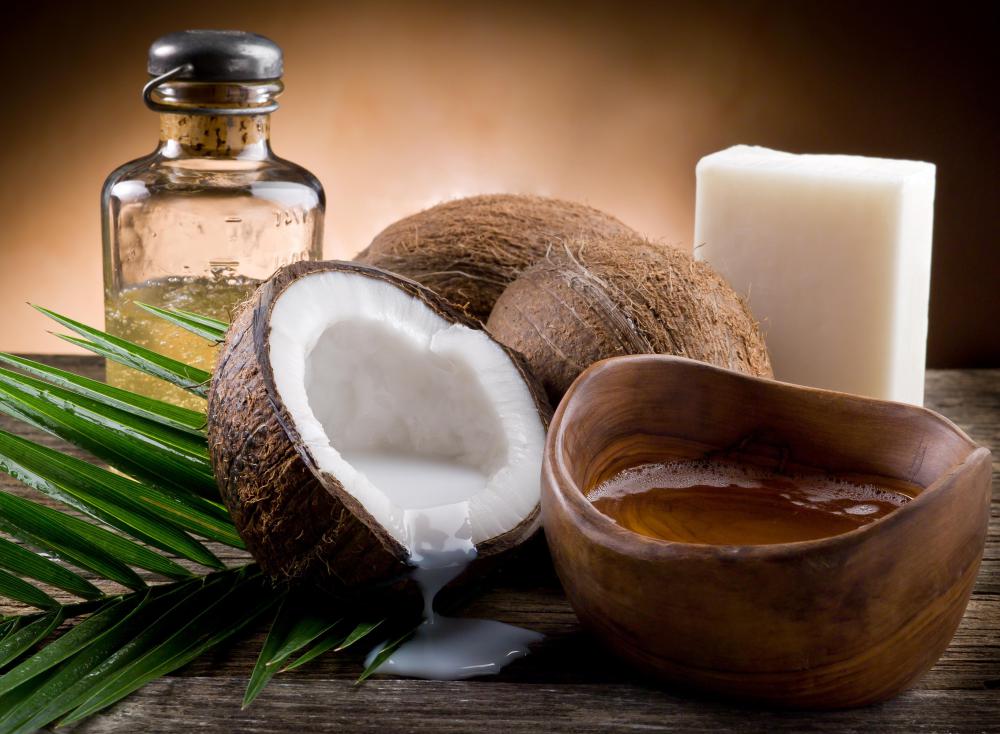
![Cocamidopropyl betaine is derived from coconut oil.]() By: Marco MayerCocamidopropyl betaine is derived from coconut oil.
By: Marco MayerCocamidopropyl betaine is derived from coconut oil. -
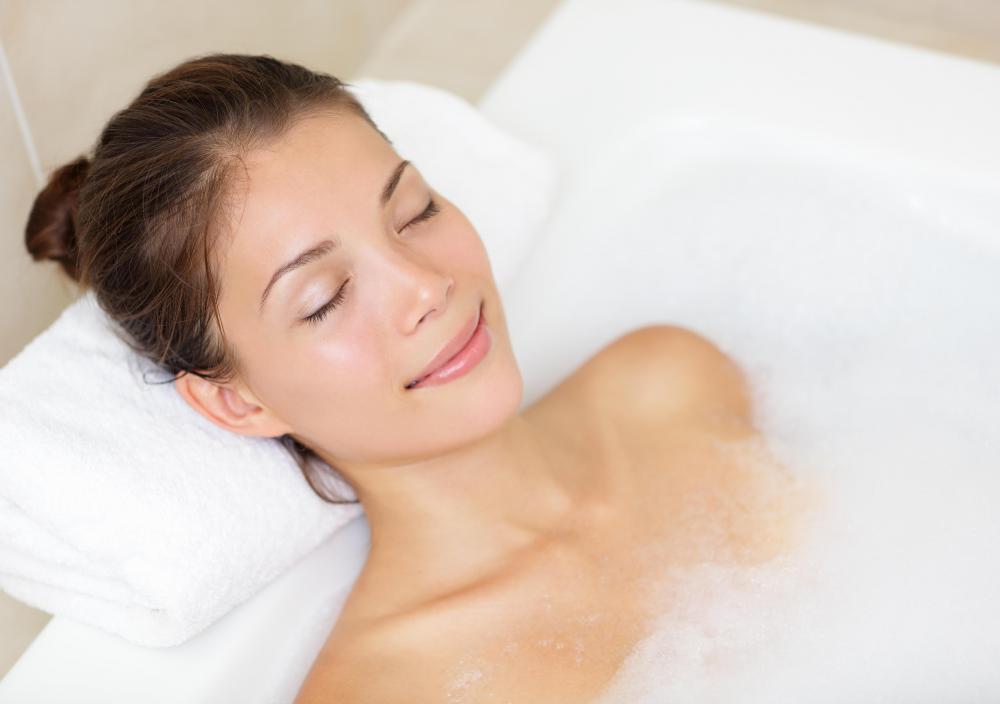
![Cocamidopropyl betaine helps produce foam in bubble baths.]() By: AriwasabiCocamidopropyl betaine helps produce foam in bubble baths.
By: AriwasabiCocamidopropyl betaine helps produce foam in bubble baths. -
![Cocamidopropyl betaine has shown possible carcinogenic effects on lab rats.]() By: lculigCocamidopropyl betaine has shown possible carcinogenic effects on lab rats.
By: lculigCocamidopropyl betaine has shown possible carcinogenic effects on lab rats. -
![CABP may be found in hair dyes.]() By: Valua VitalyCABP may be found in hair dyes.
By: Valua VitalyCABP may be found in hair dyes. -
![Cocamidopropyl betaine (CAPB) is added to some makeup products for its moisturizing properties.]() By: arminaCocamidopropyl betaine (CAPB) is added to some makeup products for its moisturizing properties.
By: arminaCocamidopropyl betaine (CAPB) is added to some makeup products for its moisturizing properties.




Discussion Comments
Just to say i didn't know that this- capb- was a possible irritant and used 2 shampoos containing it about a week apart. I didn't have a rash, but a burning sensation developed a few days after the 2nd one for family use- was used and had a tiny amount of burning sensation after first using the organic clarifying shampoo containing it. Will avoid it from now on and will ask medic what best to do. I would say it's best to use alternative if you have sensitive skin.
It is true that some Coco-betaines have had unreasonably high levels of impurities in the past. However, today most responsible labs are using cosmetic grade coco-betaine with impurities refined away.
Certainly folks should be cautious, but don't assume all coco-betaines are equal. I'm more concerned about all these new and hybrid ingredients with no history or track record. At least now companies are aware of how to responsibly proceed with coco-betaine.
If I am allergic to CAPB, am I also allergic to Cocamide DEA? Or is it a different substance? I got tested, so I know I'm allergic to CAPB, but I have no idea about Cocamide DEA.
@Sara007 - I am surprised you didn't have a reaction much sooner as cocamidopropyl betaine is in pretty much every shampoo and conditioner, even the natural and organic versions. CAPB is just usually just hidden under a different name.
Perhaps you are more sensitive to a particular combination of ingredients verses just CAPB?
I think that allergies in general can be very tricky as different exposure levels impact everyone differently.
I myself no longer use any shampoo and condition but rather a combination of natural oils and good old water. I think that too many people waste money on commercial hair cleansing products and just end up stripping their hair of all their natural oils.
If you are allergic to cocamidopropyl betaine you'll know it pretty fast. Contact dermatitis is not a pretty thing to get, but if you try a new shampoo and suddenly get an itchy, blistering rash on your scalp and along your hairline, there is a good chance you may be allergic to CAPB.
I like to switch shampoos, and usually choose natural and organic varieties, but I was on a bit of a budget so I just picked up a regular store version. It was quite popular, but unfortunately for me CAPB and I do not get along. I ended up at my doctors for an allergy patch test and now have to avoid all products containing cocamidopropyl betaine.
Post your comments