
At WiseGEEK, we're committed to delivering accurate, trustworthy information. Our expert-authored content is rigorously fact-checked and sourced from credible authorities. Discover how we uphold the highest standards in providing you with reliable knowledge.
What is Clotted Cream?
 Mary McMahon
Mary McMahon
Mary McMahon
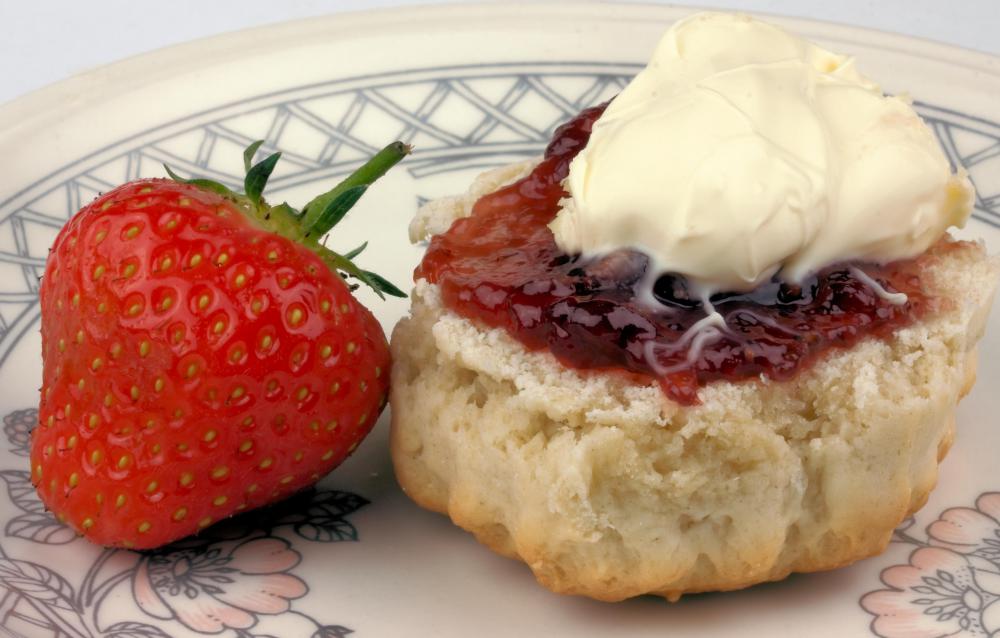
Clotted cream is a dairy product closely associated with England, although other cultures make variants of it. It is difficult to describe for those who have not experienced it, with a rich, creamy flavor and a stiffness that reminds some people of whipped cream. In England, this cream is served over scones, desserts, and fresh fruit, and it is a very popular luxury. Some companies in England manufacture it for export, although it does not have the same flavor as the fresh product. It is also possible to make it at home.
The origins of clotted cream appear to lie in Southwest England, in the counties of Devon and Cornwall. In fact, an alternate name for it is Devonshire cream or Devon cream, in a reference to its county of possible origin. Cornish clotted cream has attained an appellation of controlled origin, meaning that only cream prepared in a certain way that comes from Cornwall may be so labeled.

Clotted cream is made by allowing fresh, unpasteurized milk to stand for about 12 hours before gently heating it and allowing it to stand again. The cream in the milk slowly rises to the surface, forming clots that are sometimes studded with small golden dots of butterfat. This intensely rich cream is skimmed off and sold. Fresh clotted cream should be used within three to four days, although shelf stabilized and pasteurized versions are also available.

It is possible to make this cream at home, using much the same techniques. For cooks who do not have access to unpasteurized milk, lightly pasteurized, but not homogenized, milk may be used. Mixing milk with whipping cream may yield more of the cream at the end. Some cooks also make a reasonable approximation with mascarpone cheese beaten with whipping cream.

The fat content of clotted cream is usually around 55%, and it has a creamy, slightly sweet flavor all on its own. Some cooks like to add small amounts of sugar or flavoring such as vanilla, especially when it's used on fresh fruit. On scones, the natural sweetness of the scone is all that is needed, and sweetened cream can seem cloying on desserts. While traveling in England and Ireland, it should be eaten fresh, if it is offered, since it is a unique experience.
Mary McMahon
Ever since she began contributing to the site several years ago, Mary has embraced the exciting challenge of being a WiseGEEK researcher and writer. Mary has a liberal arts degree from Goddard College and spends her free time reading, cooking, and exploring the great outdoors.
Learn more...
Mary McMahon
Ever since she began contributing to the site several years ago, Mary has embraced the exciting challenge of being a WiseGEEK researcher and writer. Mary has a liberal arts degree from Goddard College and spends her free time reading, cooking, and exploring the great outdoors.
Learn more...AS FEATURED ON:
AS FEATURED ON:









-
![A popular way to enjoy clotted cream is on top of a scone with jam.]() By: Andrew MillsA popular way to enjoy clotted cream is on top of a scone with jam.
By: Andrew MillsA popular way to enjoy clotted cream is on top of a scone with jam. -
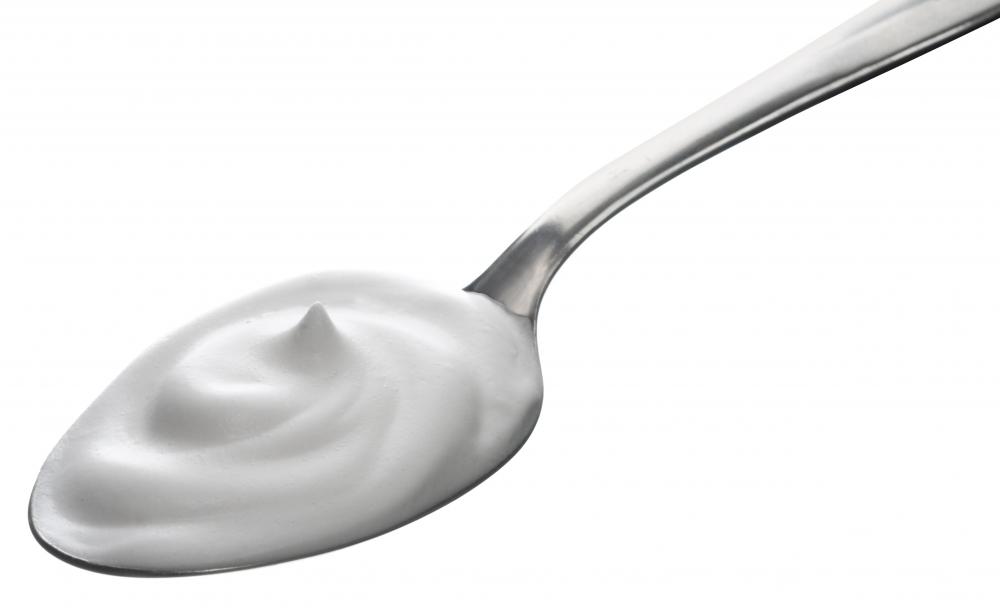
![A spoonful of clotted cream.]() By: angelo.giA spoonful of clotted cream.
By: angelo.giA spoonful of clotted cream. -
![Clotted cream is a dairy product closely associated with England.]() By: Negura DincoloClotted cream is a dairy product closely associated with England.
By: Negura DincoloClotted cream is a dairy product closely associated with England. -
![Most bottled milk is pasteurized and homogenized, making it a poor base for clotted cream.]() By: Budimir JevticMost bottled milk is pasteurized and homogenized, making it a poor base for clotted cream.
By: Budimir JevticMost bottled milk is pasteurized and homogenized, making it a poor base for clotted cream.


Discussion Comments
Dear musicshaman: Yes, North Carolina is odd. You can buy raw milk in both South Carolina and Tennessee. Search for realmilk.
With raw milk, you need only follow this recipe:
Look up "green chronicle clotted cream"
Hope this helps, and that it hasn't been too long before you have seen this.
P.S. - Raw milk can be bought in NC, but it is only for animals, and is colored gray. Love that government control over every facet of life. Yay, liberalization of society?
@Musicshaman: I live in East tennessee and we have a chain store called World Market that sells clotted cream in jars. It's fairly inexpensive and pretty good. If you can find a european market, they're also a good bet. Good luck on your search!
I have a question for you anglophiles -- I am trying to make a Christmas pudding, and the pudding recipe calls for clotted cream.
Unfortunately, I don't have access to any clotted cream where I live. Is there anything at all that I could use for a clotted cream substitute?
I can link you the actual recipe if you want, but I need the info as quickly as possible.
Thanks so much!
I was wondering where I could buy clotted cream in North Carolina. I would make it, but it's illegal to buy raw milk here, so I can't even get the proper ingredients. I really love having clotted cream with shortbread, but I have to wait until my sister visits me from the UK before I can get my fix.
Unfortunately, she only visits about once a year, and my jar of clotted cream just can't last that long. I've tried clotted cream substitutes, but as anyone who has had the real thing can tell you, they're just not worth it.
It's like asking a coffee addict to switch to decaf, or a dark chocolate lover to only eat milk chocolate -- just not a good situation.
Anyway, are there any places that you all know about that sell real clotted cream in Western North Carolina? Or even the surrounding areas, southern Virginia, East TN, or even South Carolina? I'm willing to travel to get my clotted cream fix!
When I was in England, I was lucky enough to be able to try Devon clotted cream with out tea. It really is a great experience, and the sweetness of the cream just complements the taste of the scones so well. I have tried putting clotted cream on American biscuits, since they are vaguely like scones, but English clotted cream simply beats the pants off of clotted cream in the USA. I would highly recommend it to anybody traveling in Britain.
Post your comments