
At WiseGEEK, we're committed to delivering accurate, trustworthy information. Our expert-authored content is rigorously fact-checked and sourced from credible authorities. Discover how we uphold the highest standards in providing you with reliable knowledge.
What is Clary Sage?
 Mary McMahon
Mary McMahon
Mary McMahon
Clary sage is a specific member of the salvia family that has been used in traditional healing for centuries. It is often included in botanical body products, such as bath oil and hair care compounds, and it is also available in the form of a pure essential oil. Its odor is very distinct, and the herb is said to have soothing properties that can be beneficial to health. Pregnant women, however, should avoid exposure to clary sage, since it may be harmful or induce contractions.
Salvia sclarea is the plant's scientific name. The name was derived from claurus, the Latin word for “clear,” since clary sage was used in eyewashes and to clear up infections. The leaves and flowers can be used to make a mild tea, suitable for washing eyes or ingesting, and they can also be steam distilled into a clear to amber essential oil.

As is the case with most herbs, a medical professional should be consulted before ingesting clary sage. Sometimes, there are peculiar conflicts between herbs and medications that patients are unaware of. Patients should also make sure that they use herbs that are suitable for human consumption if they plan on ingesting it. The oil can be applied to the skin, although it must be diluted, and it can also be added to bathwater and cosmetics.

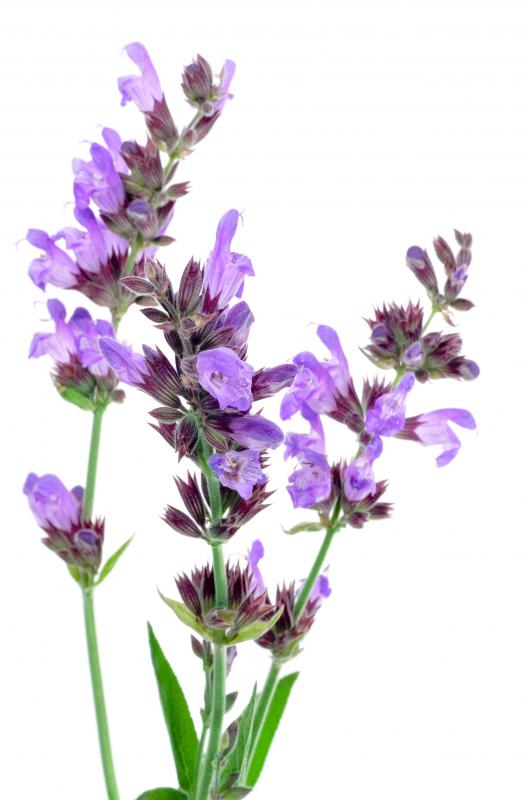
In nature, the clary sage plant can reach up to 3 feet (1 meter) in height, with long stems carrying clusters of white to purple flowers. The leaves can be triangular to roughly ovoid, and like many members of the mint family, it has square stems. Many people grow the plant as an ornamental, since it has a pleasing appearance, especially in the summer blooming months. However, the smell can be strong or unpleasant, so it should be planted with care.

When people take clary sage medicinally, they use it for female complaints such as amenorrhea, dysmenorrhea, and labor pains. It is also used to treat asthma, sore throat, coughing, stress, and gastrointestinal pain. Since it has narcotic effects, it may be used to treat exhaustion as well. Because clary sage is mildly narcotic, it should be used with caution, and it should not be combined with other narcotics. If any of the symptoms being treated persist for more than several days, professional medical attention should be received, to make sure that there is not a systemic problem.
Mary McMahon
Ever since she began contributing to the site several years ago, Mary has embraced the exciting challenge of being a WiseGEEK researcher and writer. Mary has a liberal arts degree from Goddard College and spends her free time reading, cooking, and exploring the great outdoors.
Learn more...
Mary McMahon
Ever since she began contributing to the site several years ago, Mary has embraced the exciting challenge of being a WiseGEEK researcher and writer. Mary has a liberal arts degree from Goddard College and spends her free time reading, cooking, and exploring the great outdoors.
Learn more...AS FEATURED ON:
AS FEATURED ON:









-
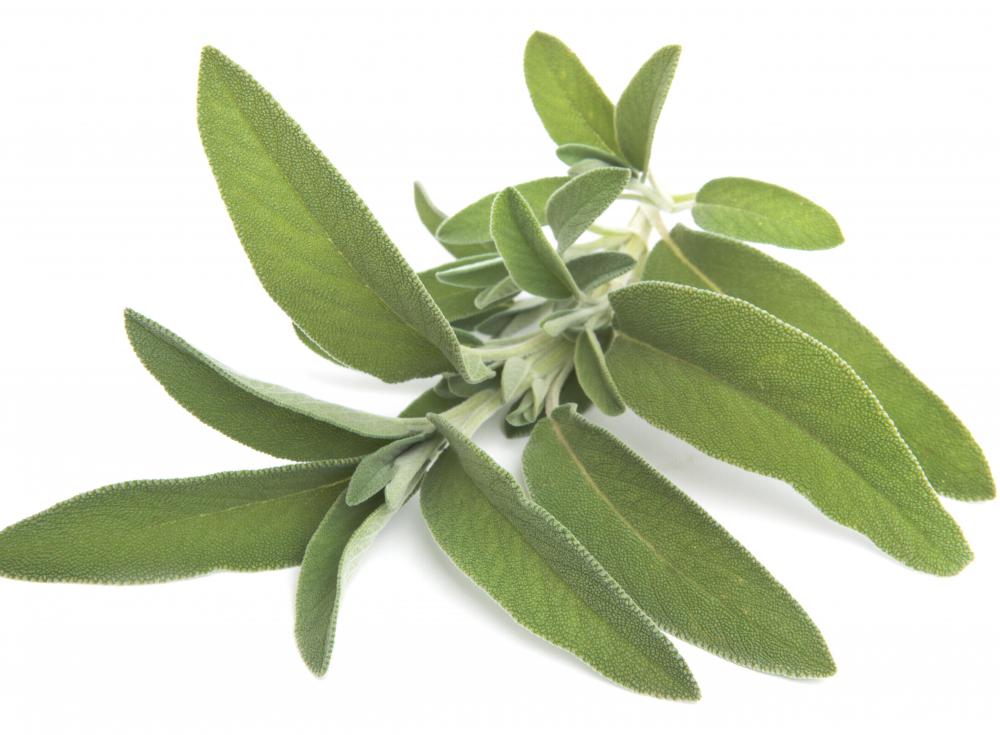
![Sage can be used as an accent to flavor many foods including roasts, soups and stuffing.]() By: Irina BelousaSage can be used as an accent to flavor many foods including roasts, soups and stuffing.
By: Irina BelousaSage can be used as an accent to flavor many foods including roasts, soups and stuffing. -
![Clary sage might be used to treat exhaustion.]() By: lassedesignenClary sage might be used to treat exhaustion.
By: lassedesignenClary sage might be used to treat exhaustion. -
![The Salvia genus contains many varieties of sage.]() By: nitoThe Salvia genus contains many varieties of sage.
By: nitoThe Salvia genus contains many varieties of sage.

Discussion Comments
@ceilingcat - I personally think it's always a good idea to try new medicine when you can spend some time at home. You never know what strange side effects you may experience!
I'm a bit interested in the herb because it supposedly treats asthma. I have asthma, and it's definitely not bad enough that I need to use a preventative inhaler. I do use a rescue inhaler at times though.
Anyway, I think it would be nice if I could take something natural for my asthma instead of an inhaled steroid from the doctor. It seems like it's worth a try!
You know, I know it's a good idea to consult a doctor if you're going to take herbs. But I just can't bring myself to do it. Most doctors I've been to act like herbal medicine is wacky and weird. But it really works for me, so I keep doing it.
Anyway, I was considering clary sage for some menstrual problems. However, I'm not sure I like the sound of the "narcotic effects." I think I may try it and see how it affects me. However, I'm going to do so when I can stay home and I won't have to drive!
I use clary sage in some essential oil blends. I don't care much for the fragrance of it when used by itself, but like it blended with other oils.
The main reason I use this is to help with cramping and pre-menstrual symptoms. It also seems to help with the headaches I get every month.
I like to combine this with lavender and jasmine essential oils for a combination that smells better to me.
I know some people who use it to help them sleep because it is also supposed to help relieve stress.
Since I have had such good results with it for other things, I have been planning on trying it if I have trouble getting to sleep at night.
Post your comments