
At BeautyAnswered, we're committed to delivering accurate, trustworthy information. Our expert-authored content is rigorously fact-checked and sourced from credible authorities. Discover how we uphold the highest standards in providing you with reliable knowledge.
What is Chiffon?
 Mary McMahon
Mary McMahon
Mary McMahon
Chiffon is a textile made from silk, cotton, nylon, polyester, or rayon. It tends to be sheer, with a faint shimmer and a simple weave. When held up to the light, chiffon strongly resembles closely woven netting. This fabric is generally used in evening and formal wear, since it drapes well and can add a floaty look to gowns and dresses. It is also notoriously difficult to work with, because of its slippery texture. Most fabric stores carry several forms in varying colors. The name comes from an Old French word for rag.
Silk chiffon is the most prized, since it has a rich shimmer and slick texture. It is also surprisingly strong for its weight. Because silk chiffon is made from a natural fiber, it tends to be more expensive than synthetics, and it also needs to be dry cleaned. Silk is also used to make georgette, sometimes called crepe, a thicker and more opaque fabric that drapes and behaves like chiffon. Another natural fiber, cotton, is sometimes used to make chiffon, although the resulting fabric is more matte and less floaty.

Synthetic materials are most commonly used to make chiffon, since most synthetics take dye well, are relatively cheap to make, and they tend to be sturdy. However, the fabric is still delicate enough that it should be hand washed with cold water only, and never run through a washing machine. Synthetics are also just as challenging to work with as silk, since they are also slippery.

In formal wear, chiffon is often used as an overlay over more opaque fabrics. The fabric floats on top, adding shimmer and texture to the dress while keeping the wearer modest. The color of the underlying fabric will also show slightly, so the chiffon is usually coordinated with the underlayer. This fabric is used in tops, skirts, and dresses as well as in scarves, belts, and accents.

When sewing chiffon, many crafters layer tissue paper in between the two pieces being sewn together. The tissue paper helps keep the fabric together, with the rough surface of the tissue holding the chiffon in place while it is handled. After sewing, the tissue paper can be carefully ripped out. Chiffon is also pinnable, as it will spring back, concealing pin marks. As a general rule, sewers should work slowly and steadily with this fabric, taking care not to run it through a sewing machine too quickly or it will bunch and gather.
Mary McMahon
Ever since she began contributing to the site several years ago, Mary has embraced the exciting challenge of being a BeautyAnswered researcher and writer. Mary has a liberal arts degree from Goddard College and spends her free time reading, cooking, and exploring the great outdoors.
Learn more...
Mary McMahon
Ever since she began contributing to the site several years ago, Mary has embraced the exciting challenge of being a BeautyAnswered researcher and writer. Mary has a liberal arts degree from Goddard College and spends her free time reading, cooking, and exploring the great outdoors.
Learn more...AS FEATURED ON:
AS FEATURED ON:


-
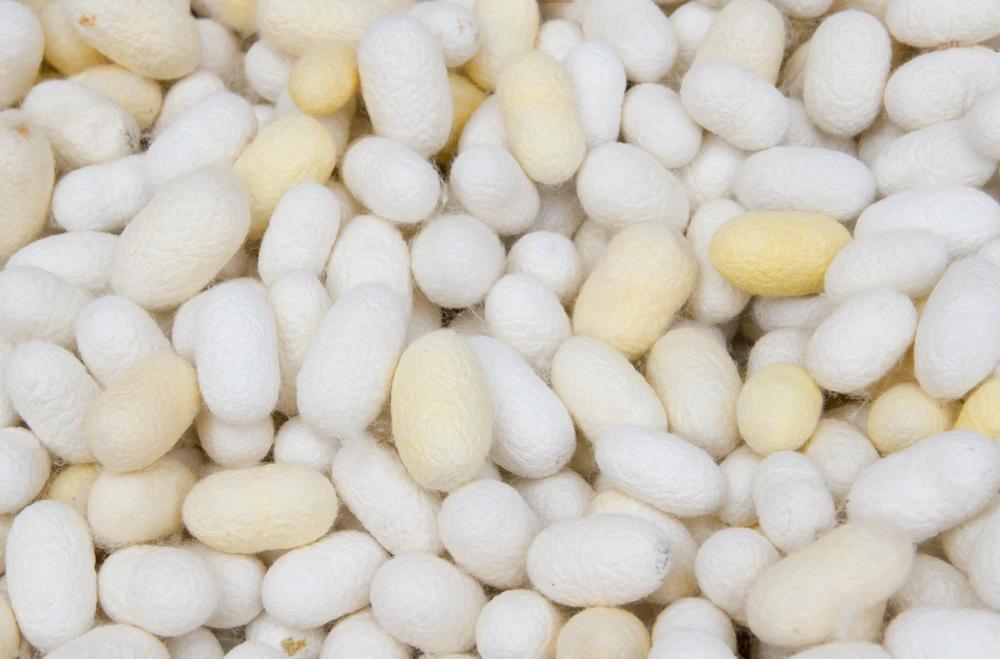
![Silk cocoons. Chiffon fabric can be made from silk.]() By: phiseksitSilk cocoons. Chiffon fabric can be made from silk.
By: phiseksitSilk cocoons. Chiffon fabric can be made from silk. -
![Chiffon will spring back to conceal sewing pins.]() By: FotoschlickChiffon will spring back to conceal sewing pins.
By: FotoschlickChiffon will spring back to conceal sewing pins. -
![Chiffon gives formal dresses a sheer, floaty appearance.]() By: Soare CeciliaChiffon gives formal dresses a sheer, floaty appearance.
By: Soare CeciliaChiffon gives formal dresses a sheer, floaty appearance. -
![Chiffon should generally be hand washed with cold water only.]() By: LoloStockChiffon should generally be hand washed with cold water only.
By: LoloStockChiffon should generally be hand washed with cold water only.


Discussion Comments
I believe they were going to take the dress to the museum to see if they can get help identifying the fabric, not to "dump their granny's old things off at their doorstep."
Not to be rude, but the museum may not like you dumping your granny's old things off at their door step. I suggest you sell the old rags for cash on eBay!
wow dude. never knew this.
I have a long chiffon evening dress. I found it in the sixties when my grandmother died at age 84. It was worn by my grandmother in the teens, twenties or thirties. It was probably the twenties, but did they wear long dresses in that era? My grandmother's friends were very well to do. And,they got very dressed up. When were the synthetics introduced? I ask this question because I think the synthetics were introduced in the forties. My guess is this dress is silk chiffon. My next step is to take it to the Indianapolis Museum of Art.
Barbara Campbell
what is the history of chiffon?
Post your comments