
At HomeQuestionsAnswered, we're committed to delivering accurate, trustworthy information. Our expert-authored content is rigorously fact-checked and sourced from credible authorities. Discover how we uphold the highest standards in providing you with reliable knowledge.
What is Chenille?
 Diane Goettel
Diane Goettel
Diane Goettel
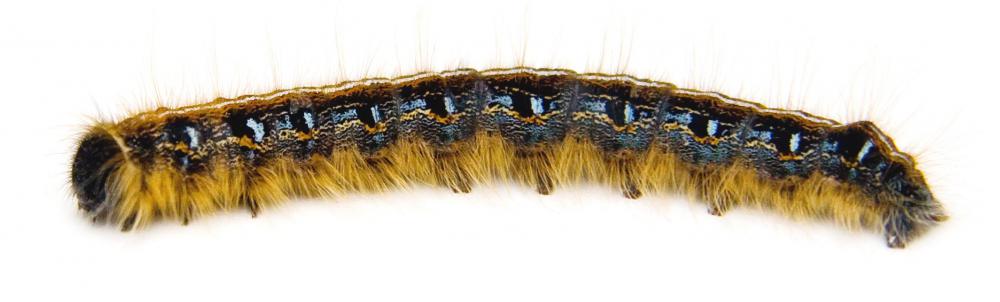
In French, the word chenille means “caterpillar,” the worm-like insect that, after a period of time in a chrysalis, becomes a butterfly. Most caterpillars are a few inches long and are covered in short hairs that give them a fuzzy look. It is this particular look that provided the name for a certain type of fabric. Chenille yarn is quite thick, soft, and fuzzy, and lengths of it do look, in fact, like long caterpillars.
Manufacturers of chenille begin by creating a tightly wound core for the yarn. Then short lengths of fabric, which are referred to in the industry as piles, are wrapped about the core. Once the piles are wrapped around the core, its edges stand at right angles from the center of the fabric. This gives chenille both its softness and its characteristic look. Depending on the type of fabric that is used to create it, as well as the tonality of the color, chenille can have a lovely iridescent look to it without actually using iridescent fabric.

Fabrics like mohair and wool are named specifically for the type of fibers that they are made of. This is not true for chenille. Rather, the distinguishing factor for this fabric is the way in which it is made. The fabric piles used to create it are most commonly cotton, although it can also be made of rayon, acrylic, and olefin fibers.
Textile historians believe that chenille has been produced since the 18th century. It was not until the 20th century that it developed widespread popularity. In the 1930s, chenille became a popular fabric for housewares. Very sturdy versions of the yarn were used on bedspreads and even carpets. In the 1970s, it became a commercialized in garments. It was not until almost two decades later, in the 1990s, when standards for production were developed for chenille. In fact, there is currently an organization dedicated to the improvement and development of the manufacturing processes, the Chenille International Manufacturers Association (CIMA).

Anyone who owns a chenille garment, or who is considering incorporating the fabric into his or her wardrobe, should know how to care for it. Almost all fabrics made with this yarn should be dry cleaned. If it is hand washed, it should not be hung to dry as it will almost certainly stretch and ruin the form of the garment. Rather, it should be dried it flat.
Diane Goettel
In addition to her work as a freelance writer for HomeQuestionsAnswered, Diane is the executive editor of Black Lawrence Press, an independent publishing company based in upstate New York. She has also edited several anthologies, the e-newsletter Sapling, and The Adirondack Review. Diane has a B.A. from Sarah Lawrence College and an M.A. from Brooklyn College.
Learn more...
Diane Goettel
In addition to her work as a freelance writer for HomeQuestionsAnswered, Diane is the executive editor of Black Lawrence Press, an independent publishing company based in upstate New York. She has also edited several anthologies, the e-newsletter Sapling, and The Adirondack Review. Diane has a B.A. from Sarah Lawrence College and an M.A. from Brooklyn College.
Learn more...AS FEATURED ON:
AS FEATURED ON:


-
![Pink chenille with a textured stripe appearance.]() By: VIPDesignPink chenille with a textured stripe appearance.
By: VIPDesignPink chenille with a textured stripe appearance. -
![Chenille fabric is commonly use for bedspreads,small rugs, and some clothing.]() By: Stephen VanHornChenille fabric is commonly use for bedspreads,small rugs, and some clothing.
By: Stephen VanHornChenille fabric is commonly use for bedspreads,small rugs, and some clothing. -
!["Chenille" is French for caterpillar.]() By: epantha"Chenille" is French for caterpillar.
By: epantha"Chenille" is French for caterpillar. -
![Fabrics made with chenille can be hand washed and dried flat.]() By: LoloStockFabrics made with chenille can be hand washed and dried flat.
By: LoloStockFabrics made with chenille can be hand washed and dried flat.



Discussion Comments
how is the best way to make chenille?
I'm may be purchasing a Chenille upholstery fabric. I wanted a velvety texture for my sofa but was advised not to get actual velvet because it wares pretty quickly with friction. I found this Chenille fabric but don't know much about it. Would it be a good idea to use chenille on a sofa?
I have a picture of this particular fabric that I may purchase but don't know how to post it.
Post your comments