
At DelightedCooking, we're committed to delivering accurate, trustworthy information. Our expert-authored content is rigorously fact-checked and sourced from credible authorities. Discover how we uphold the highest standards in providing you with reliable knowledge.
What is Chamomile Tea?
The flowers of the herb chamomile, when infused in hot water, make a soothing, herbal tea. While not a member of the "tea" plant family, chamomile tea has a sweet aroma and a mild, pleasant flavor. Made famous among readers of Beatrix Potter's Peter Rabbit, many people have found that chamomile tea served at bedtime helps them fall asleep. It has been used through the ages, however, for other medicinal qualities, such as anti-inflammatory and anti-spasmodic properties.
Flavor and Aroma

Chamomile tea smells a bit like apples, in fact the name "chamomile" comes from the Greek for "ground apple." It has a somewhat fruity taste to it and is often accompanied by a little honey for extra sweetness that compliments the flavor of the flowers. Oils and extracts of this flower can have a strong, bitter taste to them, however, so they should not be used to make tea.
Preparation

Although different methods can be employed to make chamomile tea, loose leaves or teabags are often preferred. The "leaves" are usually petals from the chamomile flower, which can have hot water poured over them or be placed in an infuser and then dipped into a cup. Teabags with chamomile can be purchased from a number of companies and stores, and make preparation quite easy.
Possible Medicinal Uses

Chamomile tea often includes some peppermint to enhance the flavor and aid digestion for the drinker, though lemongrass can be included to help relax the drinker's nerves. One of its most common uses is as a sleep aid, since it lacks caffeine. Ancient Egyptians grew chamomile to treat a variety of ailments. They believed it was a sacred herb associated with the sun god Ra, and would present offerings to appease Him.

Although many people now associate chamomile with drowsiness, the Egyptians used it for gastrointestinal disorders and women's ailments. In fact, the botanical name for German chamomile, Matrocaria chamomilla, includes the Latin term for "womb." Many women still drink chamomile tea to help soothe discomforts associated with menstruation and pregnancy. Some people also treat liver disorders and kidney stones by drinking tea or taking chamomile extract as a medicine. Rolled up, steeped plant material has even been used as a poultice for injuries.
Benefits and Drawbacks

Active ingredients include alphabisabolol, matricin, and bioflavonoids in the flower's light blue oil, though the tea itself has almost no calories and very little nutritional content. Since it has such low toxicity, chamomile tea is often recommended for children with colds, insomnia, or upset stomachs. Some people have experienced allergic reactions to chamomile, however, and more concentrated oils and extracts should not be used by anyone who is pregnant or nursing. Incidents of allergic reactions to chamomile seem most common in those with allergies to ragweed and similar plants. Anyone with existing medical conditions or chronic problems should consult a health care professional for additional information, and to ensure chamomile is safe with other medications.
AS FEATURED ON:
AS FEATURED ON:


-
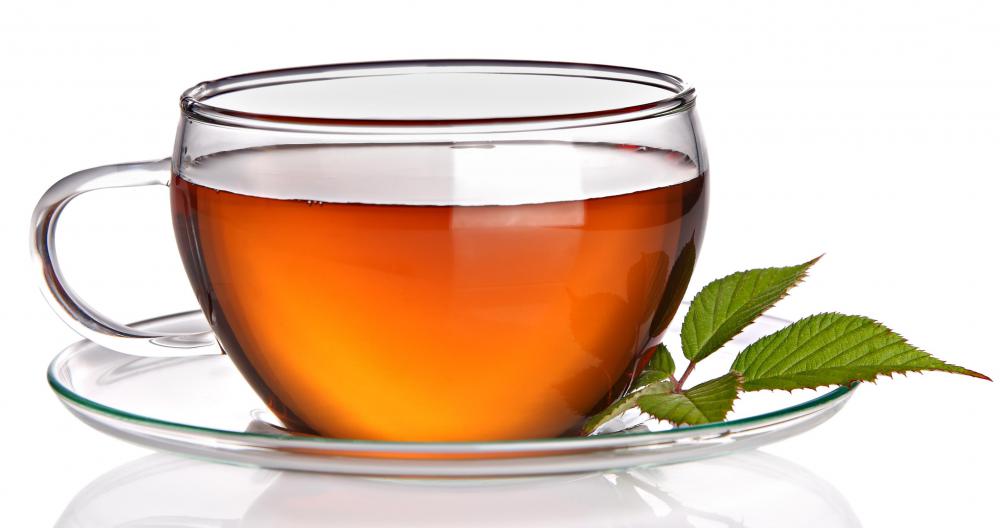
![A cup of chamomile tea.]() By: gtranquillityA cup of chamomile tea.
By: gtranquillityA cup of chamomile tea. -
![Honey is often used to sweeten chamomile tea.]() By: Jaimie DuplassHoney is often used to sweeten chamomile tea.
By: Jaimie DuplassHoney is often used to sweeten chamomile tea. -
![Chamomile tea may be useful in treating insomnia.]() By: Sandor KacsoChamomile tea may be useful in treating insomnia.
By: Sandor KacsoChamomile tea may be useful in treating insomnia. -
![A step in making chamomile tea involves pouring hot water over chamomile leaves.]() By: nikkytokA step in making chamomile tea involves pouring hot water over chamomile leaves.
By: nikkytokA step in making chamomile tea involves pouring hot water over chamomile leaves. -
![Chamomile tea, which has a light, fruity taste, can have a calming effect.]() By: PrintempsChamomile tea, which has a light, fruity taste, can have a calming effect.
By: PrintempsChamomile tea, which has a light, fruity taste, can have a calming effect.


Discussion Comments
This tea is not for me. As a rule, I rarely have nightmares, but twice I've tried the tea and twice been woken by awful, hideous dreams . Last week I dreamed I gave birth to a greyhound! I only woke when the nurse asked me to breast feed it!
Well I'm currently experiencing my menstrual cycle too early and having nightmares. This is my first time in life drinking Chamomile.
I also have experienced severe nightmares while drinking chamomile tea. I have seen others in other blogs post about this too. I think this is a not well known potential side effect of chamomile.
@anon8988: I also just found I have nightmares from chamomile tea. It has nothing to do with medications but I react to foods with high fodmaps and chamomile is one. It doesn't work for everyone, but may be something he can look in to.
I was advised by my doctor to stop drink anything with caffeine and drinks with stimulant. i do drink coffee and tea a lot and my doctor told me to take decaf and chamomile tea instead. i chose the latter. it helps me relax as well as sleep. it might not be good for some people, but i found it good for me. It helps me slow down my physical activities and lessens my so called stress so i was able to sleep well and took naps. Thanks to my doctor. --mce0556
Does anyone know if Chamomile tea can cause abnormal menstrual bleeding? I started bleeding way too early in my cycle this month and the only thing that has changed is one cup of Chamomile tea at night. It helps me relax and I love it but I'm suspicious it has caused this side effect. The flow of blood is worse when I stand up and I have lots of cramps.
@muahmed: Chamomile tea is an herbal tea, but it isn't actually a tea, as far as being from the tea plant. It's a separate plant, called chamomile. The "tea" part doesn't refer to the tea plant, but rather, the infusion or decoction produced from chamomile.
The word "tea" in English has two meanings. It can either refer to "tea" the plant, like oolong or Ceylon, or it can refer to the liquid produced from infusing plants and herbs for drinking. I hope this helps!
Could any one tell me where we put chamomile tea in tea types, according to my knowledge tea is of the following types:
Green-Tea; Herbal-Tea; Black-Tea; White-Tea; Oolong-Tea; Yellow-Tea.
It's great for my anxiety, gout, stomach pains and migraines. Not even pain medication can do this for me.
I've been doing some research. Chamomile contains many chemicals; thus, it can have multiple positive and negative actions. One is it can affect blood-clotting. in some folks this is a good side-effect, but in many others it is really dangerous. Just because herbs are "natural" does not mean they are necessarily safe for everyone. Do much research before ingesting "natural" herbs. Herbs, after all, are the basis of many prescription medications. Chamomile tea may be great for calming stomachs, but what about if someone has bleeding ulcers? Will it make those worse? Do your research and check things out thoroughly, and be sure to report to your doctor all the "natural" herbs and "home" preventatives and remedies that you use. If your doctor ignores your list, get a different doctor!
In this particular month I do not have a good flow during my menses. I am under stress now. As far as I know it is normal for women under stress for not having regular menses. Does Chamomile tea help?
um, Malena, other websites say that Chamomile is good for diabetes, and you mention heart attacks, but it is not mentioned anywhere in this article!!! The BBC did a documentary on Chamomile and its positive effects on diabetes though...
anonymous - while i personally don't think that chamomile tea can cause any adverse medical reactions with regular medications since it's herbal, you really never know. and the truth is this really isn't the best forum for receiving personal medical advice. especially when you're talking about serious things like diabetes and heart attacks, the only reliable information you can get is after seeing a medical professional. i'd set up an appointment if you are concerned.
Hello, My boyfriend had severe nightmare after drinking some chamomile tea. Is it possible possible with other medications he is currently taking? he had a heart attack and we also found out he is a type 2 diabetic. Thank you for taking time to read this letter, looking for a reply.
There are a number of other uses for chamomile tea, besides the obvious one for ingesting it for a variety of ailments. I have observed tepid chamomile tea being used to wash a baby's face and eyelids.
Chamomile tea is good for blond hair too. Young girls can rinse their hair in chamomile tea, and the result would be a lovely smelling hair, something like sweet clover.
And chamomile flowers soaked in water for a day can be used to spray plants to control disease.
Post your comments