
At TheHealthBoard, we're committed to delivering accurate, trustworthy information. Our expert-authored content is rigorously fact-checked and sourced from credible authorities. Discover how we uphold the highest standards in providing you with reliable knowledge.
What is Cell Division?
 Mary Elizabeth
Mary Elizabeth
Mary Elizabeth
Cell division is the process that cells go through in order to divide. Cells may divide for several reasons, and there are two types of cell division depending on the purpose. The cell division associated with sexual reproduction is one type, called meiosis. The other type, the cell division associated with growth and cell replacement or repair, is called mitosis. In both types of cell division, the nucleus splits and DNA is replicated.
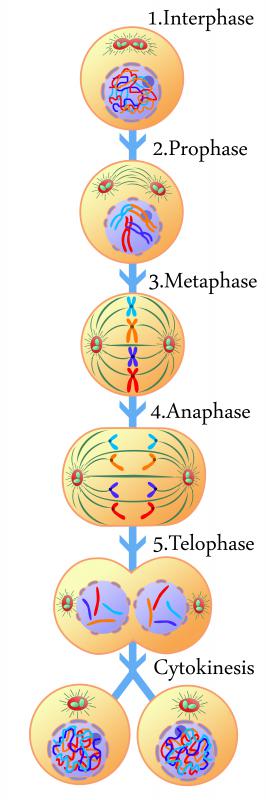
The cell division called mitosis produces daughter cells that have all the genetic material of the parent cell — a complete set of chromosomes. However, chromosomes are not the only material that needs to be divided and transferred to the daughter cells: there are cytoplasm and the cell membrane to divide as well. Cytokinesis is the process of dividing the cytoplasm and the cell membrane, and this process may follow immediately after mitosis or occur separately, depending on the organism involved. Together, these two processes make up the mitotic phases of the cell cycle.

The phases of cell division are prophase, metaphase, anaphase, and telophase, and these occur in both mitosis and meiosis. A fifth phases called prometaphase occurring between prophase and metaphase is designated by some, but not all sources. Interphase, which is not part of mitosis, is a preparatory stage during which the parent cell makes a copy of its genetic material so that each daughter cell can have a complete set. Therefore, mitosis is an ongoing and repetitive process, alternating with interphase.

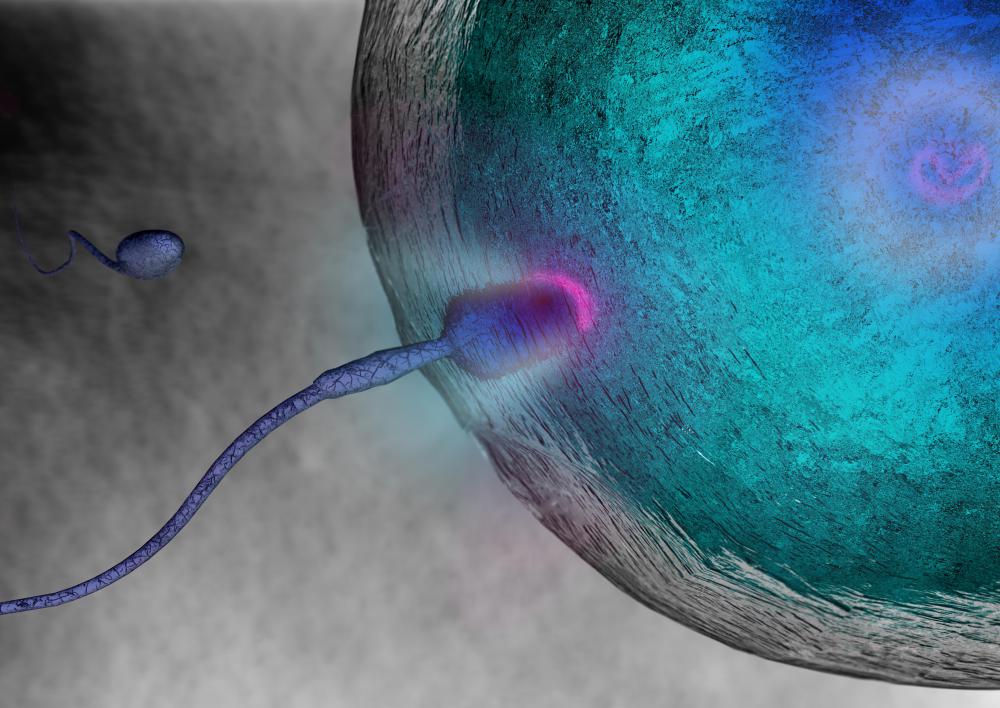
Meiosis, on the other hand, reduces the number of chromosomes by half, so that, for example, human egg and sperm cells, called gametes, each have 23 chromosomes and can join to produce a zygote with 46. It has two division phases, whereas mitosis has only one. Meiosis in animals is called gametogenesis, specifically, spermatogenesis, producing sperm, in males and oogenesis, producing eggs or ova, in females. In the unfused state, the egg and sperm are called haploid cells — having only a single set of chromosomes, and they become diploid — having a pair of each type of chromosome — again when they unite during fertilization.

Meiosis specifically works to combine the genetic material of two individuals. When there is only one parent in the reproductive cycle — for example, in ferns, which reproduce through spore — the daughter cell must have the full genetic material — all the chromosomes — of the parent cell. Therefore, in the case of the creation of spore — sporogenesis — reproduction is accomplished without meiosis.
Mary Elizabeth
Mary Elizabeth is passionate about reading, writing, and research, and has a penchant for correcting misinformation on the Internet. In addition to contributing articles to TheHealthBoard about art, literature, and music, Mary Elizabeth is a teacher, composer, and author. She has a B.A. from the University of Chicago’s writing program and an M.A. from the University of Vermont, and she has written books, study guides, and teacher materials on language and literature, as well as music composition content for Sibelius Software.
Learn more...
Mary Elizabeth
Mary Elizabeth is passionate about reading, writing, and research, and has a penchant for correcting misinformation on the Internet. In addition to contributing articles to TheHealthBoard about art, literature, and music, Mary Elizabeth is a teacher, composer, and author. She has a B.A. from the University of Chicago’s writing program and an M.A. from the University of Vermont, and she has written books, study guides, and teacher materials on language and literature, as well as music composition content for Sibelius Software.
Learn more...AS FEATURED ON:
AS FEATURED ON:


-
![A cell dividing into two daughter cells.]() By: Luk CoxA cell dividing into two daughter cells.
By: Luk CoxA cell dividing into two daughter cells. -
![The stages of mitosis.]() By: VanessaThe stages of mitosis.
By: VanessaThe stages of mitosis. -
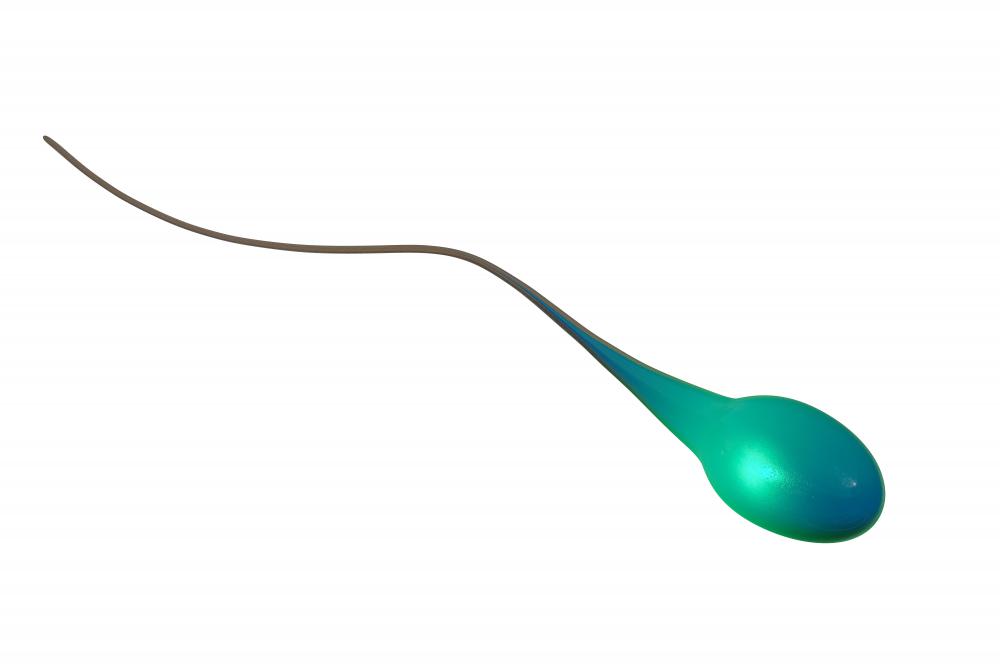
![Sperm cells have twenty-three chromosomes.]() By: fotoliaxrenderSperm cells have twenty-three chromosomes.
By: fotoliaxrenderSperm cells have twenty-three chromosomes. -
![Ferns reproduce using spores.]() By: vencavFerns reproduce using spores.
By: vencavFerns reproduce using spores. -
![The nucelus, which is located at the center of the cell, splits during the cell division process.]() By: jscreationzsThe nucelus, which is located at the center of the cell, splits during the cell division process.
By: jscreationzsThe nucelus, which is located at the center of the cell, splits during the cell division process. -
![The sex cells, gametes, each have 23 chromosomes.]() By: Giovanni CancemiThe sex cells, gametes, each have 23 chromosomes.
By: Giovanni CancemiThe sex cells, gametes, each have 23 chromosomes.



Discussion Comments
What are the conditions that apply for mitosis to take place.?
Mitosis is for the growth and repair of a human body.
Which energy works in cell division, and is it the same energy as in meiosis cell division?
Why is cell division so important?
The purpose of cell division is to make up all the organs' parts inside the baby's body.
how many cells can an adult man produce in a second?
What are the purposes of cell division?
why is cell division needed?
what are the seven reasons for cell division?
i am a student studying in grade 8 and i am having difficulty in answering the following question: why do cells have to divide after they reach a certain size? please answer this question for me.
What is the purpose of cell division in single celled organism?
what is needed for cell division?
so what part is it, when removed, the cell won't reproduce?
what is the purpose of each cell division? where does it take place?
i am in grade 8. can you please tell me the difference between fertilization and pollination?
so helpful! thank you so much!
how do these factors affect cell division: time of day; stress; inflammation.
how does it work?
what are the two major reasons for cell division?
why do cells undergo cell division? for what purpose?
what parts of the cell are important in cell reproduction?
what role does cell division have in healing the body?
why is cell division so important?
are all cells the same size?
why is each stage of the cell cycle a prerequisite to the other?
what is the purpose of cell division?
Post your comments