
At InfoBloom, we're committed to delivering accurate, trustworthy information. Our expert-authored content is rigorously fact-checked and sourced from credible authorities. Discover how we uphold the highest standards in providing you with reliable knowledge.
What is Cavitation?
Cavitation occurs in liquid when bubbles form and implode in pump systems or around propellers. Pumps put liquid under pressure, but if the pressure of the substance drops or its temperature increases, it begins to vaporize, just like boiling water. In a small, sensitive system, however, the bubbles can't escape so they implode, causing physical damage to parts of the pump or propeller.
A combination of temperature and pressure constraints will result in cavitation in any system. No manufacturer or industrial technician wants to run pumps that keep getting affected by this problem, however, as it will permanently damage the chambers of the device. The vaporization actually causes a loud, rocky noise because the bubbles are imploding and making the liquid move faster than the speed of sound.

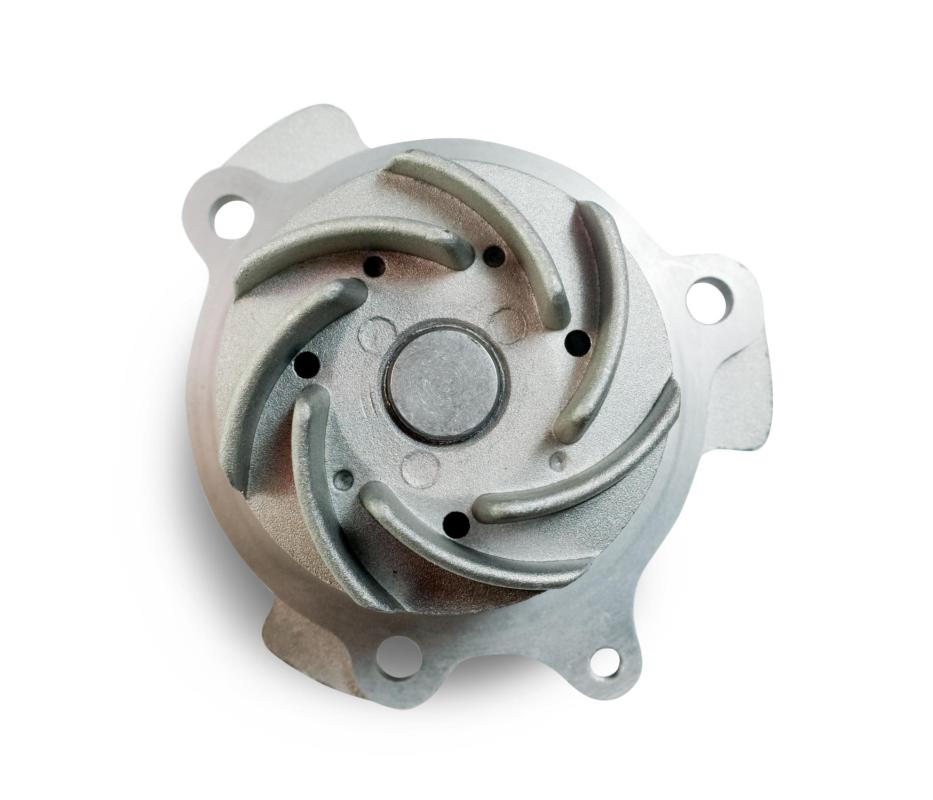
Inside every pump, there is a propeller that draws liquid from one side of the chamber to the other. The liquid normally continues out through a valve so it can do another job in a different part of the machine. Sometimes, this device is called an impeller. Even though the total chamber stays under the same pressure, and the materials are temperature regulated, cavitation manages to occur right next to the surface of the propeller.

A propeller rotates through a liquid and actually creates localized differences in pressure along the blades. This can even occur underwater on a submarine or ship's propeller. Bubbles appear in low-pressure areas but then immediately want to implode with such force that they make dings and pits in metal. A propeller exposed to these bubbles resembles the surface of the moon, with tiny, scattered craters.

There are two types of this phenomena that can occur in the different stages of pumping, but both are results of the same phenomenon. Suction or classical cavitation occurs around the impeller as it is drawing liquid through the chamber. The propeller's motion creates the changes in pressure necessary for vaporization.
Discharge or recirculation cavitation is the result of changing pressure at the point of exit, the discharge valve. The valve is not able to let all the liquid through as fast as it should, so the currents' different velocities create miniature changes in the uniform pressure. Even such small variations are enough to create the ideal circumstances for this problem.
AS FEATURED ON:
AS FEATURED ON:









-
![Cavitation occurs when bubbles that have been formed by spinning boat or ship propellers collapse.]() By: Reimer - PixelvarioCavitation occurs when bubbles that have been formed by spinning boat or ship propellers collapse.
By: Reimer - PixelvarioCavitation occurs when bubbles that have been formed by spinning boat or ship propellers collapse. -
![Impellers inside water or fuel pumps can be damaged by cavitation.]() By: JackFImpellers inside water or fuel pumps can be damaged by cavitation.
By: JackFImpellers inside water or fuel pumps can be damaged by cavitation. -
![Submarine propellers can cause cavitation.]() By: VanderWolf ImagesSubmarine propellers can cause cavitation.
By: VanderWolf ImagesSubmarine propellers can cause cavitation.


Discussion Comments
Also to prevent cavitation, you can correct the flow path. To avoid separation bubbles and turbulence, one can insert a cheng rotation vane, which are stationary vanes that apply a spin on the flow treating an elbow or bend as straight pipe.
They increase pump life impeller life and the efficiency of pump and overall systems. Cheng fluid systems technology has been in use for 20 plus years. I have spoken with many engineers and plants that have installed these.
Instead of understanding the definition of cavitation, people should look for solutions beside pipe configuration. Obviously, following simple rules is great, but even those are outdated.
Why use long pipe runs for flow meter accuracy when solutions are available for small compact distances? Do some research and check it out.
can high pressure air pumped into a glass bowl filled with water cause cavitaion?
how do you cause pressure to drop in a sealed bowl filled with water?
As a former industrial pump mechanic, I can tell you with certainty that there are no propellers inside pumps. Those devices the move liquids are called "Impellers" because they are inside a fixed container and impel the liquid is a fixed direction.
Propellers are used to "propel" a floating container (a boat or ship).
Cavation is prevented by slowly increasing the rotating speed of the prop.
What is the pressure within the bubbles and the temp when they collapse?
Lackpt. The phenomenon is discharge cavitation not suction.
I am a Physical Therapist looking for information on cavitation but not in regard to pump systems or around propellers. The cracking of joints (audible pop) is a common phenomenon which interests patients and many health care professionals. From your review, I can see that cavitation is a well-documented engineering principle but the scientific literature is limited with regard to the exact mechanism of action that occurs with an audible pop is heard from manipulating one’s back or knuckles. Cavitation is the term that has been accepted since it describes the formation of vapor and gas bubbles within fluid, through the local reduction of pressure, when tension is applied to a joint. The vapor bubble that then collapses in a synovial joint is believed to be carbon dioxide. This collapse causes the “crack”. What I would like to know, is if you see this audible pop as a result of suction/classical cavitation, as you describe, or discharge cavitation. However, could another term be more appropriate?
I would be very interested in the thoughts of an engineer.
Can you make a vacuum pump by taking advantage of cavitation?
Post your comments