
At AllThingsNature, we're committed to delivering accurate, trustworthy information. Our expert-authored content is rigorously fact-checked and sourced from credible authorities. Discover how we uphold the highest standards in providing you with reliable knowledge.
What is Carbon Dioxide?
 Mary McMahon
Mary McMahon
Mary McMahon
Carbon dioxide (CO2) is an inorganic chemical compound with a wide range of commercial uses, from the production of lasers to the carbonation of soft drinks. This compound exists naturally in the Earth's environment, and it is produced in a variety of ways; commercial CO2 is usually derived from the byproducts of industrial processes. The simple gas has become a topic of interest for humans because it is classified among the greenhouse gases, which impact the Earth's environment when they reach high concentrations in the atmosphere.
This compound takes the form of two oxygen molecules covalently bonded to a single carbon molecule. It is produced through decomposition of organic materials as well as through respiration and combustion. The amount of carbon dioxide in the environment prior to the beginning of the 20th century were kept stable by plants, which are capable of absorbing this gas as it was produced for use in photosynthesis.

As early as the 1600s, people were beginning to think about carbon dioxide, although they didn't know what to call it. Flemish chemist Jan Baptist van Helmont made observations which hinted at its existence, setting the stage for breakthrough work in the 18th century by Joseph Black, a Scottish chemist who identified the compound and explored many of its properties. By the 1800s, people had succeeded in creating and studying many of its forms.

At room temperature, carbon dioxide takes the form of an odorless, colorless gas that is incombustible in normal conditions. It can be forced into a solid form, in which case it is known as dry ice, and the gas is toxic to animals in high concentrations. People who inhale too much essentially suffocate, ultimately falling into unconsciousness as their oxygen saturation level drops.

This gas is used for things like creating an inert environment for welding, fire suppression, and the carbonation of beverages. It is an important part of the carbon cycle, a complex cycle that underlies many of the mechanics of life on Earth. While this gas is entirely natural, some people began to be concerned about rising levels towards the end of the 20th century. Scientists became concerned that humans were producing too much of the compound for plants to process, a practice that could potentially lead to serious environmental problems.
Frequently Asked Questions
What is carbon dioxide and why is it important?

Carbon dioxide (CO2) is a colorless, odorless gas that is vital to life on Earth. It's a natural greenhouse gas that helps trap heat in the atmosphere, keeping our planet warm enough to sustain life. Plants use CO2 for photosynthesis, converting it into oxygen and glucose, which are essential for the survival of animals and humans.
How is carbon dioxide produced?

Carbon dioxide is produced naturally through processes like respiration, decomposition, and volcanic eruptions. Human activities, such as burning fossil fuels (coal, oil, and natural gas), deforestation, and industrial processes, significantly increase CO2 levels in the atmosphere, contributing to climate change.
What are the effects of increased carbon dioxide levels in the atmosphere?
Increased levels of carbon dioxide contribute to the greenhouse effect, leading to global warming. This results in climate change, characterized by rising global temperatures, melting ice caps, rising sea levels, and extreme weather events. According to NASA, CO2 levels have risen by about 50% since the Industrial Revolution.
Can carbon dioxide levels be reduced, and how?
Yes, carbon dioxide levels can be reduced through various methods. These include increasing energy efficiency, switching to renewable energy sources, reforestation, and developing carbon capture and storage technologies. Lifestyle changes, such as reducing meat consumption and minimizing waste, also contribute to lower CO2 emissions.
What role do oceans play in the carbon cycle?
Oceans are a major carbon sink, absorbing about a quarter of the CO2 emitted by human activities, according to the National Oceanic and Atmospheric Administration (NOAA). This process helps mitigate the greenhouse effect, but it also leads to ocean acidification, which can harm marine life and ecosystems.
How does carbon dioxide affect human health?
While carbon dioxide is not toxic at typical concentrations, high levels of CO2 can lead to health issues such as headaches, dizziness, restlessness, and in extreme cases, asphyxiation. Indirectly, the impact of climate change on weather patterns, food supply, and disease vectors can also have significant health implications for humans.
Mary McMahon
Ever since she began contributing to the site several years ago, Mary has embraced the exciting challenge of being a AllThingsNature researcher and writer. Mary has a liberal arts degree from Goddard College and spends her free time reading, cooking, and exploring the great outdoors.
Learn more...
Mary McMahon
Ever since she began contributing to the site several years ago, Mary has embraced the exciting challenge of being a AllThingsNature researcher and writer. Mary has a liberal arts degree from Goddard College and spends her free time reading, cooking, and exploring the great outdoors.
Learn more...AS FEATURED ON:
AS FEATURED ON:









-
![Carbon dioxide is used in the carbonation of soft drinks.]() By: gtranquillityCarbon dioxide is used in the carbonation of soft drinks.
By: gtranquillityCarbon dioxide is used in the carbonation of soft drinks. -
![Plants use carbon dioxide in photosynthesis.]() By: Sergey GalushkoPlants use carbon dioxide in photosynthesis.
By: Sergey GalushkoPlants use carbon dioxide in photosynthesis. -
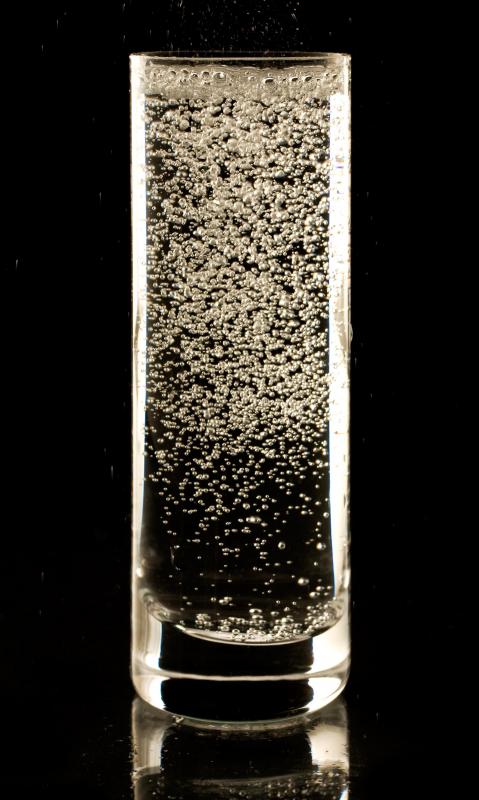
![Sparkling water, which contains carbon dioxide.]() By: StudiotouchSparkling water, which contains carbon dioxide.
By: StudiotouchSparkling water, which contains carbon dioxide. -
![A carbon dioxide laser cutter is used to cut a sheet of metal.]() By: KadmyA carbon dioxide laser cutter is used to cut a sheet of metal.
By: KadmyA carbon dioxide laser cutter is used to cut a sheet of metal. -
![Severe symptoms of carbon dioxide poisoning may include headache and disorientation.]() By: chuugoSevere symptoms of carbon dioxide poisoning may include headache and disorientation.
By: chuugoSevere symptoms of carbon dioxide poisoning may include headache and disorientation.




Discussion Comments
Does carbon dioxide produce particulates?
This helped. Thanks.
what does carbon do to the earth?
I agree with post 28 and post 22 mainly because there hasn't been any noticeable temperature rises in my neighborhood, plus even if the temperature is rising in other areas, that's natural for earth, according to history itself.
carbon dioxide is only in minute trace elements in our atmosphere. The atmosphere is composed of 78 percent nitrogen, 21 percent oxygen, less than 1 percent argon and minute traces of several other elements. So carbon dioxide does not cause a problem. --anon 67
Nature -- that's what it is. Trees and plants breathe in carbon dioxide and breathe out oxygen. Humans breathe in the oxygen and breathe out the carbon dioxide. And so it goes. Stop burning down the forests and plant more trees. Problem solved.
I use it in small doses to subdue my Parrots when clipping nails, trimming beaks and minor surgery. great stuff.
What a lot of baloney. Kept stable in the last century by trees. Were there no volcanic explosions then?
I agree with the first part of post 22. other websites will explain why global warming isn't happening.
I don't think carbon dioxide is the cause for global warming. Heck! I don't even think there is any global warming. But could it be possible if most of the plant life is killed off in let's say a nuclear war?
in reading above it says co2 is an inorganic compound. if something has carbon, doesn't that by definition make it an organic compound?
co is carbon monoxide its given off in fuel combustion in car exhaust, furnace, wood stove. co2 carbon dioxide is what we breath out after we take in o2. plants then take in co2 and give back O2 or oxygen.
so we need plants to get rid of co2 and give us o2. does anyone know how we get rid of co carbon monoxide.
i agree with post 15. plus, i love this website. i will use it every time i need to research things for science class.
The classification of Carbon Dioxide as a pollutant is the basis for most of our economic, political and social problems.
What is the difference between CO2 and CO
i love this website. it really, really, really helped me. thanks a lot and again thank you.
this helped me with my project.
thanks. This was helpful for my project.
Why would you even think of that?
Carbon dioxide is plant food.
Post your comments