
At WiseGEEK, we're committed to delivering accurate, trustworthy information. Our expert-authored content is rigorously fact-checked and sourced from credible authorities. Discover how we uphold the highest standards in providing you with reliable knowledge.
What is Capitalized Interest?
 Malcolm Tatum
Malcolm Tatum
Malcolm Tatum
Capitalized interest has to do with the interest that is associated with just about every type of loan agreement. Basically, it can be understood in terms of expensed interest that occurs when the regularly scheduled loan payments are not made on time. In many types of loans, the unpaid interest that is part of the delinquent payment is added to the principal balance of the loan.
This type of interested does not necessarily only occur when payments are late or are missed, however. It can also be amortized in situations where payments are deferred for some reason. For example, if the borrower works with the lender to suspend payments for a short period of time, this is known as forbearance. During this arranged time, payments are not considered to be delinquent. At the same time, the portion of those deferred payments that would have gone toward the accrued interest on the loan will be added back to the principal, creating capitalized interest.

There are actually some situations in which this action may be in the best interests of the borrower. This is especially true if the purpose of the loan was to create an asset that will be capable of generating revenue once it is completed, such as to finance the construction of a building. Seeking a deferred payment arrangement does create more interest and higher payments down the road, but it also frees resources to be devoted to the project. Once the building is complete and can begin generating revenue, the additional cash flow will offset both the higher loan payments and the extra interest.
In some cases, a lender may be not be agreeable to a deferred payment schedule, but will be open to receiving only payments on the loan interest for a period of time. In this scenario, the borrower may choose to use part of the loan proceeds to make the payments on the capitalized interest. This allows the borrower to buy some time until the project is completed and the assets begin to generate revenue to cover both the loan principal and the interest.
Malcolm Tatum
After many years in the teleconferencing industry, Michael decided to embrace his passion for trivia, research, and writing by becoming a full-time freelance writer. Since then, he has contributed articles to a variety of print and online publications, including WiseGEEK, and his work has also appeared in poetry collections, devotional anthologies, and several newspapers. Malcolm’s other interests include collecting vinyl records, minor league baseball, and cycling.
Learn more...
Malcolm Tatum
After many years in the teleconferencing industry, Michael decided to embrace his passion for trivia, research, and writing by becoming a full-time freelance writer. Since then, he has contributed articles to a variety of print and online publications, including WiseGEEK, and his work has also appeared in poetry collections, devotional anthologies, and several newspapers. Malcolm’s other interests include collecting vinyl records, minor league baseball, and cycling.
Learn more...AS FEATURED ON:
AS FEATURED ON:









-
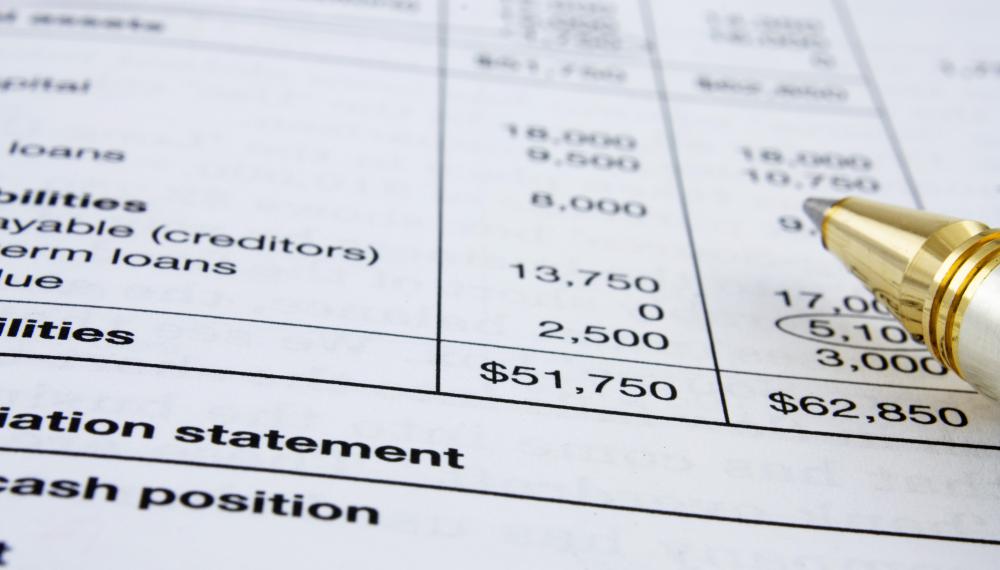
![Capitalized interests are added to the balance of a loan.]() By: GabrelCapitalized interests are added to the balance of a loan.
By: GabrelCapitalized interests are added to the balance of a loan.
Discussion Comments
I have a fixed deposit in my account, and the bank has given me additional capitalized interest. If I pay more interest than what I am getting, can you tell me what that is? How am I getting more money? Is that revenue the bank is getting ?
I am in the process of signing for loan modification. About $10,000 will be capitalized back into my loan in Oklahoma. I noticed on the second page it states, "As a result of your loan modification, the mortgage interest on the amount capitalized cannot be claimed on IRS Income Tax Returns." But this does not appear to agree with what I'm finding online? Does anyone have any insight?
If "interest in arrears" is capitalized (added to the loan) due to the Federal Making Home Affordable mortgage program, the interest is deductible in the year the settlement occurs.
The reason is that this process further encumbers the property with a new loan - i.e. an additional loan was made by the lender (evidenced by the new encumbrance) to "pay" the interest in arrears. Thus the interest was paid by this new additional loan.
I struggling. if on 1 july 2004, $135,000 was borrowed and the first installment of $45,000 is payable on Aug 31, and interest is calculated at 10 percent monthly and is not capitalized, what is the interest on the loan on Sept 30?
What about if my student loan was for $3,500 and it had capitalized interest on it until I was out of school, and let's say I was in school for a year without paying any amount on the interest. When I did start paying the loan back how much capitalized interest would be added to the principal balance?
You can only deduct interest that is paid.
hi all ty. for this i really need any answers in good plain eng. thanks
my student loan was made in july 06. as of now, i have only paid 3000 on this. not by my choice. they keep diff. it even though I request it not to be.
my payments are 92.00/mo. 54.00 be taken out in interest. at this rate i will never get it paid off. they even took cap. in. too out. is all this legal or do i need to get a lawyer and pay more out. someone help plz.
I've not been able to find out if capitalized interest is deductible for a home mortgage. Basically, my home mortgage was modified and about 10 month's interest was added back into the principal. My bank automatically excluded it from my 1098, since I didn't pay the interest through the normal mortgage payment process.
I've consulted numerous sources, including the IRS (!), but have not gotten any definitive answers as yet. Does anyone know or could point me to a knowledgeable source?
Yep. First of all, the interest is due the lender anyway, so you have to pay it sometime. Might as well be sooner rather than later, so it does not have even a slight chance of damaging your credit report. Besides, the interest may be deductible (check the laws that apply to your location) and could make a difference in which tax bracket you fall into that particular tax period.
Is there any advantage to paying the capitalized interest on a student loan?
Capitalized interest may be deductible, depending on current tax laws that apply in the jurisdiction where the borrower resides and whether the interest is accrued as part of the amortization process or due to slow payment on the loan. It is best to check with an accountant or tax preparer before trying to deduct the amount of the interest from a tax return.
Is Capitalized interest deductible?
Post your comments