
At DelightedCooking, we're committed to delivering accurate, trustworthy information. Our expert-authored content is rigorously fact-checked and sourced from credible authorities. Discover how we uphold the highest standards in providing you with reliable knowledge.
What is Cake Flour?
 Mary McMahon
Mary McMahon
Mary McMahon
Cake flour is a type of wheat flour that is very fine and, as such, is particularly well-suited to cakes, cookies, and other confections that need to have a light and fluffy texture. It is related to the more standard “all-purpose” flour, but is more processed — and in many cases, is actually made from a different part of the original wheat germ. The result is a silky, powdery substance that is low in protein and does not typically bind much with other ingredients.
Distinguishing Characteristics

Texture is the main thing that sets cake flour apart from other varieties. It is often milled so fine that it is actually soft to the touch, much like baby powder or powdered sugar. Most of the time, it is pure white as well, thanks to the intensive bleaching process it goes through as it is made.
Cake flour is often more expensive than other, more standard types of flour and is usually sold in smaller quantities. Though many different brands produce it around the world, there is usually little difference between true cake flours. The most important characteristic is the fine grind, which allows baked goods to set up differently than they would with a thicker product.
Milling and Manufacturing Process

Getting wheat to such a refined point is often a rather involved undertaking. Millers first isolate wheat germ’s endosperm, which is the softest part of the kernel. The endosperm is set aside and ground specially into a powder, which is then heavily bleached. Bleaching not only produces a uniform color, but it also helps break down the wheat’s inherent protein.

Wheat is not usually considered a “high protein” food, though it does contain a number of linked protein molecules. These don’t really translate into much dietary benefit, but they do have an effect on how the product interacts with other ingredients and sets up. So-called “high protein” flours are also high in gluten, which leads to dense baked goods. Bread flour, for instance, has a protein content of about 15%; cake versions are usually closer to 7%. Without so many bonds between wet and dry ingredients, batter and dough set up much differently. While by no means gluten-free, cake flour has much weaker glutinous bonds and tends to create airier, fluffier products.
Why Cooks Choose It

The fine grains also absorb fat readily, ensuring that butter or oils are well distributed throughout the batter. Cake flour may also have a high volume of sugar when compared to higher protein flours, which makes it particularly well suited for dessert confections and may require cooks to add less refined sugar overall. Much of this is owing to the endosperm, which often contains comparatively high levels of natural sweetness.
Far and away the main reason why most cooks choose this more refined product is because certain recipes call for it. Specialty cakes, cookies, and other foods that are designed to be made with cake flour often don’t turn out as well if they are made with coarser, more protein-laden alternatives. Cakes don’t crumble as nicely, for instance, or may simply taste “heavy.” They also may not rise out of the pan as much during cooking, leading to an end product that is not particularly pretty to look at.
At-Home Substitutions
Home chefs who do not have ready access to cake flour can usually achieve similar results with a few alterations to standard all-purpose flour — though straight substitutions rarely work out. Most experts recommend a combination of all-purpose flour and cornstarch which, when blended and heavily sifted, often leads to a similar final product. One of the most common substitutions instructs cooks to remove 2 tablespoons (15.62 g) of flour from each cup (125 g) that the recipe requires, replacing them with ordinary cornstarch. The mixture must then be sifted between six and ten times to ensure a good blend and to help weaken the heavier flour’s consistency.
Care and Storage
For the most part, caring for cake flour is no different from caring for any other sort of flour. It's best to store it in an airtight container, as this will prevent excess moisture from building up. Cooks should also use it up within about a year for the best results. Flour doesn’t really expire in any real sense, though it will lose its potency and freshness over time. It is sometimes possible to extend its lifespan by refrigerating or freezing unused portions, though professional cooks often debate whether this does more harm than good. Cold storage may preserve the flour, but it can also cause it to dry out prematurely. A lot depends on the storage mechanism and the precise temperatures at issue.
Mary McMahon
Ever since she began contributing to the site several years ago, Mary has embraced the exciting challenge of being a DelightedCooking researcher and writer. Mary has a liberal arts degree from Goddard College and spends her free time reading, cooking, and exploring the great outdoors.
Learn more...
Mary McMahon
Ever since she began contributing to the site several years ago, Mary has embraced the exciting challenge of being a DelightedCooking researcher and writer. Mary has a liberal arts degree from Goddard College and spends her free time reading, cooking, and exploring the great outdoors.
Learn more...AS FEATURED ON:
AS FEATURED ON:


-
![Cake flour typically has low protein content, a finely milled texture and the ability to hold large amounts of fat and sugar.]() By: atm2003Cake flour typically has low protein content, a finely milled texture and the ability to hold large amounts of fat and sugar.
By: atm2003Cake flour typically has low protein content, a finely milled texture and the ability to hold large amounts of fat and sugar. -
![A person sifting cake flour.]()
A person sifting cake flour. -
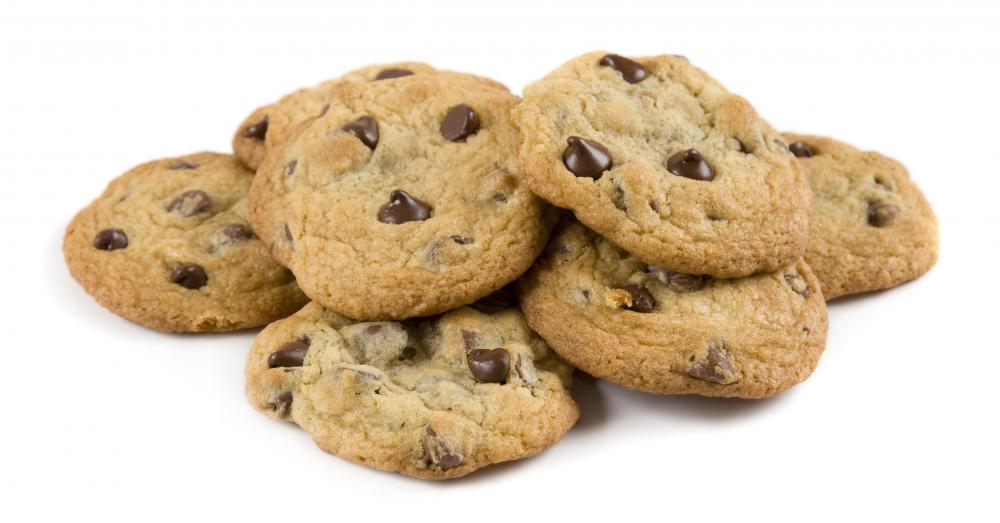
![Chocolate chip cookies made with cake flour.]()
Chocolate chip cookies made with cake flour. -
![Cake flour is a very finely milled wheat flour.]() By: Studio GiCake flour is a very finely milled wheat flour.
By: Studio GiCake flour is a very finely milled wheat flour.



Discussion Comments
My cake flour box expiration date was May 2011, but I just used it in a recipe that called for it specifically. Over the years. I have always kept cake flour/ or any flour ingredients in my fridge for up to two years after the date without worry. Any thoughts on this?
Flour does expire. The bag will have an expiration date on it, usually within a year of purchase. You can prolong this a little by refrigerating or freezing. However, it must be kept in an airtight container. Otherwise it will absorb moisture from your fridge and then not bond properly with the oils and sugar in your recipe.
@anon260209: Don't worry. There aren't too many differences among the different brands of cake flour. Just make sure you're using *cake* flour, if the recipe calls for it, and not all-purpose flour, self-rising or bread flour. You won't get the same results.
If a recipe just says cake flour, how do you know which one to use: Swans Down? Presto: Softsilk? Totally confused.
Can cake flour be substituted for all purpose flour?
Does softasilk flour absorb water over time? My pound cake fell and I'm trying to find out why.
can you please provide me an analysis (content of the other items)? Thank you.
My Mother freezes flour, is this good? Nothing seems to come out right and I wondered if it was the freezing.
Thanks.
very helpful tip. thanks for posting it.
cake flour is called softasilk. It's sold in the flour section of the supermarket.
Very interesting article, and very informative. To express my thanks, here's a recipe for a spectacular *heavy* poundcake that has brought me rave reviews for years, and it *must* be made with cake flour:
3 cups *unsifted* cake flour (measure it, *then* sift)
3 cups sugar
1 pound regular butter (not unsalted)
1 8-ounce package cream cheese
6 large eggs
1 teaspoon lemon extract.
All ingredients *must* be at room temperature before you begin. Check oven rack to make sure it will hold large tube pan *in center* of oven. Preheat oven to 350 Fahrenheit.
Grease and flour a standard tube pan (not a bundt pan.) In large bowl of electric mixer, blend together butter and cream cheese at low-medium speed. Gradually blend in sugar at medium speed. Add extract, then eggs one at a time, gradually increasing mixer speed. Beat at high speed, once all eggs are added, about 2 minutes, scraping bowl constantly, to achieve high volume and thorough dissolving of sugar. Reduce mixer speed to lowest and gradually add *cake flour*. Batter will be *very stiff*.
Spoon into pan, carefully ensuring that there are no air pockets. Bake in center of oven at 350 degrees till done (about an hour and 20 minutes). A toothpick inserted in center of cake will come out clean if the cake is done.
Cool in pan ten minutes, remove from pan and put on cake plate that has a dome. It can be upside-down or right-side up, depending on your own preference for appearance. Put dome on cake plate when cake is still slightly warm. Leave dome on plate for *two days* to cause moisture to migrate uniformly throughout cake.
Serve in thin slices to guests who will scream and beg for the recipe. This is the king *and* queen of cakes, perfect just plain with no icing or topping, easy to eat with the fingers, perfect for a stand-up reception along with "healthy" finger-foods like strawberries, grapes and nuts.
The main thing: this cake *must* be made with cake flour.
Take self rising flour, add water and watch it. If it bubbles, it's OK. You could try using boiling water too.
can cake flour be replaced with low protein flour?
How much protein in cake flour is low protein? Does matzoh cake meal qualify? Is there an expiration date? Can presto self-rising cake flour be used in a recipe calling for cake flour?
I have old PRESTO self-rising cake flour that I kept in the freezer. Can I use it ? Is there a way to test it?
Can matzoh cake meal be used as a substitute for cake flour?
Post your comments