
At TheHealthBoard, we're committed to delivering accurate, trustworthy information. Our expert-authored content is rigorously fact-checked and sourced from credible authorities. Discover how we uphold the highest standards in providing you with reliable knowledge.
What is Cafestol?
 Mary McMahon
Mary McMahon
Mary McMahon
Cafestol is a substance found in coffee beans. Depending on how the beans are processed and brewed, it is present in varying levels in the coffee itself. The chemical is still being studied, but it has been shown to have a number of properties which are of concern to scientists and doctors. Both Arabica and Robusta beans have been demonstrated to contain the compound.
The substance is a diterpene molecule, meaning that it is in the terpene class of hydrocarbons. Terpenes tend to have strong scents, flavors, and essential oils, and residual cafestol is one of the substances which gives coffee a slightly oily, bitter flavor. It appears in Coffea arabica in concentrations of approximately .06% by weight. It is also present in Coffea robusta, which has a higher caffeine content than Arabica.

Robusta beans contain less of the substance than Arabica beans. In addition, they contain virtually no kahweol, another diterpene compound found in Arabica beans. The exact actions of kahweol on the body are unclear, as the compound is difficult to isolate for study.
International research has shown cafestol elevates cholesterol levels. It also elevates liver enzymes, which could potentially be harmful to a coffee consumer's health. Fortunately, there are ways to reduce the amount of the substance present in brewed coffee. When coffee is boiled, it has a much higher level. French press and traditional Turkish coffee both harbor much more cafestol than filtered coffee, which has negligible amounts of the compound.

Women appear to be more susceptible to the health problems associated with cafestol than men. The residual amounts of the compound in filtered coffee, for example, does have an impact on women, but not on men. Female coffee drinkers may want to consider drinking only filtered coffee, and perhaps cutting down on their consumption as well. If caffeine is an issue, increasing your intake of tea or switching to less flavorful but more powerful Robusta beans can meet your needs without exposing you to potentially harmful compounds in coffee.

Coffee is extremely complex, chemically. In addition to cafestol, there are numerous other compounds in coffee which have an impact on its flavor, smell, and potential health risks. Like many complex foods, not all of the compounds in coffee have been identified and fully studied, although researchers are working on it. Further research may reveal additional benefits to coffee which should be weighed when considering the potential health problems associated with cafestol.
Mary McMahon
Ever since she began contributing to the site several years ago, Mary has embraced the exciting challenge of being a TheHealthBoard researcher and writer. Mary has a liberal arts degree from Goddard College and spends her free time reading, cooking, and exploring the great outdoors.
Learn more...
Mary McMahon
Ever since she began contributing to the site several years ago, Mary has embraced the exciting challenge of being a TheHealthBoard researcher and writer. Mary has a liberal arts degree from Goddard College and spends her free time reading, cooking, and exploring the great outdoors.
Learn more...AS FEATURED ON:
AS FEATURED ON:


-
![Cafestol elevates liver enzymes.]() By: kaianniCafestol elevates liver enzymes.
By: kaianniCafestol elevates liver enzymes. -
![Women are more susceptible to the health problems associated with cafestol than men.]() By: spotmatikphotoWomen are more susceptible to the health problems associated with cafestol than men.
By: spotmatikphotoWomen are more susceptible to the health problems associated with cafestol than men. -
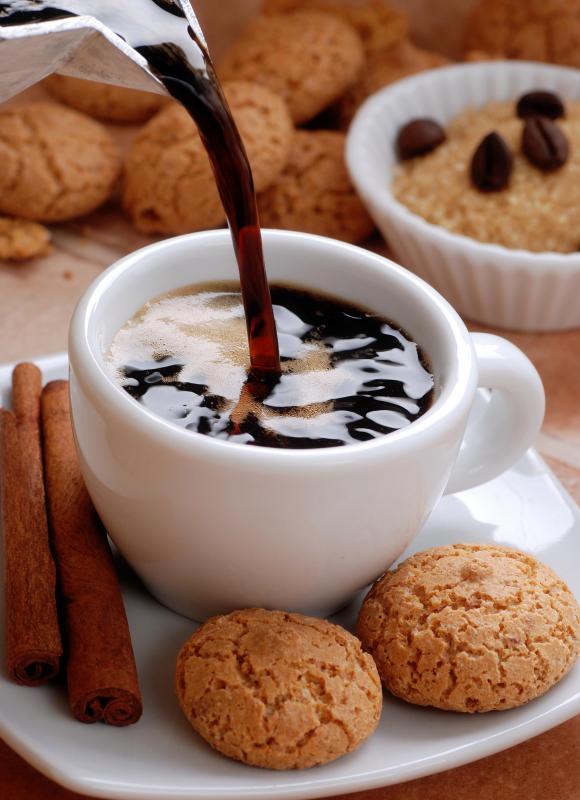
![Coffee beans contain cafestol.]() By: photosoupCoffee beans contain cafestol.
By: photosoupCoffee beans contain cafestol. -
![One downside of cafestol is that is can raise cholesterol levels.]() By: rob3000One downside of cafestol is that is can raise cholesterol levels.
By: rob3000One downside of cafestol is that is can raise cholesterol levels. -
![Coffee is complex, and not all of its numerous compounds have been fully studied.]() By: al62Coffee is complex, and not all of its numerous compounds have been fully studied.
By: al62Coffee is complex, and not all of its numerous compounds have been fully studied.




Discussion Comments
@babylove - Good for you for becoming more health conscience and taking steps to reduce your cholesterol. I am a lover of Scandinavian boiled coffee and consumed it almost daily for most of my adult life.
A few years back I developed a liver disease that my physician blames solely on the effects that cafestol and kahweol had on the enzymes in my liver.
I stopped drinking coffee altogether but a friend of mine shared a tip with me once to help reduce the high diterpene concentration.
He said to use two filters in your coffee pot and add an extra scoop of coffee to every eight cups of water and to really boost the flavor you can add two parts regular coffee to one part of some really fancy expensive coffee.
I don't know if this really works or not since I never tried it but you should give it a go and see if it gives you the affect your looking for. Good luck and here's to your health.
I used to drink an espresso on my way to work every morning for nearly three years until my doctor told me my cholesterol level was very high.
I have since reduced myself to drinking only two cups of filtered coffee each day. The effects are not the same and not to mention the terrible withdrawals I've had from my wonderful espresso.
I am a workaholic and I need that adrenalin rush to get me going every day. Isn't there any way to get the same rich robust flavor of an espresso in a pot coffee without the added diterpenes?
Post your comments