
At DelightedCooking, we're committed to delivering accurate, trustworthy information. Our expert-authored content is rigorously fact-checked and sourced from credible authorities. Discover how we uphold the highest standards in providing you with reliable knowledge.
What is Bulgur?
Bulgur, also called bulgar, bulghur, or burghul, is a form of whole wheat that has been cleaned, steamed or parboiled, dried, and then ground into grains of several distinct sizes. It may be made from any variety of wheat, but durum is the most common.
The processing of wheat into bulgur is believed to have begun in the area of the Mediterranean. This form has been part of the Middle Eastern diet for millennia, with references in the Old Testament literature that identify it with Hebrew, Babylonian, and Hittite peoples. Other ancient civilizations, such as the Roman and Egyptian, were eating bulgur as early as 1000 B.C.

Although the term is often used to mean cracked wheat, the two products differ in one important way: bulgur is precooked. Because of this, it requires only minimal preparation before eating. Unlike cracked wheat, bulgur is ready to eat after just ten minutes of boiling—roughly the same amount of time that it takes to prepare pasta.
Bulgur is typically available in four grain sizes: fine, medium, coarse, and whole grains. The different sizes are used for different purposes. Finely ground bulgur is used for hot breakfast cereals and desserts. Medium-ground is preferred for tabbouleh and other salads, stews, multigrain breads and other baked goods, and vegetarian burgers. Coarsely ground varieties can be used for pilafs, casseroles, stuffing, and salads. Whole grains can be added to baked goods or used in soups and stews.

This wheat has a delicious, mildly nutty flavor. It is a good source of protein, iron, magnesium, and B vitamins. It is packed with fiber — a 1-cup (182 g) serving of cooked bulgur has 8 grams of fiber and contains very little fat. You can add nutritional punch to casseroles and other dishes by substituting it for converted rice.
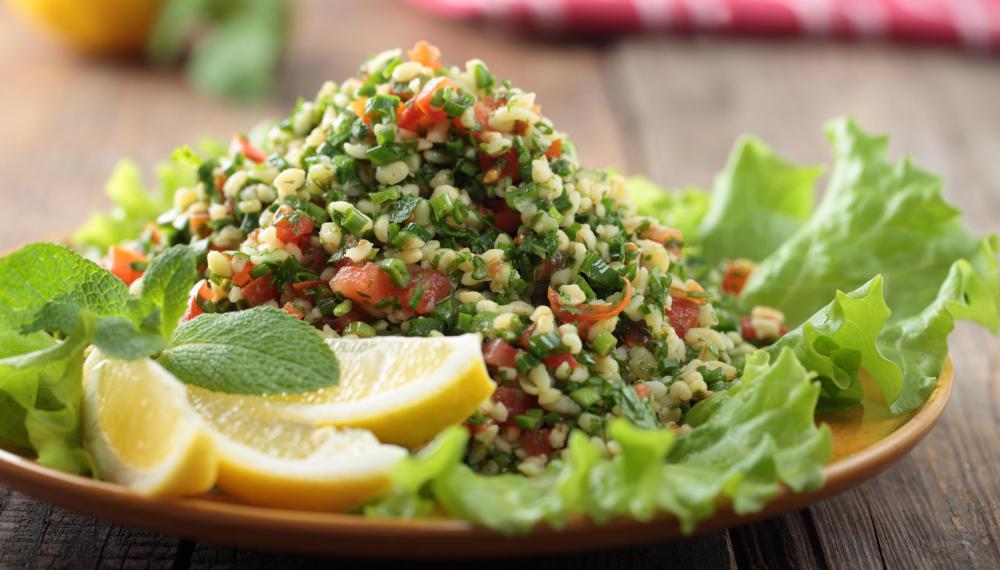
Incorporating bulgur into your diet is both nutritionally smart and easily accomplished. For a cold side-dish salad, combine prepared bulgur with chopped fresh vegetables such as cucumbers, tomatoes, scallions, and green peppers; minced fresh herbs; olive oil; and a bit of vinegar or freshly squeezed lemon juice. Middle Eastern tabbouleh is a classic example of this type of salad.
AS FEATURED ON:
AS FEATURED ON:


-
![Tabbouleh is a middle eastern salad made with bulgur.]() By: Lilyana VynogradovaTabbouleh is a middle eastern salad made with bulgur.
By: Lilyana VynogradovaTabbouleh is a middle eastern salad made with bulgur. -
![Wheat before cooking.]() By: PerytskyyWheat before cooking.
By: PerytskyyWheat before cooking. -
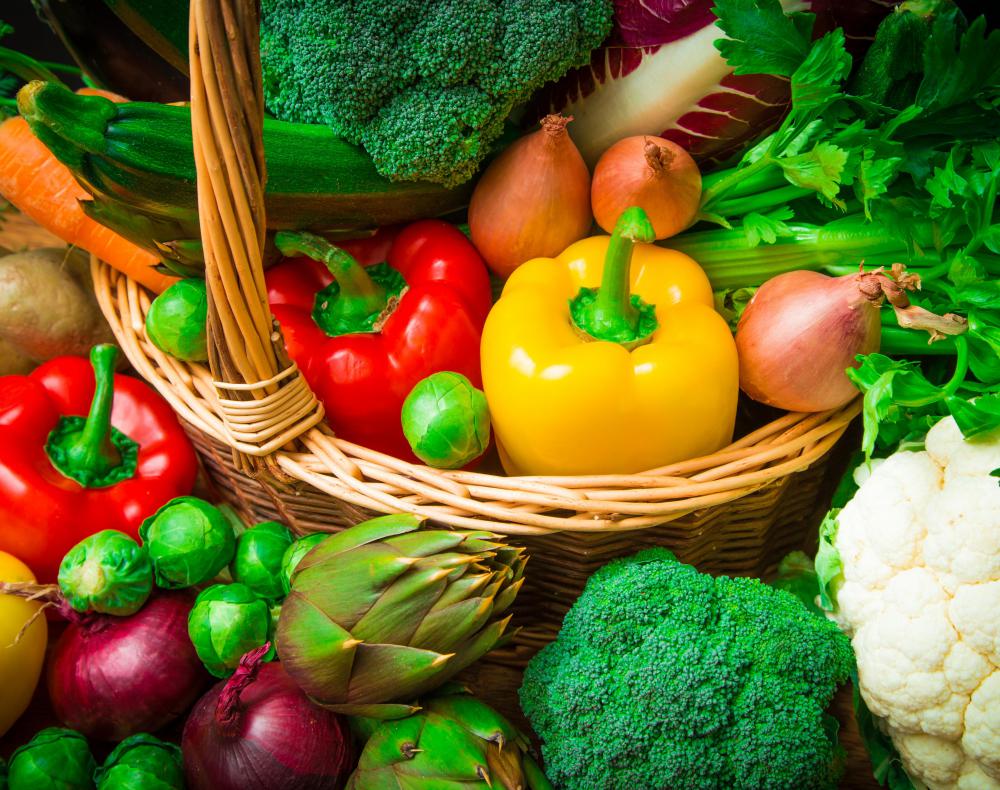
![For a chilled side dish, team bulgur with chopped fresh vegetables and a light vinaigrette.]() By: larcobassoFor a chilled side dish, team bulgur with chopped fresh vegetables and a light vinaigrette.
By: larcobassoFor a chilled side dish, team bulgur with chopped fresh vegetables and a light vinaigrette.

Discussion Comments
I have mixed half bulgur and half white rice in my regular rice cooking. This combination of bulgur and rice is nutritious, high in protein, low in sugar and very tasty with all Asian side dishes. It's also an excellent choice to make fried rice with the bulgur-rice. This diet has helped to control my sugar and triglyceride levels.
Is the bran removed?
@ysmina-- What kind of bulgur is used for couscous? I purchased some bulgur purely out of curiosity. I don't know if it's the most finely milled one because I hadn't seen bulgur before. But it looks pretty fine. Can I use this to make couscous?
I recently became a vegetarian and have been learning about different foods so that I can add some variety in my diet. I saw bulgur at the store and it looked interesting. I could tell it's something healthy because it's brown like whole-grain foods usually are.
But I'm not sure what to cook with it now. Bulgur couscous seems like a popular dish. Does anyone have a simple but delicious recipe for it?
@ysmina-- That's so interesting because I have a friend who is a Malungeon (Meluncan). Melungeons are a group of people in the US that are claimed to have Turkish ancestry. I've eaten at this friend's house a lot and they use a lot of bulgur in their cooking. It makes a lot of sense since bulgur is from the Mediterranean region. I guess they continued eating bulgur after coming to the United States. As far as I know, bulgur was not eaten here until very recently and it's all imported from elsewhere.
My favorite bulgur recipe is a salad my friend's mom makes with bulgur, spices, parsley, vegetables and pepper paste. It's so delicious and healthy, I love it. I've also learned to make it now. Bulgur is probably the easiest thing to cook. I make mine in the microwave, I just add some hot water to the bulgur and microwave it. Then I mix all the other ingredients. Super easy!
It can be a little difficult to find and buy bulgur. But it's available in most organic stores and of course at Middle Eastern grocery shops. Thankfully, it's cheap, so I can buy it in bulk.
@anon185023-- There really isn't any alternative I know of. Are you sure it's not available? It might have a different name. Sometimes it's called broken wheat or cracked wheat. The really finely milled bulgur is called selmonila.
I'm from Turkey and we eat bulgur a lot, in all forms. We make salads, rice, appetizers, even desserts from it. We use selmonila to make desserts called helva (halwa), the less finely-milled one for salads and the least milled one for rice.
We eat it even more than most Turkish people in my family because both my parents have diabetes. Since bulgur is whole grain and is rich in fiber, doctors recommend replacing regular rice with it. So we eat bulgur wheat instead of rice.
Don't think we can get it in Zimbabwe - what alternative can I use? --Wendy B.
Yes, as it is made from durum wheat, bulgur does contain gluten. --S. N. Smith
Does Tabbouleh contain gluten?
Post your comments