
At TheHealthBoard, we're committed to delivering accurate, trustworthy information. Our expert-authored content is rigorously fact-checked and sourced from credible authorities. Discover how we uphold the highest standards in providing you with reliable knowledge.
What is Bone Marrow Edema?
Bone marrow edema (BME) occurs when excess fluids in the bone marrow buildup and cause swelling. This condition is often caused by a protective reaction of the body in response to an injury or inflammation; when the body is injured, blood cells are sent to the place of injury, which may cause a buildup of fluids and result in bone marrow edema. It may also be a symptom of another medical condition or disease such as osteoporosis or tumors. Symptoms may or may not occur with this condition, with the most common symptoms being swelling and/or pain at the site of the injury. Depending on the severity of the swelling, treatment options may include rest, medications, steroid injections, or surgery.
A spongy, flexible substance inside of a bone, bone marrow is responsible for the production of new blood cells. These cells — red blood cells, white blood cells, and platelets — transport oxygen, fight off infection, and enable the blood to clot to stop excessive bleeding caused by an injury. Edema, or the inflammation caused by excess fluid, is typically a result of an underlying injury or condition, and can develop in both soft tissues and bone marrow.
Causes

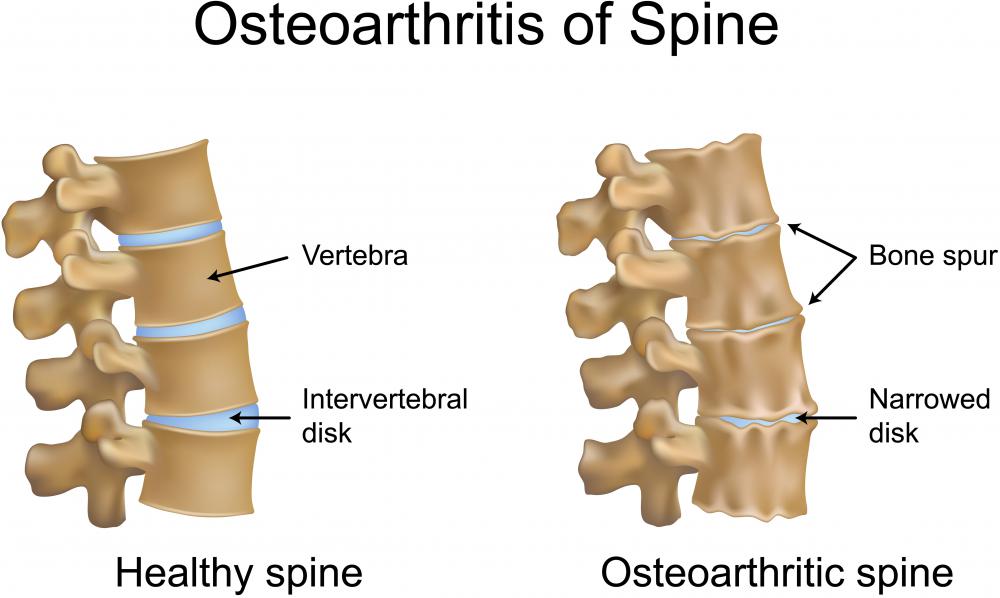
Swelling in the bone marrow resulting in bone marrow edema can occur with incidences like fractures, a break in the continuity of the bone, ligament injuries, and bone bruises. Another cause of BME is a condition known as synovitis, which is the inflammation of the synovial membrane, or the lining of joints. This excessive fluid buildup can also occur with conditions such as osteoarthritis, a joint disorder caused by wear and tear; osteoporosis, or softening of the bone; ischemia, a decrease of blood flow; and tumors.
Symptoms and Diagnosis

Bone marrow edema can be present with or without pain and dysfunction of the bone or joint involved. Often, the symptoms experienced relate to the underlying cause of fluid buildup. For example, reoccurring, mild to moderate pain may be present with structural changes, such as swelling, of the joint that occur over time. This can be seen with arthritis symptoms, when severe, acute pain may be a sign of some sort of trauma to the bone, as often seen with bruising or fractures. Excess fluid or inflammation that is a result of BME is commonly found through radiographic images such as magnetic resonance imaging (MRI); before MRIs were an option, it was not possible to diagnose this condition.
Treatment

Treatment for bone marrow edema directly corresponds to the underlying cause of swelling and fluid buildup. Proper care of acute injuries and management of medical conditions causing this increase in bone marrow fluid may ease symptoms of pain and dysfunction. The use of pain relieving analgesics, and in severe cases, steroid injections to decrease inflammation, may be used in some instances. Surgical intervention to repair damaged ligaments, pin fractures for proper healing, or the removal of tumor growths may be necessary to decrease chronic or long-lasting edema issues and pain. While treatments are available to help alleviate symptoms, there is currently no cure for bone marrow edema.
AS FEATURED ON:
AS FEATURED ON:


-
![A diagram of the anatomy of a bone, showing the bone marrow in red.]() By: AlilaA diagram of the anatomy of a bone, showing the bone marrow in red.
By: AlilaA diagram of the anatomy of a bone, showing the bone marrow in red. -
![Fluid can build up in the bone marrow with conditions such as osteoporosis.]() By: Alila Medical MediaFluid can build up in the bone marrow with conditions such as osteoporosis.
By: Alila Medical MediaFluid can build up in the bone marrow with conditions such as osteoporosis. -
![BME can be triggered by osteoarthritis.]() By: peterjunaidyBME can be triggered by osteoarthritis.
By: peterjunaidyBME can be triggered by osteoarthritis. -
![Inflammation of the synovial membrane lining the joints is one potential cause of bone marrow edema.]() By: AlessandroContadinInflammation of the synovial membrane lining the joints is one potential cause of bone marrow edema.
By: AlessandroContadinInflammation of the synovial membrane lining the joints is one potential cause of bone marrow edema. -
![Asian-American women are at high risk for developing osteoporosis.]() By: chuugoAsian-American women are at high risk for developing osteoporosis.
By: chuugoAsian-American women are at high risk for developing osteoporosis. -
![Smoking increases an individual's risk of developing osteoporosis.]() By: illustrez-vousSmoking increases an individual's risk of developing osteoporosis.
By: illustrez-vousSmoking increases an individual's risk of developing osteoporosis.





Discussion Comments
For patients suffering from BME or Bone Marrow Lesions in the hip, knee or ankle, there is a minimally invasive treatment option with promising clinical results.
So has anyone found the answer to how long a BME must be endured? How many months? Three? Six? Twelve? Somebody please share their recovery. I have had BME for over two months now. It's very depressing because I am very active.
I was told I have BME in my talus and Calcaneus. Just wondering if anyone else has dealt with this. My doc told me it was really rare but couldn't offer anything else other than that. Said rest was the only thing that could heal it.
Bone marrow edema may be as a result of osteomyelitis. I want to read more regarding bone marrow edema.
I have had BME in my ankle for over two months now. It didn't hurt much in the beginning and I thought it would end on its own and didn't tend to it. Then I ran a couple of half marathons and it worsened. I haven't been running for six weeks and I try to keep my ankle off strain as much as possible. It improved slightly once and then I did a short jog and am back to square one. I would advise everyone to refrain from stressful activities until you get rid of it completely.
A pet scan showed some bone marrow edema. What can this possibly mean? My spine is so inflamed and I am so much in pain daily. I have spasms in my back, and weakness in my back and legs. I am also disoriented, etc.
Magglio Ordonez, a former MLB outfielder had this condition and went to Europe (Austria) for treatment. His knee had bone marrow edema.
The next year he was nearly the MVP of the league, finishing second in voting. He batted .360 with 30 Homers and nearly 130 RBI's. The electrocorpeal shockwave therapy worked.
I thought I broke my ankle in April, so I went to the V.A. medical center to have it X-rayed. They X-rayed my toes (unknown to me), and told me to rest for two weeks. Three months later, I find out through a slipped word by my pcm that they never X-rayed my foot, and sent me home anyway, because the ER room was full. Yesterday I had an MRI done, and it came back that I had bone marrow edema. I have no idea where to go from here. The V.A. is no help, and rest didn't help.
I believe there are a couple of procedural kits available to treat this condition. I was talking to a friend of mine who said that there is a new product called Injectionplasty that treats this and will eliminate the pain. You may ask your surgeon or find one who knows about it.
I wish I had rested. I didn't know what was wrong. I thought I could just walk it off. Now my ankle is shot.
My son that had to wait five more weeks for reevaluation and still had pain when he started back up. He waited a total of three months with very limited wait bearing (just to walk around in the house). We did another MRI and the BME is gone. He has returned to activity, a gradual increase for four weeks now and is doing great. His return was monitored by a physical therapist. Next week he will be okayed to return to football!
I recently ruptured my Anterior Cruciate Ligament [ACL] and have partial tears in my Medial and Fibular Collateral Ligament [MCL, FCL] from playing rugby and after doing an MRI they let me know that they see Moderate BME. So far I've been told that surgery is the only answer in order to get this all figured out.
My son has been seeing an orthopedic specialist. He has had symptoms for six months and they were confirmed with MRI. According to the doctor, BME is often a precursor to bone, muscle and ligament tears and breaks, but they are often not discovered until after the injury, by an MRI.
My son has extreme pelvic BME but luckily, no fractures or avulsions at this point. His treatment is no activity or exercise that will put any stress on his pelvis. It has been five weeks since his diagnosis and he has been pain free for one week. He still cannot exercise for five more weeks and will then be re-evaluated.
When allowed, a return to exercise must be very slow and gradual. Any sign of pain will mean months of more rest. He is 15 and lifts weights for football. The doctor said his activity has been too intense for his young, growing bones. His doctor is awesome. He has been a physician for college football teams, professional minor baseball teams, an olympic consultant, and the USA swim team.
I've got bone marrow edema in my left shoulder from years of gym (weights) I haven't been able to train for the past two months. Talk about being depressed. This blows.
It's been about three months and I've had severe knee pain with swelling in my right knee and all the signs of tearing my knees and ligaments are evident. Are these signs? I've had an MRI and it confirmed bone marrow edema in the patella.
Meanwhile, the symptoms and pain went away for about 10 days, but re-emerged without any specific stimulation. How is this treated?
I have had bone marrow edema for more than two months now. This has forced me to stop all strenuous sporting activity as prescribed by my orthopedic doctor. Although the pain has reduced considerably, what I want to know if how much longer do I have to wait until I can resume full fledged sports? Are there any physiotherapy exercises which I can do, since I feel my knee has considerably weakened due to inactivity in the past two months? I'm 21 years old. Please advise.
I have a bone marrow edemas all over my left foot and ankle, and all bones are involved. I have not been able to walk for already two years, with intermittently getting a bit better and worse. It does not seem that the doctors here in D.C. understand what is going on? Can anybody offer help? Thank you.
I was told by doctor that i have mild marrow edema, that's what the MRI showed. the bone scan showed something different(bone marrow contusion). I'm very much confused at this stage.
In addition to varying severity of pain or discomfort, limited movement while resting or exercising may occur as a symptom of bone marrow edema.
Bone marrow edema may also be associated with rheumatoid arthritis and ankylosing spondylitis.
Post your comments