
At TheHealthBoard, we're committed to delivering accurate, trustworthy information. Our expert-authored content is rigorously fact-checked and sourced from credible authorities. Discover how we uphold the highest standards in providing you with reliable knowledge.
What Is Basal Ganglia Calcification?
Basal ganglia calcification, better known as Fahr’s Syndrome, is a disorder that is characterized by abnormal amounts of calcium mainly deposited in the basal ganglia, as well as the cerebral cortex. It is considered an inherited, genetically dominant condition. Fahr’s Syndrome is also known as non-arteriosclerotic cerebral calcification, idiopathic basal ganglia calcification, striopallidodentate calcinosis, cerebrovascular ferrocalcinosis, or Fahr disease.
This neurological disorder was first described in 1930, when a medical researcher by the name of Karl Theodor Fahr discovered deposits of calcium in places where they are not supposed to be, including on the basal ganglia and the cerebral cortex, which are connected with each other at the base of the forebrain. These structures are collectively responsible for functions such as eye movement, awareness, memory, and motor skills.

The most important symptoms of this condition are dementia and the erosion of motor function. Other symptoms include dysarthria, or loss of articulation in speech; spasticity, or stiffness of the limbs; and athetosis, or involuntary, writhing movements of the arms, fingers, neck and legs. Signs of Parkinson's disease, such as shuffling movement, lack of facial expression, and dystonia, or abnormal muscle contractions, are common. Basal ganglia calcification is also known to cause microcephaly, or shrinking of the skull, and the eye disorder glaucoma.

The cause of this disease is unknown, so it is sometimes referred to as an idiopathic disorder. It is also exceedingly rare. Some medical professionals, however, theorize that the disorder is inherited in cases when both the mother and father have what is referred to as a Fahr gene. The children then have a 25% risk of inheriting it as an autosomal recessive trait. This leads some people to classify the disease as a neurogenetic disorder, rather than being simply neurological.

IBGC1 is the official name of the Fahr gene; "IBGC" is an acronym for idiopathic basal ganglia calcification. The disease affects men and women alike, and it can also appear at any stage of life, although it seems that it occurs in people between the ages of 30 and 60 a little more frequently.
Since there is no cure for the disease, treatment usually consists of managing the symptoms. Failure to significantly address the disease medically only speeds its progress, which eventually results in disability and death. Even with the management of Fahr disease's symptoms, however, the prognosis for patients is very poor.
AS FEATURED ON:
AS FEATURED ON:


-
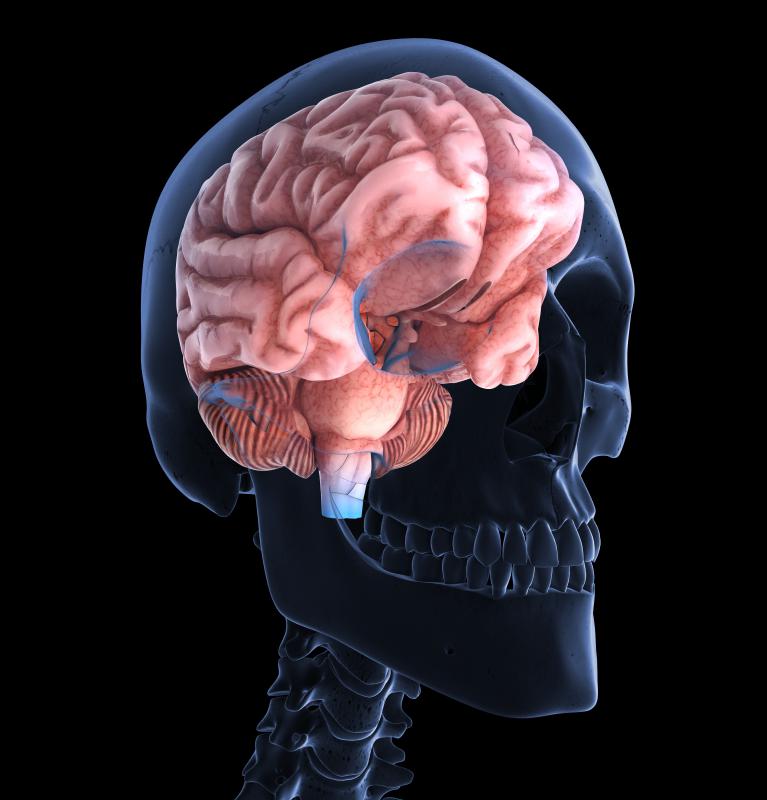
![Abnormal amounts of calcium in the brain, known as Fahr's Syndrome, can cause dementia and erosion of motor function.]() By: unlim3dAbnormal amounts of calcium in the brain, known as Fahr's Syndrome, can cause dementia and erosion of motor function.
By: unlim3dAbnormal amounts of calcium in the brain, known as Fahr's Syndrome, can cause dementia and erosion of motor function. -
![When the body's chemical balance is off, calcium may be deposited in the brain, causing a disorder which can diagnosed via a x-ray, CAT scan, or MRI.]() By: Rob ByronWhen the body's chemical balance is off, calcium may be deposited in the brain, causing a disorder which can diagnosed via a x-ray, CAT scan, or MRI.
By: Rob ByronWhen the body's chemical balance is off, calcium may be deposited in the brain, causing a disorder which can diagnosed via a x-ray, CAT scan, or MRI. -
![Symptoms of basal ganglia calcification may include dementia.]() By: SmailhodzicSymptoms of basal ganglia calcification may include dementia.
By: SmailhodzicSymptoms of basal ganglia calcification may include dementia. -
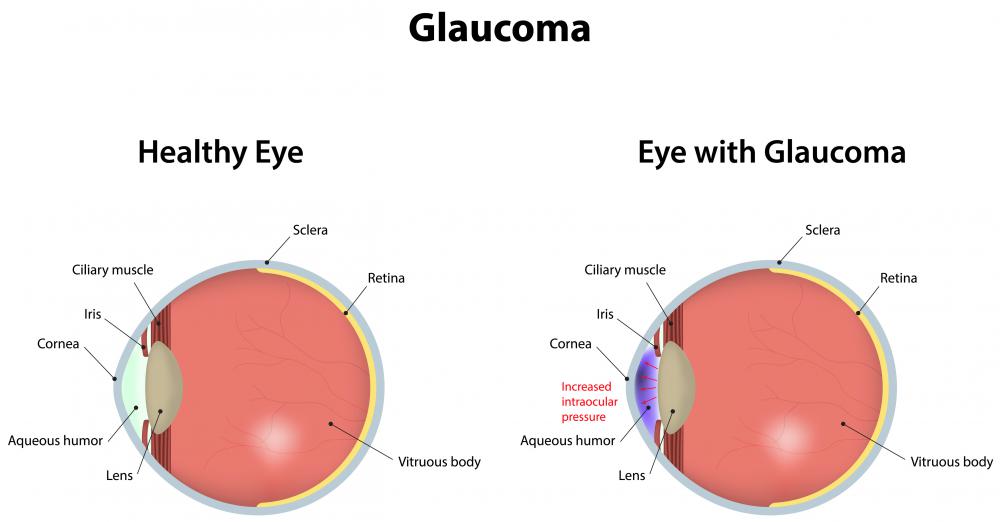
![Basal ganglia calcification may be the cause of glaucoma.]() By: joshyaBasal ganglia calcification may be the cause of glaucoma.
By: joshyaBasal ganglia calcification may be the cause of glaucoma. -
![Individuals suffering from glaucoma may experience tunnel vision.]() By: JPC-PRODIndividuals suffering from glaucoma may experience tunnel vision.
By: JPC-PRODIndividuals suffering from glaucoma may experience tunnel vision. -
![Symptoms of basal ganglia calcification may include stiffness of the limbs.]() By: lightwavemediaSymptoms of basal ganglia calcification may include stiffness of the limbs.
By: lightwavemediaSymptoms of basal ganglia calcification may include stiffness of the limbs.




Discuss this Article
Post your comments