
At HomeQuestionsAnswered, we're committed to delivering accurate, trustworthy information. Our expert-authored content is rigorously fact-checked and sourced from credible authorities. Discover how we uphold the highest standards in providing you with reliable knowledge.
What is Bamboo Fabric?
 Mary McMahon
Mary McMahon
Mary McMahon
Bamboo fabric is a natural textile made from the pulp of the bamboo grass. Bamboo fabric has been growing in popularity because it has many unique properties and is more sustainable than most textile fibers. Bamboo fabric is light and strong, has excellent wicking properties, and is to some extent antibacterial. The use of bamboo fiber for clothing was a 20th century development, pioneered by several Chinese corporations.
Bamboo fiber resembles cotton in its unspun form, a puffball of light, airy fibers. Many companies use extensive bleaching processes to turn bamboo fiber white, although companies producing organic bamboo fabric leave the bamboo fiber unbleached. To make bamboo fiber, bamboo is heavily pulped until it separates into thin component threads of fiber, which can be spun and dyed for weaving into cloth.

Bamboo fabric is very soft and can be worn directly next to the skin. Many people who experience allergic reactions to other natural fibers, such as wool or hemp, do not complain of this issue with bamboo. The fiber is naturally smooth and round without chemical treatment, meaning that there are no sharp spurs to irritate the skin.
Bamboo fabric is favored by companies trying to use sustainable textiles, because the bamboo plant is very quick growing and does not usually require the use of pesticides and herbicides to thrive. As a result, plantations can easily be kept organic and replanted yearly to replenish stocks. The process of making unbleached bamboo fiber is very light on chemicals that could potentially harm the environment.

Just because a fabric is made with bamboo doesn't mean it's necessarily eco-friendly though. The US Federal Trade Commission (FTC) has sent out several warnings about rayon fabrics made with bamboo because of pollution created during the manufacturing process, so eco-conscious consumers should be sure to check the origins of their fabric.
In many textile forms, bamboo retains many of the properties it has as a plant. Bamboo is highly water absorbent, able to take up three times its weight in water. In bamboo fabric, this translates to an excellent wicking ability that will pull moisture away from the skin so that it can evaporate. For this reason, clothing made of bamboo fiber is often worn next to the skin.

Bamboo also has many antibacterial qualities, which bamboo fabric is apparently able to retain, even through multiple washings. This helps to reduce bacteria that thrive on clothing and cause unpleasant odors. It can also kill odor causing bacteria that live on human skin, making the wearer and his or her clothing smell more sweet. In addition, bamboo fabric has insulating properties and will keep the wearer cooler in summer and warmer in winter. The versatility of bamboo fabric makes it an excellent choice for clothing designers exploring alternative textiles, and in addition, the fabric is able to take bright dye colors well, drape smoothly, and star in a variety of roles from knit shirts to woven skirts.
Mary McMahon
Ever since she began contributing to the site several years ago, Mary has embraced the exciting challenge of being a HomeQuestionsAnswered researcher and writer. Mary has a liberal arts degree from Goddard College and spends her free time reading, cooking, and exploring the great outdoors.
Learn more...
Mary McMahon
Ever since she began contributing to the site several years ago, Mary has embraced the exciting challenge of being a HomeQuestionsAnswered researcher and writer. Mary has a liberal arts degree from Goddard College and spends her free time reading, cooking, and exploring the great outdoors.
Learn more...AS FEATURED ON:
AS FEATURED ON:


-
![Bamboo fabric.]() By: sootraBamboo fabric.
By: sootraBamboo fabric. -
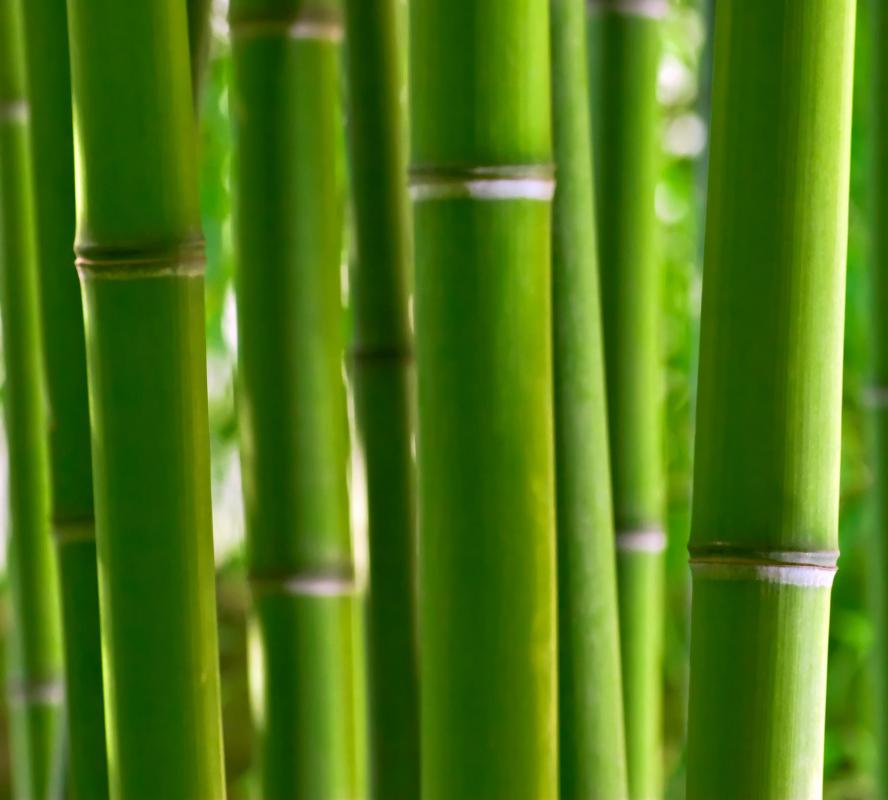
![Bamboo stalks.]() By: MaceoBamboo stalks.
By: MaceoBamboo stalks. -
![Bamboo fabric is known for being gentle on sensitive skin.]() By: Poulsons PhotographyBamboo fabric is known for being gentle on sensitive skin.
By: Poulsons PhotographyBamboo fabric is known for being gentle on sensitive skin. -
![Bamboo fabric may help reduce bacteria that thrive on clothing and cause unpleasant odors.]() By: Vera KuttelvaserovaBamboo fabric may help reduce bacteria that thrive on clothing and cause unpleasant odors.
By: Vera KuttelvaserovaBamboo fabric may help reduce bacteria that thrive on clothing and cause unpleasant odors.

Discussion Comments
Bamboo will grow just about anywhere, and is pretty invasive once planted. It's also very cheap, grows very fast, and has a ton of uses that make it competitive with plastic, which is basically made from non-renewable and expensive oil!
It's not found primarily in rainforests; it's found in backyards everywhere, along with growing alongside rice paddies, and elsewhere.
What are the disadvantages of bamboo fiber?
@anon112099: Bamboo for use as bamboo fiber is another kind of bamboo, so don't worry about it.
Bamboo fiber is really widely used in the production of towels, underwear, scraves, bed sheets and so on. We are from China and sell bamboo products overseas, customers do enjoy the wearing experience.
However, have to say that the durability of 100% bamboo fiber products is not as good as cotton.
Bamboo sheets are a beautiful, natural solution for those seeking an eco friendly alternative to cotton. Thankfully, the FTC was proven wrong with their misgivings about bamboo fabric.
Bamboo is not a textile. It is illegal in the USA, Canada and the European Union to label it as such. It has to be labeled as viscose or rayon from bamboo pulp. It is also illegal in the USA to make any claims of being anti-microbial as there is no scientific evidence that the fabric possesses any such qualities. Nor can it be described as "eco-friendly," as the chemical processes the raw material have to go through to produce the pulp uses harsh and polluting chemicals.
The relevant notice is on the Federal Trade Commission website.
This bamboo fabric is really rayon - a man made textile.
Cariloha makes the best bamboo workout line. They don't sell it online, but their stores carry it if you call them directly. And they have an excellent warranty.
@anon112099: The bamboo used for fabric is a different species to the one the pandas use as a food source.
The amount of misinformation here is humorous. The FTC has sued many retailers about promoting bamboo fabric when it is really rayon. Using bamboo as the source of rayon is not any better than using any other cellulose source. Also, the process to convert bamboo into rayon is not environmentally friendly. Links are not permitted here, but you can easily find articles about this.
do you have any idea how much would be needed for capital to start a business in manufacturing a bamboo fabric out of bamboo fiber? And what would it credit the human being, financially and environmentally?
@message 46: Chlorine is a chemical that's half part of table salt that we eat and hydrogen is the one from water, so, by your argument, you should be able to drink hydrochloric acid and live. Please try it out and let me know the result. If you don't post any further I will understand what happened to you!!!
And, cotton is not nature unfriendly or pesticide dependent, it's humans who are. Our greediness makes us 'improve' farming by adding pesticides and fertilizer so that we can meet the greed and growing demand of us humans.
Bamboo: Because the fibers of bamboo are very short (less than 3mm), they are impossible to transform into yarn in a natural process and bamboo is often grown without pesticides or fertilizers.
My bamboo short sleeved shirt has shrunk. Is there anything that can be done to reverse the process?
Using bamboo for fabric will not lead to the endangerment of Pandas. Bamboo is an incredibly hearty plant, growing almost three meters a day. It is not harvested from the root, but from the ground up. The root system of bamboo is something very difficult to get rid of, as it branches out underground and will sprout new plants even if you think you've removed it all.
i thought pandas are becoming endangered because of the lack of bamboo/ bamboo forests?
Ehy use bamboo if the pandas need it?
i don't get it.
bamboo fabric is good in its way but bad also.
I just received a bamboo blanket and it is hands down the best feeling fabric on bare skin.
i would like to know more about the antibacterial properties of bamboo fiber. kindly specify its chemical composition and which substitute is the reason for this above mentioned property.
Is it possible to buy some machinery and start making bamboo fiber or rayon. If possible can you please specify the name of the company that supplies this machinery. thank you
Wow! Some of these people are way, way off base if they actually think that using bamboo is bad for the environment!
True, there are no doubt third world countries that are using products from rainforests due to the extremely destitute (and often corrupt) nature of their country's economy, but come on people, bamboo behaves like a very aggressive weed in any environment that can support it.
It grows maniacally crazy in the Southeastern U.S. and if one plants it just as decoration, very serious steps must be taken to ensure it does not overtake the property upon which it is planted. There is no possibility of the extinction of bamboo.
This is an awesome "green" product at virtually all levels.
Where can i buy clothing that is made from bamboo?
Bamboo fabric is made from the bamboo plant that can be found mainly in rainforests and will soon become extinct, making bamboo fabric and products extremely expensive.
Bamboo fibers clothes has many advantage,they are very soft,really better than cotton fabric.
When I first use bamboo fiber towels, I give them to my families as a gift.
It's kind of 'Green' fabric with antibiosis and anti-UV performance. It's usually blended with elaspane to get the well stretch.
Does bamboo last longer than any other fiber?
-- questioner
thanks. this helps me with my report.
give me the complete procedure for bamboo yarn dyeing.
Wow who are the marketing idiots responsible for this mess? It's clear that they were afraid that calling it "bamboo rayon" would cause people to dismiss it as nothing new.
So they concocted a marketing campaign designed to "hide" its association with rayon.
The irony is the fabric is honestly a much friendlier fabric than say cotton.
It doesn't require an ocean of pesticides, nor is it grown in dry areas requiring lakes of irrigation. That alone justifies the claim of being more environmentally friendly.
The idiot marketers' mistaken attempts have brought out the cynical, the foolish and the fostered the paranoia in these posts.
Sodium hydroxide is a safe chemical. Most people know of it by its other name, "lye," as in lye soap.
It is definitely environmentally friendly. It's sodium (1/2 of salt) and hydrogen and oxygen (the hydroxide part).
Carbon disulfide is similar. It's dangerous if you want to swim in it perhaps, but otherwise it's carbon and sulfur - very common elements that are everywhere, and not dangerous in normal use.
Anything used improperly or in gross excess can be deadly. Water can kill you if you drink too much at one time!
Rayon has been around for ages, but their manufacturing process using bamboo is a new twist that apparently makes the production a lot cheaper.
As for land being taken to grow more bamboo, it's pretty naive to think such land would be left alone otherwise. If history is a guide, it'd be taken over to do seriously environmentally unfriendly crops - like cotton or any water hungry, pesticide dependent crop - neither of which bamboo is!
People are right to be suspicious, but don't blame bamboo rayon, blame the idiot marketers who, in their quest for the big bucks, tried to market Bamboo fiber as a "new" product capable of commanding a huge premium over its sister fabric rayon.
Ironically, the truth would have served the fabric many times better and probably succeeded in gaining acceptance quicker and faster.
What they would have lost in margin they would have gained in market share.
Yet another lesson on the high price of greed both to society and stupid businessmen who treat customers as idiots.
can a paper mill use bamboo fiber to make paper.
What are the tensile strength properties of this material? For example is it flexible to be used in an industrial oven as a continuous driven belt the same as a fiberglass belt?
are bamboo made garments avialable in india?
Is bamboo fabric used in panties as breathable as cotton and as good for feminine hygiene?
Cotton, though a "natural" fabric, requires a lot of fertilizer because it sucks all the nutrients out of the soil. If you have ever had bamboo in your yard, it requires little fertilizer and becomes a pesky weed sending out runners. So bamboo can be grown without the level of chemicals that cotton requires, and without chopping down vast forests. It's just a big, tall, thick grass, with lots of uses.
To reduce one concern posted here, there are two methods for manufacturing fabric from bamboo fibers. One is the chemical process previously mentioned that uses sodium hydroxide and carbon disulfide in processing (both of which are reported to be reclaimed and reused) which produces the rayon type cloth. The second is the "mechanical" or "Natural" process in which the bamboo is cut into strips, steamed, crushed, and then soaked in an enzyme bath (the enzyme comes from a white wood fungus) until the fibers separate. Afterwards the fibers are carded, spun, and woven much like cotton.
The negative issues with bamboo is that it may use Panda habitat, and that it uses sodium hydroxide and carbon disulfide in processing. Carbon disulfide, according to the material I read, may affect reproduction.
Currently bamboo fiber is patented by a large Chinese corporation. China Bambrotex is the sole owner of Bamboo Fiber production technique,--blah blah. they offer free testing of your bamboo fiber to make sure it comes from them and not other illegal bamboo manufacturers.
is it true that in order for the new bamboo movement to manufacture products fast enough, whole forests of regular trees are getting cut down in order for bamboo forests to be planted?
bamboo is actually rayon. any time you have to "pulp" a fiber and put it through a spinnerette, it is called rayon.
Anon- You asked about tie dying bamboo - it is *great*- Check out Dharma Trading and their selection of bamboo goods.
We have settings on our irons for "cotton", "polyester" etc. Now we need a new setting called "bamboo".
I have a few pairs of bamboo underwear and they are amazing. most comfortable underwear i've ever own. i will definitely be looking for more bamboo fabrics.
Better use Google. This author has a very restricted view of what bamboo fabric is and how it is manufactured.
tell me the disadvantages of the bamboo fabric or fiber
For tie-dye, how does bamboo fabric compare to 100% cotton?
Why is it that my bamboo socks create more swelling and sweat than my cotton socks in a walking cast?
I wash my bamboo towels on a cold wash with just a bit of detergent only for the lemony smell. I tried washing them without detergent and they came out fresh but I like the smell of lemons.
I've heard bamboo fabric shrinks if you put it in a hot wash so I don't want to risk it. No need anyway, if they come out clean on cold.
Bought my set last Christmas, going to save up for next Christmas for the bamboo dressing gown as well.
I bought a few bamboo t-shirts and it's amazing how much better they are than the standard cotton t-shirt. I have washed them so many times and they still feel like a soft new t-shirt. I hope to see more bamboo clothing!
"Bamboo" fiber is actually just rayon. For a really eco-friendly cellulosic, try tencel.
Is bamboo fabric is suitable for all kinds of printing? Give the advantage and disadvantage of bamboo fabrics. Is bamboo fabric is suitable for all home textile products? If not means give me the reasons.
I was just at Skinstinct in Chicago and they have a large selection of bamboo products: t-shirts, robes, towels, dresses and many other articles of clothing. I was impressed with the quality of bamboo. - Walt
For those disappointed with modal, try bamboo. I have bamboo-cotton blend bedsheets and bath towels, and they are the softest I have ever used and the fabric holds up very well. I've seen it also called bamboo rayon, but I'm not sure if it is rayon in the sense if it being treated with caustic soda. The towels are especially nice because they are very absorbent (better than cotton), very little lint (again, better than cotton), very soft, have a nice weight to them, and can go longer than cotton between washing. I think their antibacterial qualities help with that. Also, I've never had to iron the sheets; I never noticed wrinkles even after they've been sitting in the bottom of a laundry basket for days. I bought mine at Target, but they're hard to find now.
Skinstinct in Chicago makes bamboo clothing and they sell bathrobes and bath towels form bamboo too!
Comfort properties of bamboo knitted fabrics is more finer and smoother than cotton, hemp, polyester. It's basically an "eco silk". There are few companies currently manufacture woven terry cloth and terry cloth velour out of bamboo into towels and bathrobes. Some are making 100% bamboo towel or robe and others are blending bamboo with cotton or polyester or spandex. For anyone who's looking to try bamboo towel or robe for home, 100% bamboo is way softer than the blend.
Disadvantage of bamboo fabric is that since they are so much softer, the users have to follow the caring instruction; or else, the fabric will shrink. Because bamboo is a natural fiber, bleaching should really be avoided. The rate any fabric breaks down is really determined by the way it's laundered rather than fabric type.
"Bamboo fabric has many advantages, such as Natural" Oh, I guess in a way that cotton or wool are not.
my question: who makes running apparel using bamboo? And what's your experience in running in them? .. easy to wash? how many washings before they need to be tossed?
what about the comfort properties of bamboo knitted fabrics?
What are the fiber content percentage in bamboo yarn?
Do they make woven terry cloth or terry cloth velour out of bamboo? Like towels and bathrobes ?
is there a certain type/species of bamboo that is used for making fabric?
Are there any disadvantages to bamboo fabrics?
What about wrinkles? Is bamboo fabric wrinkly after washing? If so, how easily are the wrinkles removed? And what setting on the iron is used?
After weaving, what are the best finishing routes for fabric with other natural and man made fibers?
Does bamboo fabric tolerate bleaching with more or less resiliency than cotton?
Does bamboo fabric break down under normal laundering any faster than cotton?
Bamboo fabric has many advantages, such as Natural anti-bacterial,Breathable and Cool.
What is sequence of bamboo yarn manufacrure?
Post your comments