
At DelightedCooking, we're committed to delivering accurate, trustworthy information. Our expert-authored content is rigorously fact-checked and sourced from credible authorities. Discover how we uphold the highest standards in providing you with reliable knowledge.
What Is Autolyzed Yeast?
 Michael Pollick
Michael Pollick
Michael Pollick
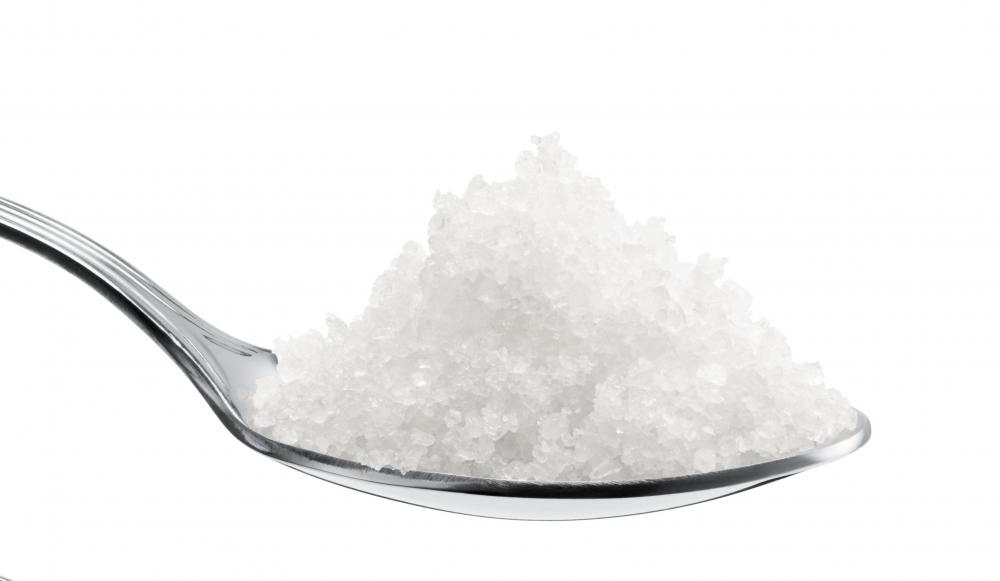
In general baking terms, salt and live yeast should never meet directly because only bad things can happen. The salt will instantly and irrevocably kill the yeast, rendering it completely useless for gas generation. This is why bakers will keep at least one layer of ingredients between the live activate yeast and any added salt. When salt is deliberately added to live yeast, however, it becomes an entirely new food ingredient known as autolyzed yeast.
The interaction between salt and live yeast creates a chemical process called autolysis. Autolysis is essentially the self-destruction or self-digestion of an organism by its own enzymes. Salt does not "kill" yeast as much as it causes the live yeast's digestive enzymes to eat themselves. The result is an inactive yeast with a different concentration of proteins. This new food product can be further processed to create a yeast extract.

Many people may not recognize autolyzed yeast as an ingredient in many of their favorite processed foods, but they might recognize an ingredient derived from it: MSG, or monosodium glutamate. Both are used as flavor enhancers in processed foods. Autolyzed yeast extract is also used by itself in processed food spreads such as Vegemite. Because of its high protein content, this yeast generally has a hearty flavor similar to beef, which is why it is often used to give processed foods a meaty or savory undertone.

Both MSG and autolyzed yeast enhance the flavor of food by chemically altering the consumer's taste buds. Even though they are both often used for the same purpose, they are not exactly the same. Autolyzed yeast has a substantial amount of glutamate, but it comes nowhere close to the amount found in MSG. MSG is very concentrated and almost entirely composed of glutamates.

There is some controversy over the use of autolyzed yeast and other flavor enhancers, however. A number of people are extremely sensitive to MSG, which can trigger a condition known as a "Chinese restaurant headache." Specifically, the sodium and the glutamates can trigger an allergic reaction in certain people.
US Food and Drug Administration (FDA) requires manufacturers to list added MSG as an ingredient on the packaging of products. MSG is also found naturally in some foods and when a food product contains naturally found MSG, the FDA does not require that it be listed on the packaging. However, manufacturers cannot claim that their products are free of MSG, even if the MSG is found naturally in the ingredients.
Michael Pollick
A regular DelightedCooking contributor, Michael enjoys doing research in order to satisfy his wide-ranging curiosity about a variety of arcane topics. Before becoming a professional writer, Michael worked as an English tutor, poet, voice-over artist, and DJ.
Learn more...
Michael Pollick
A regular DelightedCooking contributor, Michael enjoys doing research in order to satisfy his wide-ranging curiosity about a variety of arcane topics. Before becoming a professional writer, Michael worked as an English tutor, poet, voice-over artist, and DJ.
Learn more...AS FEATURED ON:
AS FEATURED ON:


-
![Autolyzed yeast is made when salt is deliberately added to live yeast.]() By: OkeaAutolyzed yeast is made when salt is deliberately added to live yeast.
By: OkeaAutolyzed yeast is made when salt is deliberately added to live yeast. -
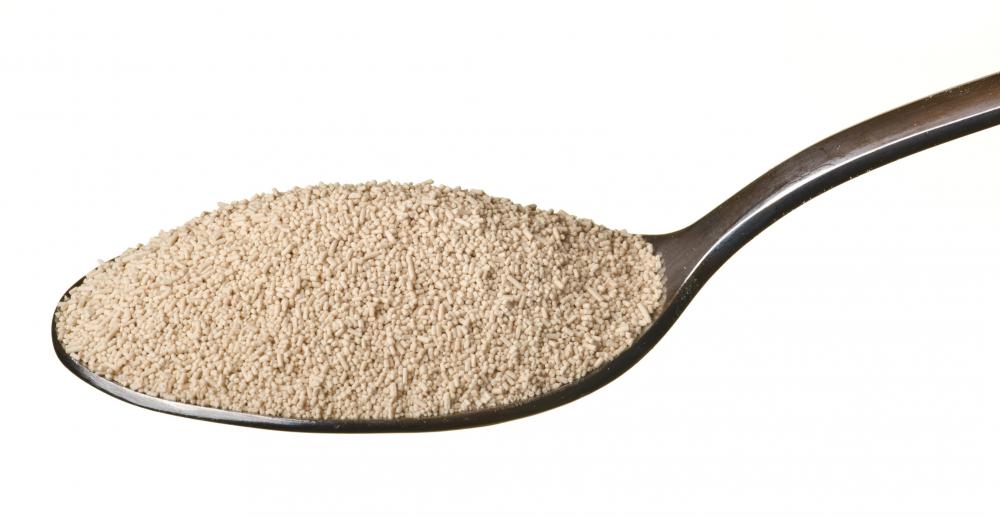
![Autolyzed yeast.]() By: RobinsonAutolyzed yeast.
By: RobinsonAutolyzed yeast. -
![Autolyzed yeast can enhance flavor by chemically altering one's taste buds.]() By: ikoAutolyzed yeast can enhance flavor by chemically altering one's taste buds.
By: ikoAutolyzed yeast can enhance flavor by chemically altering one's taste buds. -
![Autolyzed yeast is found in vegemite.]() By: MediablitzImagesAutolyzed yeast is found in vegemite.
By: MediablitzImagesAutolyzed yeast is found in vegemite. -
![People who are sensitive to MSG may experience a condition known as "Chinese restaurant headache."]() By: Andrzej WiluszPeople who are sensitive to MSG may experience a condition known as "Chinese restaurant headache."
By: Andrzej WiluszPeople who are sensitive to MSG may experience a condition known as "Chinese restaurant headache."



Discussion Comments
Great post. I recently bought Yves Veggie Cuisine (Veggie Deli Bologna) at Whole Foods, and it had autolyzed yeast in it. I was not sure what it was but I should have known better. Rule of thumb: If you can't pronounce the ingredient(s) or know what they are, don't eat the product.
How the heck do you keep a layer between the live yeast and the salt? Eventually the two will come in contact with each other.
This was the best article I've read on the subject so far. Thanks so much!
@anon232471: I purchased some Pacific Natural *Organic* French Onion soup last weekend and one of the ingredients is: autolyzed yeast extract. According to Pacific Natural's listing in their Nutrition pdf, this soup is vegetarian. Their nutrition information is online.
Someone wrote a question: What are we supposed to do now?
I use my facebook account (like) of products and foods and when they post requesting feedback, I tell them the truth. Please, make low-sodium foods with no MSG or the yeast extract. If someone requests gluten-free, then I'll add my two cents.
I also contact them via the direct website requesting No MSG/autolyzed yeast usage in their products, and always request a low salt version (and to use sea salt instead).
The more we put the words out there, the more the public will learn. and the more the public learns,
the more we'll push the producers to realize the number of people affected by these manufacturing choices and make appropriate changes.
Odd story: It seems it costs more to manufacture the exact same foods, but, removing the added salt doubles the cost. Why is that, I wonder?
Can you please confirm whether autolyzed yeast is vegetarian or not?
I have known for several years about the connection between MSG and anything that is labeled autolyzed or hydrolyzed, especially after reading Dr. Blaylock's book "Excitotoxins".
I made another interesting discovery about a month ago when I was stricken with a near blinding headache (the kind I get when I come in contact with MSG, etc.). My body was trying to get rid of something, I felt. So, doing a little investigation, I started "retracing" everything that I had been doing. Come to find out, I had been using the Jergen's Natural Glow lotion all over my body for several days. I thought I would just see what the ingredients were, and lo and behold, it contains hydrolyzed corn protein and some sort of autolyzed product. I guess I had been poisoning myself. I never thought about "non-food" labels, which I will be reading from now on.
Thank you so much for sharing this information. I finally discovered that MSG and these type of additives are the causes of my terrible tension migraines. Also get them from some food coloring (spec. yellow #5). Wish the general public was more aware of these things; sad that people are living in pain when they don't have to be!
does it have yeast leavening?
I get severe migraines from MSG and foods containing it. I recently purchased some "storable food" that has a long shelf life. The company makes it clear that their food/foods don't contain any added MSG.
What they did not clearly state is that they use autolyzed yeast extract in their foods. I was wondering why I was getting severe migraines every time I ate these foods. Now I understand why.
Thank you for posting this article. I found it to be very enlightening.
I have experienced high blood pressure symptoms (waking up in the middle of the night with my heart beating out of my chest) along with a terrible dull headache (sometimes) and a terrible coating in my mouth! Yuck! I am just so fed up with trusting the FDA. I now read all labels, but feel the information out there isn't current.
Autolyzed yeast is a definite no-no for people with interstitial cystitis also. I just found out why thanks to your information. Thank you!
i think my aching all over was due to eating corn snacks with this in it.
I just discovered that autolyzed yeast can contain gluten. Also, so many people are allergic to MSG. What are we supposed to do now?
Post your comments