
At DelightedCooking, we're committed to delivering accurate, trustworthy information. Our expert-authored content is rigorously fact-checked and sourced from credible authorities. Discover how we uphold the highest standards in providing you with reliable knowledge.
What is Aniseed?
 Tricia Christensen
Tricia Christensen
Tricia Christensen
Aniseed, commonly also known as “anise,” “anis,” or “anise seed,” is an herb with a faint licorice taste that is common in Mediterranean cooking. Its formal name is pimpinella anisum, and it is in the biological family Apiaceae — the same family as parsley, dill, coriander, and cumin. Both seed and leaves carry the plant’s distinctive licorice taste, but the seeds are usually the only parts that humans consume. They are often used to flavor baked goods and savory broths; their essential oils are also believed to have some medicinal properties.
Primary Characteristics

The anise plant is an annual plant, which means that it typically survives for just one season — it sprouts in the early spring, is at the height of its seed production in the midsummer, and dies back in the fall. The seeds it drops in the surrounding ground are its primary means of reproduction.
As herbs go, aniseed is often one of the more bushy plants; it commonly grows to at least 3 feet (about 1m) in height and has feathery, dense leaves. In the early summer, these leaves give way to white flowers that will ultimately produce the sought-after seeds. People who cultivate aniseed professionally will often harvest the seeds as soon as they are ripe, though it is also common to wait for them to fall before gathering them up.
Growing Area and Cultivation

The plant is native to the coastal areas of the Mediterranean, including France, Italy, Greece, and Turkey; it is also commonly seen in parts of North Africa. So long as the plant has good soil, regular sun, and a generally constant climate, it can thrive in a range of places and is grown pretty much everywhere in the world today. Many growers even have good luck cultivating it indoors. It is a non-toxic plant, which makes it attractive for gardeners with young children or pets. Dog owners should use a bit of caution, though — dogs often respond to aniseed the way cats do to catnip, that is, by becoming very animated and often hyperactive.
Use in Cooking and Baking

Despite its near worldwide cultivation, anise remains most popular in recipes from the Mediterranean region. It is very common in baked goods such as breads, cakes, and cookies; the slight sweetness of the herb adds a complexity and interesting dimension to otherwise more “ordinary” recipes. Many cooks will also add it to soups, stews, and savory sauces for similar reasons. The herb tends to open when simmered, which can release many of its essential oils. The result is often an intricately flavored meal that does not require much effort on the part of the cook.

Aniseed is also the predominant flavor in a number of Mediterranean liqueurs. The Greek drink ouzo carries its distinctive flavor, as do the Italian Sambuca, the French Pernod, and the Turkish Arak. Most of these are served as cordials and after dinner drinks.
Common Substitutions
Cooks who do not have ready access to aniseed can often imitate its flavor by using other similarly-flavored substances. Fennel seeds are often the simplest substitution. Fennel is a root vegetable that is widely available in most parts of the world. Like anise, it carries a slight licorice flavor in seeds, leaves, and root. Fennel seeds are not quite the same, but they will impart a similar flavor.

Star anise is another possible substitution. A lot of people confuse aniseed with star anise, but they are in fact quite different plants. The star anise is an evergreen shrub that grows in mainland Asia, particularly China and India. It gets its name from the star-shaped pod in which its seeds grow. The taste of these seeds is very similar to the seeds of the herb, but the two do not really share any biological similarity.
Medicinal and Health Properties

In addition to its use in cooking, aniseed also has a long history as a medicinal herb. The ancient Romans thought the plant promoted better sleep, and the seed is still used in herbal teas for this purpose. The oil and sometimes the seeds have also been used by a variety of cultures to help with digestive problems. This may be part of the reason why drinks like ouzo and sambuca are popularly consumed after large meals.

The herb also has antiparisitic properties, which makes it useful for treating some fungal infections; rubbing the seed’s oils on the scalp may also help ward off lice. The oil can be helpful at relieving nasal congestion and speeding the cure of the common cold, as well.
Tricia Christensen
Tricia has a Literature degree from Sonoma State University and has been a frequent DelightedCooking contributor for many years. She is especially passionate about reading and writing, although her other interests include medicine, art, film, history, politics, ethics, and religion. Tricia lives in Northern California and is currently working on her first novel.
Learn more...
Tricia Christensen
Tricia has a Literature degree from Sonoma State University and has been a frequent DelightedCooking contributor for many years. She is especially passionate about reading and writing, although her other interests include medicine, art, film, history, politics, ethics, and religion. Tricia lives in Northern California and is currently working on her first novel.
Learn more...AS FEATURED ON:
AS FEATURED ON:


-
![Anise is commonly used in cookies.]() By: Stefano PareschiAnise is commonly used in cookies.
By: Stefano PareschiAnise is commonly used in cookies. -
![Aniseed is an ingredient commonly found in herbal teas that are intended to help with sleep problems.]() By: cobraphotoAniseed is an ingredient commonly found in herbal teas that are intended to help with sleep problems.
By: cobraphotoAniseed is an ingredient commonly found in herbal teas that are intended to help with sleep problems. -
![Aniseed oil can help relive nasal congestion.]() By: bsitesAniseed oil can help relive nasal congestion.
By: bsitesAniseed oil can help relive nasal congestion. -
![Anise or aniseed (Pimpinella anisum).]() By: David MonniauxAnise or aniseed (Pimpinella anisum).
By: David MonniauxAnise or aniseed (Pimpinella anisum). -
![Jagermeister has an anise flavor.]()
Jagermeister has an anise flavor. -
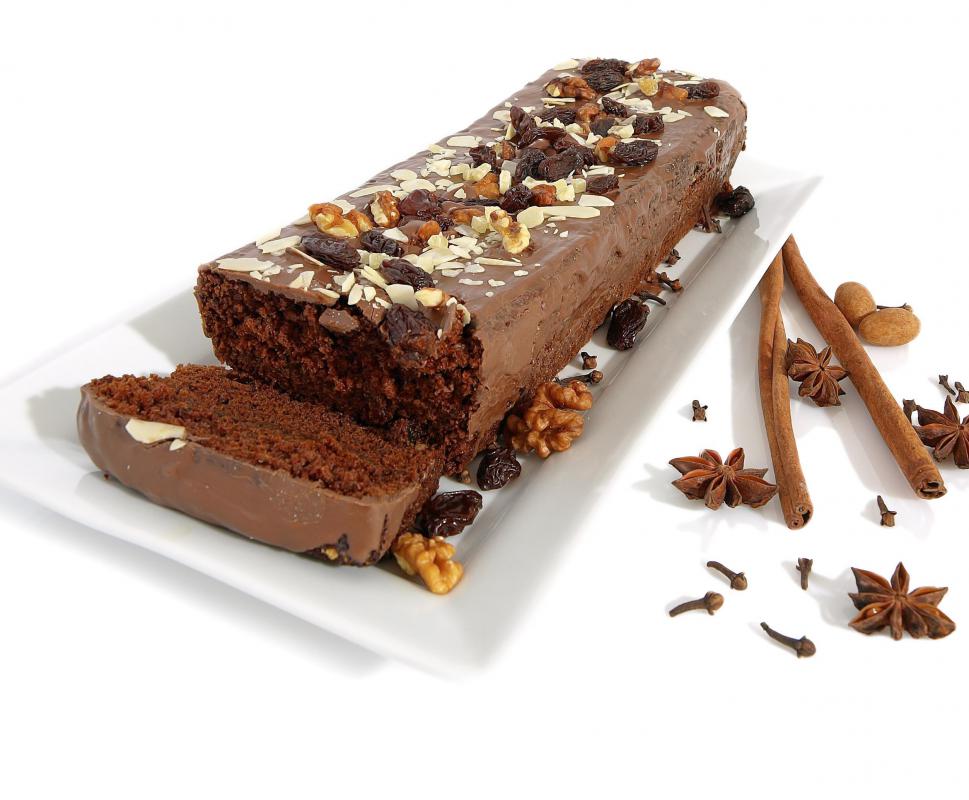
![A dessert bread made with star anise.]() By: Nightman1965A dessert bread made with star anise.
By: Nightman1965A dessert bread made with star anise. -
![Anise extract, which is used to flavor foods, has the aroma and taste of licorice.]() By: Bert FolsomAnise extract, which is used to flavor foods, has the aroma and taste of licorice.
By: Bert FolsomAnise extract, which is used to flavor foods, has the aroma and taste of licorice. -
![Sambuca is an Italian after dinner drink flavored with aniseed.]() By: eyewaveSambuca is an Italian after dinner drink flavored with aniseed.
By: eyewaveSambuca is an Italian after dinner drink flavored with aniseed.




Discussion Comments
I have seen people use whole pieces of aniseed as a spice. One lady added star anise to her stew and to her rice.
When I first saw aniseed, it startled me. It's brown with several extensions, so it instantly reminded me of a spider. I didn't even want to touch it, so I don't believe I'll ever be cooking with it whole.
I would consider using the powdered version, though. I don't have anything against the flavor. I'm just put off by the appearance.
Star anise is used to make root beer. It's funny, because I've always hated the taste of licorice, but I love root beer.
Even after I made the connection between the licorice flavor of anise and root beer, it didn't affect my love for it. I think that because the anise is mixed in with other ingredients, it isn't as intense as something like licorice candy, which I hate.
@cloudel – My sister uses both to make homemade licorice candy. She uses anise powder and licorice root powder, along with molasses.
She heats the molasses first, and then she adds the anise and licorice powder. Next comes the flour. She stirs it until it turns to a paste, which she rolls out on wax paper that has been covered in powdered sugar.
Then, she just cuts it into strips and lets it harden. It's a really easy way to make your own candy.
Is aniseed used to make licorice candy? I know that there is such a thing as an actual licorice plant, so is it used instead?
@ddljohn-- I think that aniseed is from the parsley family so it is a herb. Fennel is actually a vegetable I think. So fennel seeds are the seeds of the fennel plant. Fennel has an edible bulb root and everything. Anise is a herb so the only thing it produces is the aniseed.
The difference between regular aniseed and star aniseed is that star aniseed grows in China and Southeast Asia, not the Mediterranean. As far as I know, the appearance of the plant is also very different. But both dried aniseed and star aniseed is used in cooking. In Indian cooking, sometimes they put whole star aniseed into dishes (without removing the seeds from it).
I know about arak because I went to Turkey for a vacation last year. They actually call the aniseed drink "raki." It's really strong! It looks clear in the bottle and you have to mix it with water to dilute it. When it's mixed, it has a grayish color.
It smells and tastes very much like licorice. I did try raki a few times but I can't say I was a fan of it. I'm just not used to alcoholic drinks with aniseed herb. Some of my friends loved it though.
@cmsmith10-- Can you explain what is the difference between aniseed and fennel? I know they taste similar but they're not from the same family right?
And what's the difference between regular aniseed and star aniseed? I can't wrap my head around all these herbs.
I didn't know that anise and aniseed are the same thing. I thought that anise was the spice and aniseed was the seed.
It's true that aniseed promotes sleep. I had some aniseed tea at home that my mom had gotten. I had it one day and it put me to sleep! I think it relaxed me and made me drowsy. It was fine because it was evening and I could go to sleep. But watch out for this if you have aniseed tea during the day.
I like to make this tea when I'm really tense and having a hard time sleeping because I'm thinking too much. It works really fast. I have one cup and fifteen minutes later, I'm out.
It's also really good with tea cookies but this is not really a tea I would offer my guests.
Tea made from aniseed is great for infant catarrh and helps in digestion in adults. It is also made into lozenges to clear the chest.
Aniseed is also known for its properties to relieve flatulence. It also removes phlegm from the bronchial tubes. Those properties are due to its essential oil.
Aniseed is also useful for inducing perspiration and increasing urine, almost like a diuretic.
@christym: If you don’t have any aniseed, you can use fennel seed or a few drops of anise extract. They will both work fine.
Is there an equivalent aniseed substitute?
Post your comments