
At HomeQuestionsAnswered, we're committed to delivering accurate, trustworthy information. Our expert-authored content is rigorously fact-checked and sourced from credible authorities. Discover how we uphold the highest standards in providing you with reliable knowledge.
What is Angora Wool?
 Mary McMahon
Mary McMahon
Mary McMahon
Angora wool is an extraordinarily soft knitting fiber produced from the fur of the Angora rabbit. It can only be spun from the hair of rabbits, while the product of angora goats is called mohair. The fibers have a very soft, silky texture and are usually 10 to 13 microns thick. They are also hollow, which gives them loft and a characteristic floating feel. In addition, angora fibers are very short, which can effect stitch density when the knitter is using wool with a high percentage of angora.
Pure angora wool is impossible to make, because the fibers are too fine and the wool will simply unravel. The fibers are usually mixed with other soft fibers, such as cashmere and lambswool. Wool made of it tends to be very warm and is frequently used to trim sweaters or to knit hats and scarves. Angora is generally viewed as a luxury fiber, and most products made from it are very expensive, reflecting the laborious harvesting process and the small number of producers.

Angora rabbits can be combed or gently sheared for their fur, and they have been used for that purpose in Turkey for centuries. The wool first became popular in Europe in the late 18th century, when it was popularized by the French. In the Americas, it didn't touch the popular imagination until the 20th century, when small cottage breeders began raising Angora rabbits and spinning their fiber.

There are four breeds of Angora rabbits, beginning with the English breed, which weighs 5 to 7.5 pounds (2 to 3.5 kg). This breed produces a very large amount of fur and must be combed regularly to keep the hair free of tangles and debris. The good natured rabbits are popular in show, and their fiber wraps very tightly when spun, making an even and strong wool.

The French breed ranges from 7.5 to 10.5 pounds (3.5 to 4.5 kilograms) and has a higher proportion of guard hair to wool. Guard hairs take color better, and many colored angora wool products come from the French breed. These rabbits require less grooming than other breeds and are recommended for novice breeders.
The Satin breed has very shiny, soft fur with a satiny appearance. The hair is easy to collect and spin, and the 6.5 to 9.5 pound (3 to 4 kg) rabbits are favored by fiber collectors because their fur spins quickly and easily. The breed also tends to be richly colored, producing wool with high color saturation, although the all white Satins produce fur that takes dye very well.

The Giant breed is significantly larger than the other breeds, often weighing more than 20 pounds (9 kg). The breed most often appears in white, and its wool must be harvested by shearing, because the rabbits do not naturally molt or shed. For sheer volume of collection, Giants are an excellent choice for breeders attempting to produce angora fiber for commercial use.

Angora wool can be harvested year round, although it requires careful handwork, as most rabbits are combed. Most Angora rabbits are amenable, but nervous, and it is important to be gentle with them. The wool produced can be used in a wide variety of applications in which insulation, comfort, and warmth are needed, and the fibers are pleasurable to work with because of their luxurious look and feel.
Mary McMahon
Ever since she began contributing to the site several years ago, Mary has embraced the exciting challenge of being a HomeQuestionsAnswered researcher and writer. Mary has a liberal arts degree from Goddard College and spends her free time reading, cooking, and exploring the great outdoors.
Learn more...
Mary McMahon
Ever since she began contributing to the site several years ago, Mary has embraced the exciting challenge of being a HomeQuestionsAnswered researcher and writer. Mary has a liberal arts degree from Goddard College and spends her free time reading, cooking, and exploring the great outdoors.
Learn more...AS FEATURED ON:
AS FEATURED ON:


-
![Angora rabbits are combed regularly to keep their coats free of tangles and debris.]() By: mrsleviteAngora rabbits are combed regularly to keep their coats free of tangles and debris.
By: mrsleviteAngora rabbits are combed regularly to keep their coats free of tangles and debris. -
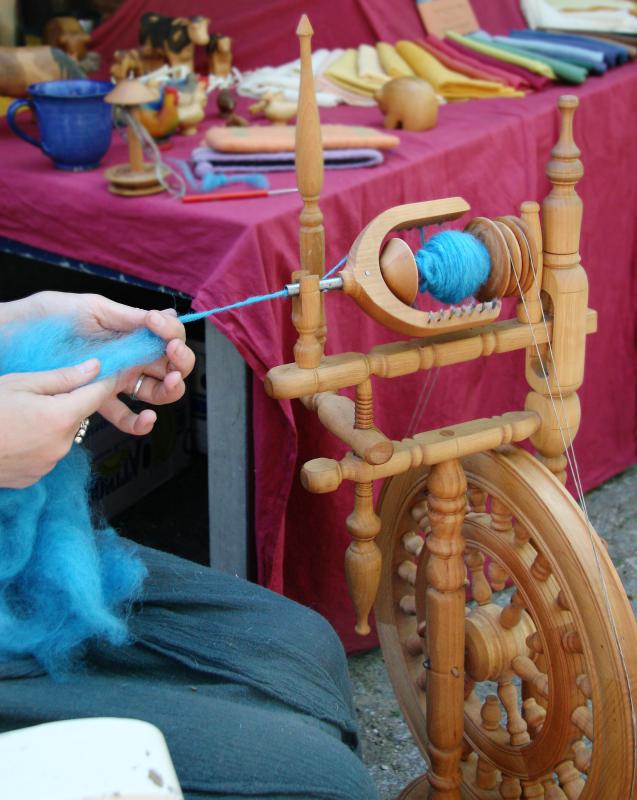
![Angora wool spins nicely into a soft, silky yarn with plenty of loft.]() By: beachlaneAngora wool spins nicely into a soft, silky yarn with plenty of loft.
By: beachlaneAngora wool spins nicely into a soft, silky yarn with plenty of loft. -
![A sweater made with angora wool.]() By: Myrtille MLBA sweater made with angora wool.
By: Myrtille MLBA sweater made with angora wool. -
![Angora is considered a luxury fiber.]() By: AmbroseAngora is considered a luxury fiber.
By: AmbroseAngora is considered a luxury fiber. -
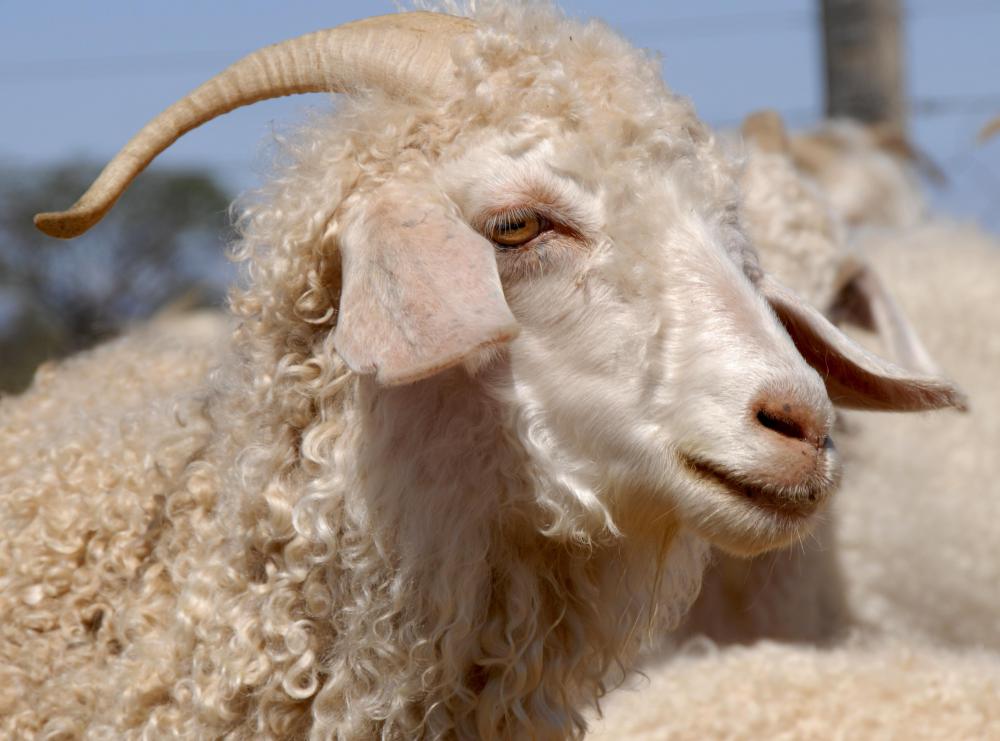
![Mohair is produced from the hair of angora goats.]() By: blackcurrentMohair is produced from the hair of angora goats.
By: blackcurrentMohair is produced from the hair of angora goats.


Discussion Comments
The angora rabbits who live in Asia and are kept purely for their fur suffer extreme pain and terror as their fur is not "gently combed" away, but ripped out with no pain medication or anything, which makes the usually almost silent little bunny scream.
Even if they are sheared, they are trussed with their front and back legs tied up and they are stretched out to enable the person brandishing the shears to get at them. This is also a horrific experience for the rabbit as it is suspended in mid-air by its legs alone. How terrifying is that?
There are no animal laws in Asia and so these defenseless rabbits are kept in horrific conditions, in absolute pain and distress, just so you can wear a soft jumper. There are videos online on how their fur is being ripped out, filmed by undercover PETA representatives who visited the country.
Don't watch the video as it is extraordinarily upsetting, but please read the text and sign the petition to help save these poor, poor rabbits. To get an idea of the pain, grab a handful of your own head hair and give it a good yank. Then keep going unit it comes out. Then do it to the rest of your hair and you'll get the idea.
Prime angora rabbit is at least 3" long, many have fiber 4-5" long, and I've seen show English angoras with 10" long coats. I spin exclusively 100 percent pure angora, and it spins beautifully. Cotton is spun pure, and it is often under 1" in length. The problem is not the length of angora fiber, but how tightly the yarn has been spun to keep the twist, and how much the fine fiber has been damaged in processing.
Commercial angora is severely underspun, so it looks fuzzy in the ball. This yarn often lacks tensile strength and pulls apart easily. A good handspun angora has adequate twist, and doesn't fuzz out until the yarn has been worked (knitted, woven, etc.) This makes knitting easier, as you aren't fighting the fuzz. It will fluff beautifully as it is handled, and is strong enough to wear as barn mittens.
The name Angora comes from a mis-pronunciation of Ankara in Turkey. In ancient times, the long flowing coats were appreciated, and the long hair gene was encouraged in both rabbit and goat.
Angoras are not killed for their fiber, most breeds shed naturally every 3-4 months, just like a dog or cat sheds in the spring and you have handfuls of fiber flying everywhere. Some angoras were bred not to shed, so they could be sheared instead. These are often sheared every three months, giving a 3-5" fiber, similar to the length of the average sheep's wool.
The angora rabbit fiber is called 'wool' according the rabbit association. The soft fiber is an underdown, similar to cashmere, with very little guard hair. The presence of guard hair in the coat can vary; those with little or no guard hair make a very soft cashmere like yarn. Those with more guard hair, like French angora, have a very high 'spike' or fluff in the yarn, but are not as soft.
Other fiber producing animals vary in whether they use the underdown/wool, or the outer hair. Mohair from angora goats is a hair fiber, while cashmere is the underdown of a goat. Very different type of fiber. There are also breeds of sheep, which produce hair fiber instead of underdown, very useful for long wearing rugs. Some breeds have both hair and underdown, and each are used separately for different projects.
Depending on the breed, angora naturally comes in a variety of colors, similar to people's hair colors. The finer the fiber, the lighter the fiber color will be. So an angora with black hair on the face, will have gray fiber. The chocolate brown angora will have tan fiber, the fawn angora a light blonde fiber, and a red angora a peachy shade.
There are paler versions of all these colors, and some colors that have more than one color on the hairshaft (agouti), like wild rabbits do. Commercial angora is all white, and they are dyed whatever shade they want.
I agree, is there any substitute for angora yarn?
Only sheep can grow wool. Other animals give us fiber or hair or fur, but not wool.
It's like a sheep. You take the sheep's wool and it lives. the rabbit is the same way.
can you say what colors they are? it is very confusing. there is 13 colors, what are they?
I was given a "100% Angora" scarf made in China. It appears that the fur is attached to the leather or skin of the animal it was cut from. Is this a standard process done for scarves? I don't want to wear the scarf for fear that an animal was killed for its fur!!!
for teddyknitter -
1. There are brushed acrylic yarns that give a halo effect somewhat like angora. Check your local yarn or craft shops. They won't be as warm as angora.
2. Both have origins in Turkey, Ankara, ergo the name "angora".
Is there any kind of non-animal fiber that makes a good substitute for angora wool?
Also, why are both the rabbit and goat wool providers called Angora? I assume it's a place in Turkey?
Post your comments