
At PracticalAdultInsights, we're committed to delivering accurate, trustworthy information. Our expert-authored content is rigorously fact-checked and sourced from credible authorities. Discover how we uphold the highest standards in providing you with reliable knowledge.
What is an Honorary Doctorate?
An honorary doctorate is a high-level academic recognition granted by a university to a recipient without completion of the normal requirements for that degree. Schools grant them to honor the recipient, while also benefiting the university by association. Recipients sometimes have no relationship with the school, no prior degrees, and no formal higher education; though on occasion they might already have substantial education and other doctorates. Such acknowledgement, in the form of an honorary doctorate, can result in criticism if it appears to be awarded as a favor or to gain funding.
Origin and History

In most countries, a doctorate is the highest level of academic recognition. An honorary doctorate can be given for a variety of reasons decided upon by the university. The first instance of an honorary degree on record was issued by Oxford University to Lionel Woodward in the 1470s. This practice became much more common, however, in the 1600s when royalty visited universities in England.
Use of Such a Degree

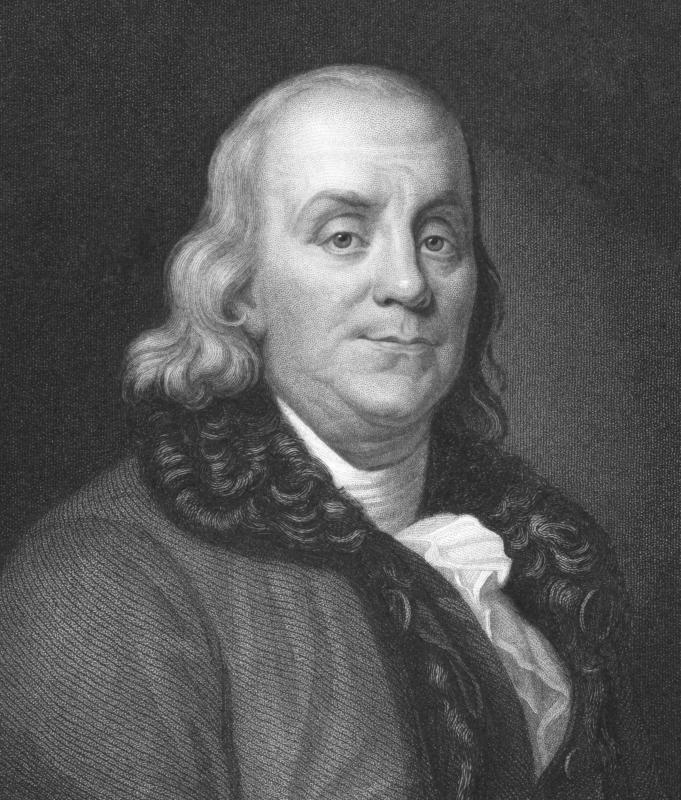
The recipient of an honorary doctorate may use the degree in the same manner as a substantive degree, except under certain circumstances where formal academic background is required. Most recipients do not use the title of "doctor," though there is no rule against it. Recipients such as Benjamin Franklin, Maya Angelou, and Billy Graham, amongst others, have used the title either before or after their names.

Many universities that award honorary degrees refer to their recipients as “doctor.” Whether the title is used before or after their name, people typically add honoris causa or h.c. in parenthesis after the degree title. This indicates to others that the title is an honorary one, with all the benefits that entails.
Granting Honorary Doctorates
A university usually awards this degree at a regular graduation ceremony and recipients traditionally give an accompanying speech. Typically, several people are nominated for the degree and a university panel decides who deserves it most. In some places, however, an honorary doctorate can be applied for. This is common in the UK, Australia, and Ireland, though it frequently requires an established relationship with the university. The recipient often has a noteworthy academic record and may be a member of the university staff.
Criticism of these Awards

Conferring honorary degrees may cause considerable controversy for universities, especially if the recipient is a political figure. Former US President George W. Bush’s honorary doctorate from Yale University, where he had previously earned his bachelor's degree in 1968, made waves with faculty and students alike, causing a boycott of the 2001 commencement ceremony. Similarly, the 2007 protests of Robert Mugabe’s honorary doctorate from the University of Edinburgh in 1984 eventually culminated in stripping the Zimbabwean leader of his award. Degrees awarded in creative or artistic fields, however, do not tend to make a stir, as seen with Joni Mitchell’s unopposed honorary doctorate of music.
Critics also worry that the degree and the title of "doctor" could be used to mislead others about the recipient’s qualifications. While the honor recognizes achievement, it does not necessarily indicate the level of knowledge expected of someone who has completed a traditional doctoral program. Others claim that honorary degrees are often given with the motive to secure large donations for the university, not to celebrate outstanding achievements. Because of this, many schools have tightened their requirements and raised their standards for honorary degree nominees.
AS FEATURED ON:
AS FEATURED ON:


-
![Schools grant honorary doctorates to honor the recipient, while also benefiting by association.]() By: freegineSchools grant honorary doctorates to honor the recipient, while also benefiting by association.
By: freegineSchools grant honorary doctorates to honor the recipient, while also benefiting by association. -
![Benjamin Franklin received an honorary doctorate.]() By: Georgios KollidasBenjamin Franklin received an honorary doctorate.
By: Georgios KollidasBenjamin Franklin received an honorary doctorate. -
![An honorary doctorate will be given at a graduation ceremony, and the recipient will usually make a speech to the graduating class.]() By: xyAn honorary doctorate will be given at a graduation ceremony, and the recipient will usually make a speech to the graduating class.
By: xyAn honorary doctorate will be given at a graduation ceremony, and the recipient will usually make a speech to the graduating class. -
![Robert Mugabe’s honorary doctorate from the University of Edinburgh was widely protested.]() By: Jörn SteinerRobert Mugabe’s honorary doctorate from the University of Edinburgh was widely protested.
By: Jörn SteinerRobert Mugabe’s honorary doctorate from the University of Edinburgh was widely protested.



Discussion Comments
If someone is a scholar, poor, and still studies, it's deserving.
Dr Robert Mugabe of Zimbabwe ... (PhD University of Oxford, UK, 1984)
Dr Jacob Zuma from South Africa.... (PhD Limkokwing University, Malaysia, 2013)
When will this nonsense stop?
The state of Tamil Nadu in India probably beats South Africa hands down! All the politicians, who never even finished eighth or ninth grade education often force the universities to award them the honorary doctorates and then shamelessly use it with their names!
You call the degree a "masters." A "master's" degree has an apostrophe. "Masters" is plural.
Would it not lessen confusion if an honorary doctor only used the title on the campus that awarded it? South Africa is suffering from too many 'dodgy' honorary"doctors" whose academic or industry contribution is sometimes questionable.
Post your comments