
At TheHealthBoard, we're committed to delivering accurate, trustworthy information. Our expert-authored content is rigorously fact-checked and sourced from credible authorities. Discover how we uphold the highest standards in providing you with reliable knowledge.
What is an Extra Vertebra?
The term “extra vertebra” is most commonly used to describe an anatomical abnormality in which a person is born with six sacrum vertebrae in the spine instead of the more typical five. Medical experts estimate that this happens very rarely, usually in less than 4% of otherwise healthy live births, though it’s usually the case that it isn’t discovered right away. People who have this extra spinal section don’t usually have any visible physical problems, and some live their whole lives without ever noticing the addition. In others it can cause a lot of pain, though, which is typically how it is diagnosed.
Typical Human Spines

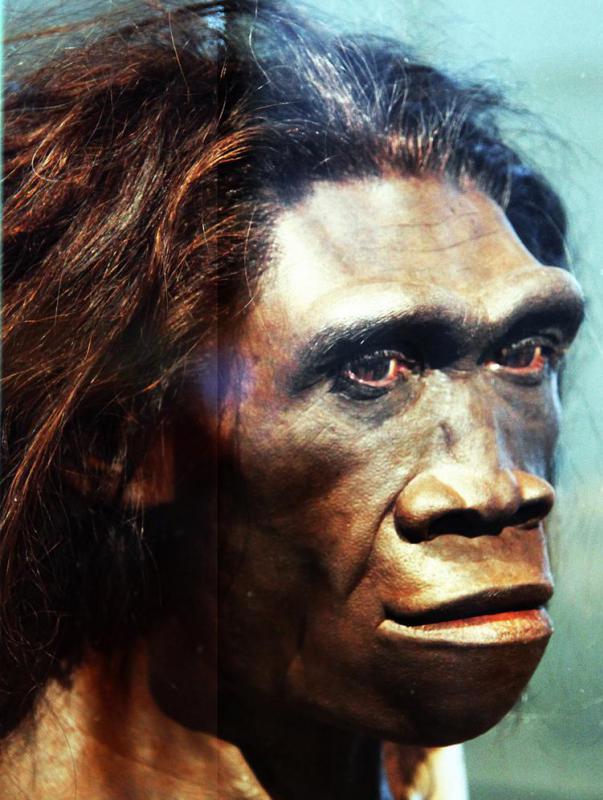
The human spine usually consists of 33 vertebrae, which are circular, collared bones that protect the spinal cord running through them. As humans become adults, five of the bones fuse together to form the sacrum or lumbar. The rest of the vertebrae are separate and individual bones. While an extra bone is not normal, it typically will not cause any pain in a patient unless it pushes on other body parts. Interestingly, research suggests that the lumbar regions of Homo erectus, some of the earliest humans, contained six vertebrae, too, though this is just one of many differences.
Why Extra Bones Form

An extra vertebra is sometimes also called a “transitional vertebra” because it tends to develop at points where the spine transitions from one section to the next. For example, the bone may form at the point where the lumbar section of the spine connects with the sacrum section. Medical experts aren’t exactly sure why some people grow the additional bone, but it is usually something to do with genetic coding. The defect does tend to run in families, but not much is known about why some people are afflicted while others aren’t.
Consequences

It’s often the case that the sixth bone is significantly smaller than the other surrounding vertebrae. When this happens there aren’t usually any big consequences, at least not at first. Trouble is most common when the addition begins to grow, or when it causes the other bones to shift and rub against each other.
Fully-formed extra vertebrae can cause chronic pain in the back and hips as a result of increased pressure. Crowding can move the spine out of alignment and push other bones, such as the hip and pelvis, out of place. Pain in other parts of the body is also common if nerve groups are affected. The spinal column is rich with nerves running to all parts of the body, and depending on where the addition is located, pain can be felt almost anywhere.
Detection and Diagnosis

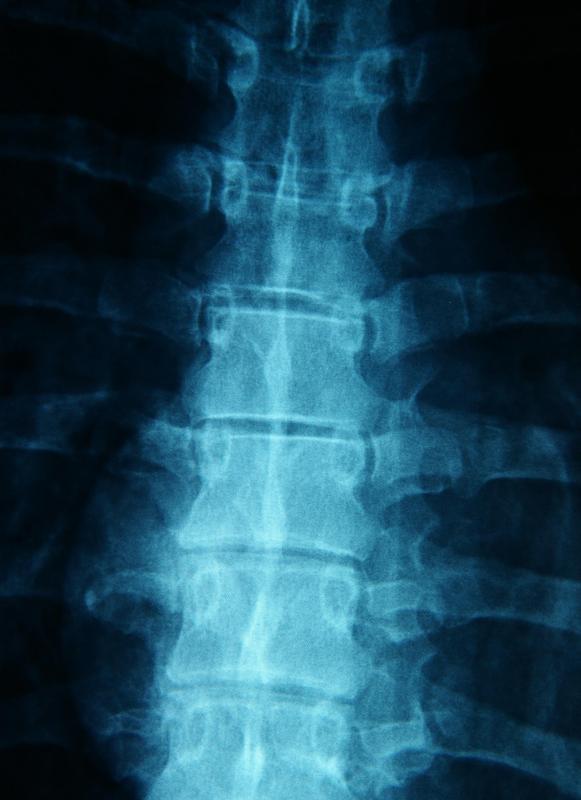
Professional health care providers are usually able to identify an extra spinal bone through magnetic resonance imaging (MRI) scans or X-rays of the spine. It’s rare for a doctor to suspect an extra vertebrae right away, though, since other back problems tend to be much more common. Screens that turn up the extra bone are, in most cases, actually looking for something else.

Not all diagnoses are correct, either. Sometimes the first lumbar vertebra is not properly fused with the second, and this may cause a misdiagnosis of an extra vertebra. On the other hand, it is also possible for the extra bone to go undetected even after X-rays have been taken. Depending on the location and stage of development it may be hard to see during testing. Most experts recommend that people get a second opinion before proceeding with treatment.
Treatment and Lifestyle Changes
Treatment plans usually start gradually, and in most cases aim to restore the patient’s comfort. Actually curing the condition can be very difficult, since it’s not usually possible to remove a bone from the middle of the spinal column — at least not without being hugely invasive. Medication is commonly the first step, followed by physical treatment like stretching therapy and spinal injections designed to relieve pressure and diminish pain. Simple lifestyle changes like refraining from high-impact activities and sports may be recommended, too.
Surgery is sometimes suggested in extraordinary cases when the extra bone is causing debilitating distress or paralysis. Even in these instances, though, the procedure is typically designed more towards reliving pressure and restoring function than it is to actually offering a “cure.” If the vertebra does not cause discomfort or pain, however, there may be no treatment necessary. People commonly live full lives with this condition, and unless it is hampering the patient’s lifestyle there isn’t usually a need to change anything.
AS FEATURED ON:
AS FEATURED ON:


-
![The extra vertebra is a defect in the lumbar vertebrae region of the spinal cord - a person will have a sixth vertebra as opposed to the normal five.]() By: Anatomical DesignThe extra vertebra is a defect in the lumbar vertebrae region of the spinal cord - a person will have a sixth vertebra as opposed to the normal five.
By: Anatomical DesignThe extra vertebra is a defect in the lumbar vertebrae region of the spinal cord - a person will have a sixth vertebra as opposed to the normal five. -
![Vertebrae and the spinal cord.]() By: Alexandr MitiucVertebrae and the spinal cord.
By: Alexandr MitiucVertebrae and the spinal cord. -
![Research suggests that the lumbar regions of Homo erectus, one of the earliest humans, contained six vertebrae.]() By: Tim EvansonResearch suggests that the lumbar regions of Homo erectus, one of the earliest humans, contained six vertebrae.
By: Tim EvansonResearch suggests that the lumbar regions of Homo erectus, one of the earliest humans, contained six vertebrae. -
![Health care professionals can usually identify an extra vertebra on X-rays of the spine.]() By: zimmytwsHealth care professionals can usually identify an extra vertebra on X-rays of the spine.
By: zimmytwsHealth care professionals can usually identify an extra vertebra on X-rays of the spine. -
![Fully formed extra vertebrae can cause chronic back pain.]() By: Laurin RinderFully formed extra vertebrae can cause chronic back pain.
By: Laurin RinderFully formed extra vertebrae can cause chronic back pain.



Discussion Comments
So what is it when you have an extra vertebrae in your neck? Chiropractor found extra one in which my spinal chord is on the Outside of rather than running through it: and, it tends to "shift" direction or "roll" out of place causing unbearable headaches, loss of feeling in arms and partial back.
I have B- blood, and an extra vertebrae. I am a "sensitive ", almost to the point of being a "medium". I was adopted pre birth, and know very little of my true background.
I have AB negative blood and an extra vertebrae. I also have been told I have spinal stenosis and sciatica. No one seems to be able to help me. I am getting extremely depressed.
I also have a extra vertebrae and have pain in my: lower back, hips, shoulders, neck, feet, and legs. I also have hyper mobility syndrome, and scoliosis to boot. I have had no answer as to why I have chronic pain, but after this article I may have some answers.
Most people with an extra vertebrae also have RH Negative blood type, which is rare.
A family member has an extra thoracic vertibrae that is causing numbness. Can't find any info on this. Help, please?
Finally went to an ortho walk-in. Sure enough, they took x-rays and noticed a few things. First, it's a miracle that my spine is in perfect health -otherwise- considering my BMI is 42 (300 pounds and 5'11"). Second, my S1 extra vertebrae is a surprise bonus, which technically makes me a mutant, but considering the fact that I have a rather brutish build and can, or rather did for six years long ago. I can carry full size fridges on my back, no problem. This mutation makes sense, if one is an esoteric nutcase. Third, it's not the extra piece that's the problem so much as the fact that it's fused to my hip.
Just found out that I have the 6th vertebrae with lower back pain. The pain radiates down both legs in my feet and toes. I have been told that there is nothing that can be done for this to help relieve the constant pain. I have already had surgery on my lower lumbar region without any relief from pinched nerves. My toes tingle and feel the burning are with me all the time. What a surprise to find this condition is so rare to have the sixth!
I have a sixth lumbar vertebrae which I discovered after a sport bike accident (a few weeks ago). I don't have and have never had any back pain. I've read research that suggests 10 percent have a sixth lumbar vertebrae.
I have seen my xray and sure enough there is a sixth vertebra.
I have pain all the way down to my feet. I even have about twenty different symptoms at any time, including sciatic nerve pain and Peripheral vascular disease, tendinitis, fasciculations, spasticity and neurogenic claudication.
@anon280037, Post 7: Wow I'm the same way. I'm getting a pinching burning pain in the back of my right shoulder. I've had it since I was about seven, and now I'm 20 and the didn't know what was causing it until now. Now I know. Life stinks. I'm not getting surgery unless I need it.
I have an extra vertebrae at lumbar 6. No surgery or drugs for me. I've managed the pain and the loss of motion by seeing a chiropractor.
So if you have an extra lumbar vertebrae, does it cause congestion in that area? If so, is it possible that it could affect the place where your appendix would be?
I am a 23 year old female with a degenerative disc at L5-S1, as well as a herniated disc on L5-S1.
I got an X-ray done and lo and behold, there is a abnormality - which I am told is a full on extra bone in my back growing up my spinal cord.
I am constantly in pain and prescribed 5mg of Percocet. I am 100 pounds soaking wet and although I believe the script is by the book, I have to take four to make the pain somewhat disappear. I have been told that surgery is my only option, unless I want to be on pain killers the rest of my life.
I am now starting to feel horrible pain in my hands and right shoulder that is excruciating. I am afraid that I might end up with rheumatoid arthritis.
So I have the "extra " lumbar vertebrae. Then what do they call a extra one in your tail bone?
My back is fine if I think about my posture.
I have this " extra vertebrae" and I say this because I have seen my MRI and sure enough there is an extra vertebrae in the spine column. I have severe pain in my lower back as well as my left hip and then down my leg. sometimes I feel a pinch in my hips and down into my left leg and into my tailbone.
a bit crude and unnecessary to label this a 'defect.'
People mistake this as an extra vertebrae which isn't true. it's a vertebrae that didn't fuse right because that's what I have.
so if one extra vertebrae affects less than 4 percent, how rare is two extra?
Post your comments