
At EasyTechJunkie, we're committed to delivering accurate, trustworthy information. Our expert-authored content is rigorously fact-checked and sourced from credible authorities. Discover how we uphold the highest standards in providing you with reliable knowledge.
What is an Ergonomic Keyboard?
Now that virtually everybody in the workplace uses a keyboard to some degree, the stress that repetitive typing causes on the hands, wrist, and fingers has become a major workplace issue. The ergonomic keyboard was designed to to relieve some of that stress and provide a more comfortable platform for typing.
Ergonomic designs for keyboards also help to relieve sometimes painful conditions such as carpal tunnel syndrome and repetitive stress injury that results from extended keyboard usage. These specially designed, contoured keyboards are created with comfort in mind, and are often recommended by therapists and health care professionals.
Sometimes an ergonomic keyboard will be designed in the unconventional Dvorak keyboard layout as opposed to the standard Qwerty layout, in the belief that this keyboard pattern also helps to relieve stress on the fingers and arms.

There is no precise definition or precise design for an ergonomic keyboard, but various models generally create a contoured design that is more comfortable than a standard flat keyboard. Some keyboards have an adjustable slant down the middle, with the two halves spaced several inches apart. Others may have a rounded base or uniquely designed palmrest. The "split hands" design is the central design element of the ergonomic keyboard, and provides a more natural positioning that allows the hands to be more widely separated when typing. Once a typist becomes accustomed to this split design, most will agree that it feels more comfortable and natural.

The ergonomic keyboard addresses several issues. It overcomes the stress that occurs when reaching out to use the numeric keypad and mouse, and frequent extending of the hands and wrists that takes place in conventional keyboards. The little fingers, which are the weakest, are pressed into service to hit additional keys, which causes further problems. The ergonomic keyboard also reduces stress that results from crowding the hands together on the keyboard, the asymmetrical posture one takes when working on a conventional keyboard, and the stress caused by continuous extended shifting.
AS FEATURED ON:
AS FEATURED ON:









-
![Ergonomic keyboards may reduce the pain of carpal tunnel syndrome.]() By: JPC-PRODErgonomic keyboards may reduce the pain of carpal tunnel syndrome.
By: JPC-PRODErgonomic keyboards may reduce the pain of carpal tunnel syndrome. -
![Web programmers and other computer users may reduce their risk of cubital or carpal tunnel issues by using an ergonomic keyboard.]() By: Artur MarciniecWeb programmers and other computer users may reduce their risk of cubital or carpal tunnel issues by using an ergonomic keyboard.
By: Artur MarciniecWeb programmers and other computer users may reduce their risk of cubital or carpal tunnel issues by using an ergonomic keyboard. -
![Individuals with carpal tunnel syndrome may experience numbness or tingling sensation in the fingers.]() By: maticsandraIndividuals with carpal tunnel syndrome may experience numbness or tingling sensation in the fingers.
By: maticsandraIndividuals with carpal tunnel syndrome may experience numbness or tingling sensation in the fingers. -
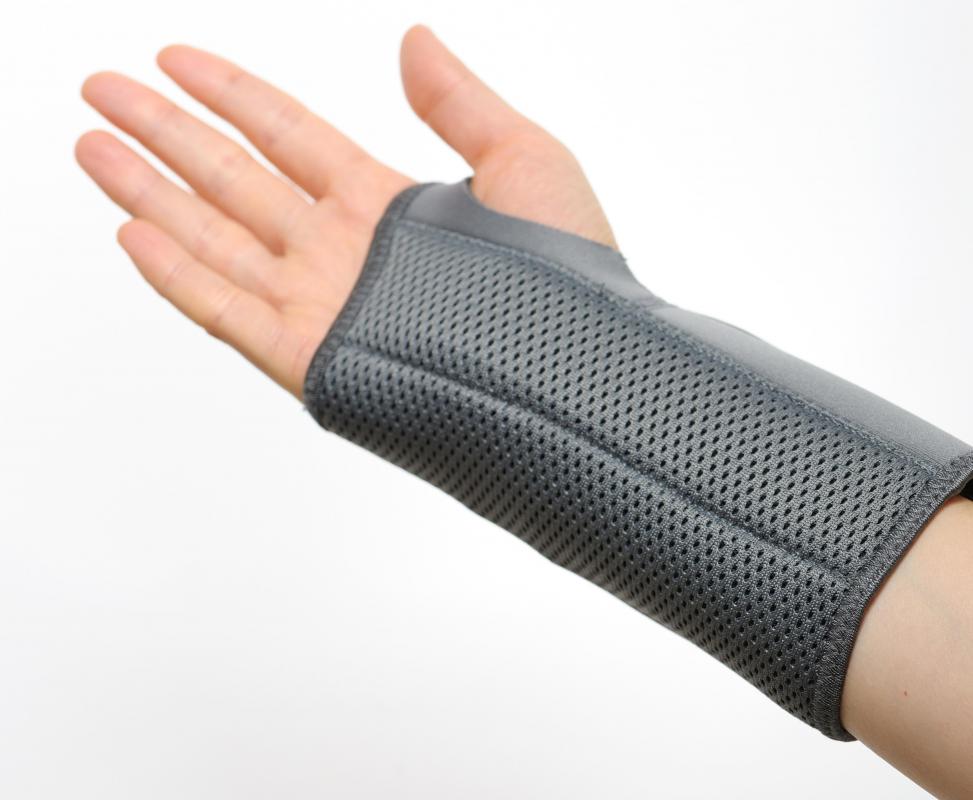
![A wrist brace may be worn to alleviate the pain associated with carpal tunnel syndrome.]() By: mady70A wrist brace may be worn to alleviate the pain associated with carpal tunnel syndrome.
By: mady70A wrist brace may be worn to alleviate the pain associated with carpal tunnel syndrome. -
![Some people believe changing the layout of the keyboard can reduce the instance repetitive stress injuries from typing.]()
Some people believe changing the layout of the keyboard can reduce the instance repetitive stress injuries from typing. -
![Using an ergonomic keyboard may help avoid strains to the hands and wrists.]() By: Photographee.euUsing an ergonomic keyboard may help avoid strains to the hands and wrists.
By: Photographee.euUsing an ergonomic keyboard may help avoid strains to the hands and wrists. -
![Repetitive typing can cause stress on the fingers.]() By: Monika WisniewskaRepetitive typing can cause stress on the fingers.
By: Monika WisniewskaRepetitive typing can cause stress on the fingers.





Discussion Comments
Did you know that its actually possible to type ergonomically without using an ergonomic keyboard?
Although an ergonomic keyboard makes it much easier, there are tips that you can follow to make your own typing more ergonomic without buying an ergonomic keyboard.
First, be sure to always pick your wrists, up, like you're playing the piano. You should only rest your wrists when you're not actively typing.
Secondly, touch the keys lightly. There should be no need to bang on the keys to get them to work, and if there is, you need a new keyboard.
You also shouldn't stretch your fingers to reach keys that are not within your natural finger reach -- move your arm instead.
Finally, try to keep your hands and fingers relaxed. The more you are able to keep them in a natural position, the healthier your typing will be.
Of course, I'm not at all decrying ergonomic keyboards -- they work great, and are excellent for healthy typing. However, if you're stuck without one, there are still things you can do to improve your typing health and reduce your risk of repetitive stress disorders and carpal tunnel syndrome.
Do you all hear good things about that Microsoft natural ergonomic keyboard 4000? I have seen just tons of advertisements for the 4000 ergonomic keyboard, but the design just looks so out there that I'm not sure if I want to try it or not.
Besides, it's really big, which is not exactly what I'm looking for when I'm buying an ergonomic keyboard. I mean, I know they have to be a little bigger to accommodate the extra room for the keys and split keyboard, but that one just looks enormous.
Buy maybe I'm wrong -- have any of you all used the 4000 ergonomic keyboard, do you have any opinions about it?
I had used a Goldtouch ergonomic keyboard for a long time at work, but I never thought about what a difference it made to my typing until I got a laptop that didn't have an ergonomic keyboard.
It's really quite a shock to see how different it feels to type on a normal keyboard after you've used an ergonomic one, and I actually found it to be kind of painful.
Now whenever I buy a laptop, I always make sure that it has an ergonomic laptop keyboard -- I've just gotten way too dependent to do without it.
And don't even get me started on my ergonomic keyboard arm...
Post your comments