
At PracticalAdultInsights, we're committed to delivering accurate, trustworthy information. Our expert-authored content is rigorously fact-checked and sourced from credible authorities. Discover how we uphold the highest standards in providing you with reliable knowledge.
What is an Epidemiologist?
 Tricia Christensen
Tricia Christensen
Tricia Christensen
An epidemiologist is a person who studies patterns of diseases or health risks in population groups, societies, and cultures. He or she may look at how diseases affect certain populations, the emergence of viruses in geographical locations, or he or she may track certain diseases. His or her goal is to reduce public health risks by studying the pattern of disease or several diseases, as well as other health risks like injury from car crashes or other accidents. Many epidemiologists can then make predictions about likelihood of disease occurrence, and develop prevention strategies.
Most epidemiologists have a bachelor’s degree in one of the sciences and a graduate degree in epidemiology. Important studies at the graduate level include learning about chronic and infectious diseases, studying psychology, physiology, biochemistry, genetics, environmental impacts on humans, toxicology, biostatistics, and health service administration. Having not only a good background in science but also good math skills, especially in the areas of statistics and probability are prime requirements, since so much of what epidemiologists do is dependent on interpretation of data.

In addition to the studies listed above, an epidemiologist can also specialize in certain areas of interest. For example, the epidemiologist might study cancer, if he or she is looking at ways to prevent it, or might study pandemics, reproduction, or nutrition. There are numerous specializations, but some take on more general work, depending upon where their interest lies.

Epidemiology is one of the central features in determining public health policy. An individual epidemiologist may work in a variety of fields. Most commonly government agencies employ epidemiologists to help research public health crises and to help set public health policy. Organizations like the World Health Organization (WHO) and the Centers for Disease Control (CDC) employ many public health experts. Someone in this position might also work at a private research facility, a university, or as a consultant for both private and public agencies. Some work for government law enforcement agencies to develop plans for coping with terrorist attacks that may create a large number of injuries or that use chemical weapons.
The work of the epidemiologist is varied, given the many causes of disease and injury. On any given day epidemiologists might perform some of the following:
- Participate in daily research on a specific disease.
- Design a study on a public health issue.
- Speak, write about, or advocate for changes that will address a public health issue.
- Write reports on a finished research project.
- Collaborate with doctors and other health care workers to address specific health issues.
- Develop plans for coping with certain identified disease issues or risks.
Tricia Christensen
Tricia has a Literature degree from Sonoma State University and has been a frequent PracticalAdultInsights contributor for many years. She is especially passionate about reading and writing, although her other interests include medicine, art, film, history, politics, ethics, and religion. Tricia lives in Northern California and is currently working on her first novel.
Learn more...
Tricia Christensen
Tricia has a Literature degree from Sonoma State University and has been a frequent PracticalAdultInsights contributor for many years. She is especially passionate about reading and writing, although her other interests include medicine, art, film, history, politics, ethics, and religion. Tricia lives in Northern California and is currently working on her first novel.
Learn more...AS FEATURED ON:
AS FEATURED ON:


-
![Epidemiologists study disease transmission.]() By: Andrey KiselevEpidemiologists study disease transmission.
By: Andrey KiselevEpidemiologists study disease transmission. -
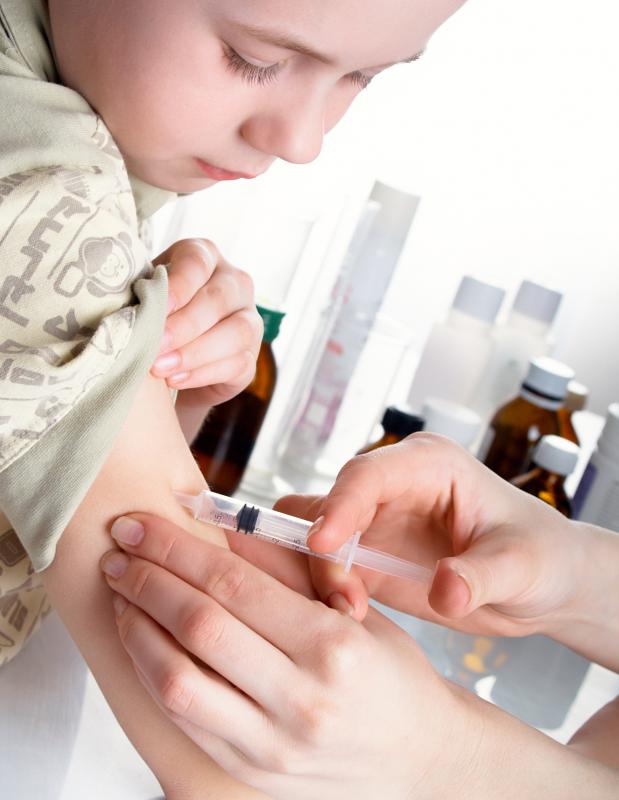
![Vaccination for a virus.]() By: stuchinVaccination for a virus.
By: stuchinVaccination for a virus. -
![An epidemiologist may study car crashes as it relates to injuries.]() By: KadmyAn epidemiologist may study car crashes as it relates to injuries.
By: KadmyAn epidemiologist may study car crashes as it relates to injuries. -
![An epidemiologist may study public health crises in a given country.]() By: oneblink1An epidemiologist may study public health crises in a given country.
By: oneblink1An epidemiologist may study public health crises in a given country. -
![An epidemiologist may work with doctors and other health care workers to address specific health issues.]() By: AllianceAn epidemiologist may work with doctors and other health care workers to address specific health issues.
By: AllianceAn epidemiologist may work with doctors and other health care workers to address specific health issues.




Discussion Comments
What is the work pace of this job?
how much do they get paid
@needinghelp, the only thing you could realistically get from feral cats is toxoplasmosis, and the reason you would get it is lack of hygiene.
If you are handling outdoor soil (gardening) and don't use gloves and wash your hands before you eat, you could potentially get this, but in adults this rarely causes complications. Odds are what ever you have, it is not from the feral cats.
@needinghelp~realistically: none. since by definition feral cats are not able to be touched or handled by humans there is no disease you would get from them any more than you would get from the squirrels in the trees or the raccoons in your garage cans. stop trying to blame feral cats for whatever is ailing you and maybe you'll get a doctor to take you more seriously.
A great job to do to change the future. people just need to push themselves and have an eternity of commitment to do such a job, working day and night.
I have a friend that has been treated for about a year for Fibromyalgia with not much relief. She recently read about Lyme Disease and has many of the symptoms including the "bulls eye". Would this be something that this specialty would cover?
70K- up to 120k
i was wondering what is the California law governing epidemiology, the scope of the practitioner, and his/her authority? i have a paper to write and i can't find that answer anywhere. thanks for your help!!
needing help: toxoplasmosis has already been mentioned, yet it is asymptomatic in almost everyone who contracts it, and anon35106 is not correct about its long-term effects. Since I doubt you go around eating cat feces, you might consider a more likely candidate such as cat scratch fever. It's not just an awesome song.
hello! there is a question encountered as to what word best describes an epidemiologist: prognosticator, estimator or planner. what would be the best answer given these choices?
how much do thay get paid?
How do epidemiologists pinpoint the origin of outbreaks of epidemics such as AIDS, Ebola, Swine Flu, and Cholera?
Please see toxoplasmosis, a disease caused by parasites, that can be contracted from the feces of cats. In its acute phase, it causes a flu-like illness, but over the long-term can cause mental health problems, like schizophrenia or bipolar disease.
I was wondering if there was an Epidemiologist who might have knowledge of zoonotic diseases from feral cats to humans? I am pretty sure I have had one for many months and 6 doctors don't believe it is possible, but have no diag as of 7 months. I am desperate. SN
Post your comments