
At TheHealthBoard, we're committed to delivering accurate, trustworthy information. Our expert-authored content is rigorously fact-checked and sourced from credible authorities. Discover how we uphold the highest standards in providing you with reliable knowledge.
What is an Enema?
 Tricia Christensen
Tricia Christensen
Tricia Christensen
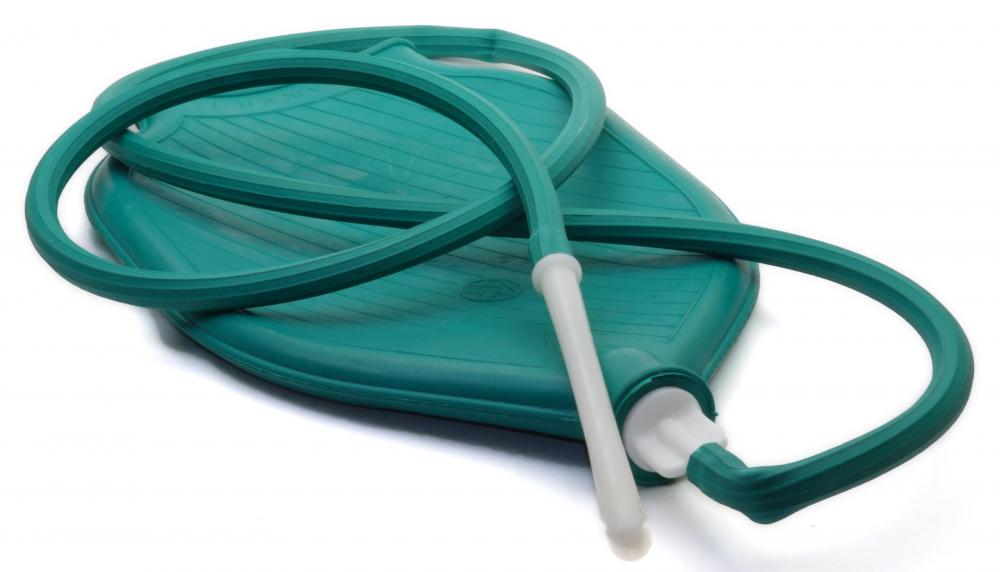
An enema is procedure used for clearing the bowel and colon of fecal matter. This procedure introduces liquid, usually water, and sodium bicarbonate or sodium phosphate, by means of a bulb or bag, into the anus and thus to the bowel and colon. This tends to stimulate the bowel to release fecal matter.
The procedure can also include introduction of any substances into the bloodstream via the anus. People with severe nausea are sometimes given an enema containing anti-nausea medication. Instead of the liquid form of the cleansing variety, this type of substance introduction is usually in the form of a suppository. People with high fevers and nausea may benefit from suppositories containing acetaminophen that can quickly bring down a fever because it reaches the blood stream more quickly. Suppository medications are commonly used in the UK, but are not quite as popular in the US.

This procedure can be done at home. People with bowel impaction or severe constipation might be told to use one. They are often available for purchase at local drug stores. Most people, unless constipation is exceptionally severe, prefer to benefit from using laxatives instead, which also result in clearing the bowel and colon through a much less uncomfortable procedure.

Some enemas still contain mineral oil, but this is not preferred by most people. Mineral oil may cause leakage of the bowel, which cannot be controlled, for up to a day after the procedure. The water-based enema is considered just as effective and it is easier to control bowel movements afterward.
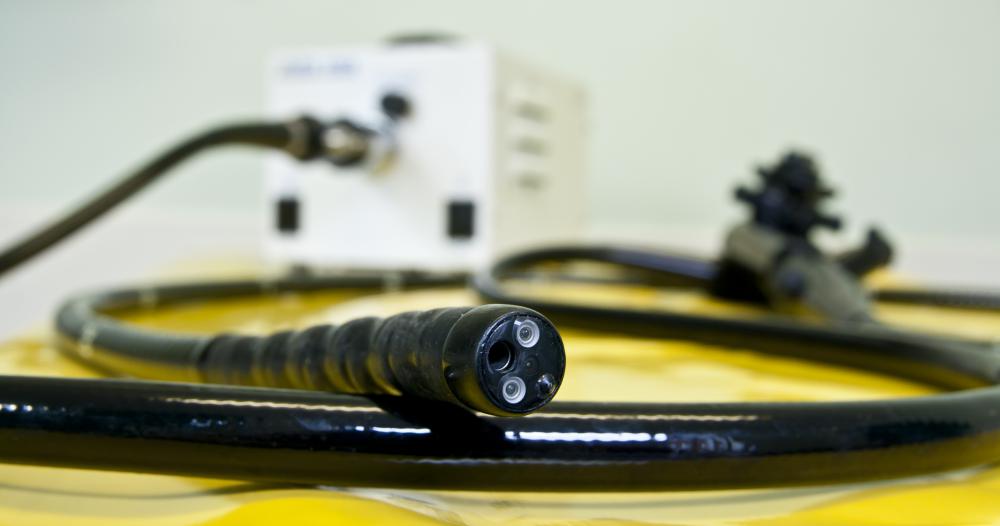
Certain medical tests may require the use of an enema. It may be standard procedure prior to a colonoscopy, since fecal matter can obscure the test. Also, some tests are performed using a barium enema. Barium is a radioactive substance, and can help visualize the gastrointestinal tract and any possible problems. The barium is usually given right before x-rays of the intestines are taken.

It used to be quite common for pregnant women going into labor, or who were past their due date to have an enema. This was thought to provoke greater labor pains and speed labor. It was also thought more sanitary, since fecal matter would not be passed during strong contractions. This is seldom performed now, and was a source of discomfort to many women for numerous years. If any fecal matter is passed during labor and delivery it is simply quickly cleaned up.

Some people believe that occasional cleaning of the bowel in this way promotes greater health, although there is little evidence that it is necessary as a part of an overall health regimen. This belief became popular at the advent of the 20th century, and some still adhere to it. People may have enemas performed as an alternative medicine procedure, in the belief that it will clear the body of toxins and strengthen the muscles of the colon.
Tricia Christensen
Tricia has a Literature degree from Sonoma State University and has been a frequent TheHealthBoard contributor for many years. She is especially passionate about reading and writing, although her other interests include medicine, art, film, history, politics, ethics, and religion. Tricia lives in Northern California and is currently working on her first novel.
Learn more...
Tricia Christensen
Tricia has a Literature degree from Sonoma State University and has been a frequent TheHealthBoard contributor for many years. She is especially passionate about reading and writing, although her other interests include medicine, art, film, history, politics, ethics, and religion. Tricia lives in Northern California and is currently working on her first novel.
Learn more...AS FEATURED ON:
AS FEATURED ON:


-
![An enema introduces liquid by means of an enema bag into the anus to clear the bowel and colon of fecal matter.]() By: Roman A. KozlovAn enema introduces liquid by means of an enema bag into the anus to clear the bowel and colon of fecal matter.
By: Roman A. KozlovAn enema introduces liquid by means of an enema bag into the anus to clear the bowel and colon of fecal matter. -
![People experiencing severe nausea may be given an enema.]() By: jedi-masterPeople experiencing severe nausea may be given an enema.
By: jedi-masterPeople experiencing severe nausea may be given an enema. -
![An enema empties a patient's colon so that a special camera captures clear images.]() By: ChrispoAn enema empties a patient's colon so that a special camera captures clear images.
By: ChrispoAn enema empties a patient's colon so that a special camera captures clear images. -
![People with bowel impaction or severe constipation might be told to use an enema.]() By: Ljupco SmokovskiPeople with bowel impaction or severe constipation might be told to use an enema.
By: Ljupco SmokovskiPeople with bowel impaction or severe constipation might be told to use an enema. -
![Avoid enemas with mineral oil.]() By: Africa StudioAvoid enemas with mineral oil.
By: Africa StudioAvoid enemas with mineral oil.


Discussion Comments
It's uncomfortable, but it doesn't hurt. Only your dignity suffers.
Will doing a salt water flush help relieve constipation?
There is nothing that should be used for a period unless it is a sterile water douche. An enema goes in the anus, not the vagina.
I've been using enemas for quiet a while. They don't hurt upon insertion, they're more uncomfortable really. the benefits are good.
Can a 87 year old person get an enema? if the yes or no please give reason.
What kinds of complications we should look out for? What precautions should be aware of?
Colon cancer is more likely to occur in people who din't use high-pH, full distention, long-retention enema therapy, than it is in those who do use such therapy. Dr. Dan
Does it hurt?
what is the purpose of enema? is this to control periods or what? if i use this what are its effects???
My mother has been doing 2-4 coffee enemas a day for about 4 months as a natural health therapy for her cancer. We are concerned it is WAY too much. Can you shed some light for me?
has anyone gotten colon cancer by using enemas?
If they use it in between two times in a week can this harm the digestive system or the colon or anything in the internal organs?
Post your comments