
At WiseGEEK, we're committed to delivering accurate, trustworthy information. Our expert-authored content is rigorously fact-checked and sourced from credible authorities. Discover how we uphold the highest standards in providing you with reliable knowledge.
What is an Endoscopy?
Endoscopy is a minimally-invasive diagnostic medical procedure in which a flexible tube is used to examine the inside of the body. The lighted flexible instrument, an endoscope, contains a camera with which a medical professional can inspect the internal organs. The physician can also insert instruments into the scope to take tissue samples for further testing or to treat internal bleeding.
In most cases, the healthcare professional inserts the tube through a natural opening in the body, such as the mouth or anus. In other situations, an endoscope is inserted through a small incision. The procedure is short, usually lasting 30 minutes or less, and it allows the medical professional to see areas of inflammation or bleeding that do not show up clearly on X-rays.

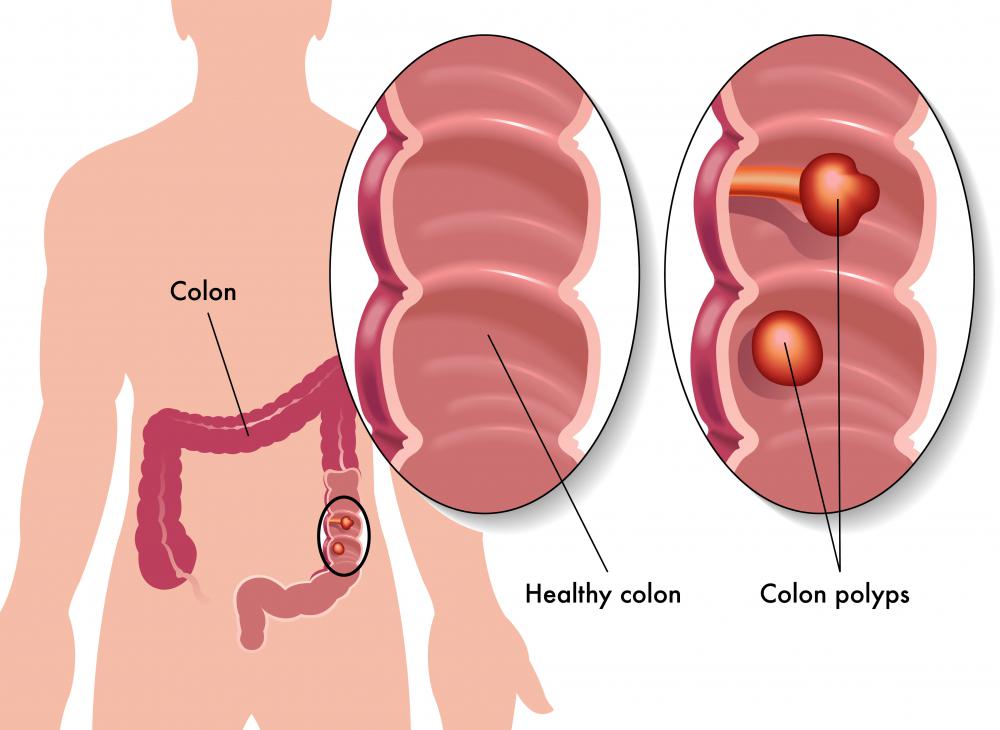
Reasons for performing an endoscopy include symptoms such as bleeding, pain, or a change in bowel habits. One may also be performed to examine the colon for polyps. It is most commonly used to examine areas of the gastrointestinal tract, including the esophagus, stomach, and areas of the intestine.
It is also possible to examine the respiratory and urinary tracts, the abdomen and chest, joints, and the reproductive system through forms of endoscopy. Each particular procedure has a specific name ending with –oscopy. It is also used for various procedures during pregnancy and even for some plastic surgeries.

An upper endoscopy is also called esophagogastroduodenoscopy (EGD). This procedure can identify the cause of symptoms such as swallowing difficulty, nausea, vomiting, or reflux. Other conditions that might be investigated in this way are indigestion and abdominal or chest pain.
During the procedure, the patient receives a numbing agent to prevent gagging when the scope is inserted in the throat. Often, patients are given pain medication and sedatives as well. As the scope also forces air into the stomach, it allows the medical professional to see the folds of tissue inside the stomach and, therefore, make a more careful analysis.

In advance of an upper endoscopy, the patient must refrain from eating or drinking for a minimum of six hours so that the stomach is empty. If a patient has been given a sedative prior to the procedure, he or she will need to stay at the medical facility until the effects wear off. The patient will also need someone to drive him or her home. Complications are rare, but can include bleeding or the puncture of an area under inspection.
AS FEATURED ON:
AS FEATURED ON:









-
![An endoscope is typically inserted through the mouth or anus of the patient.]() By: JackFAn endoscope is typically inserted through the mouth or anus of the patient.
By: JackFAn endoscope is typically inserted through the mouth or anus of the patient. -
![An endoscope may be used to examine the esophagus, stomach, and upper duodenum.]() By: Max TacticAn endoscope may be used to examine the esophagus, stomach, and upper duodenum.
By: Max TacticAn endoscope may be used to examine the esophagus, stomach, and upper duodenum. -
![An endoscopy may be performed to examine the colon for polyps.]() By: rob3000An endoscopy may be performed to examine the colon for polyps.
By: rob3000An endoscopy may be performed to examine the colon for polyps.


Discussion Comments
@SarahSon - I also had an upper endoscopy and a colonoscopy at the same time. It's much better to get it done all at once and take a sedative.
I agree, the worst part, by far, was drinking that stuff and the other preparation beforehand. And not eating for so long wasn't so much fun either.
But, the procedure was a piece of cake. The doctor said that I had GERD, so I take Prilosec now. I don't take as much as was prescribed because it doesn't seem to bother me that much.
I was having symptoms of ongoing reflux so my doctor ordered an endoscopic procedure. It really was not as bad as it sounds. If you have it scheduled for the first thing in the morning, you don't even have to go that long without food or drink.
The procedure itself does not take that long, sometimes the prep work is longer than the procedure itself. They found that I did have some gastritis, so began taking some Prilosec. This was done after they ruled out gallbladder problems.
I recently had both an upper endoscopy procedure and a colonoscopy done at the same time. Because of some of the symptoms I was having, it was easier to have them both done at once. Since you have to fast before both of them, it was not a big deal. The worst part was what I had to drink before the colonoscopy.
The endoscopy tube was put down my throat, and the only side effect I had was that my throat was sore for a couple days after the procedure. I was given a sedative, so didn't really even know what was going on, which is better for me.
Post your comments