
At TheHealthBoard, we're committed to delivering accurate, trustworthy information. Our expert-authored content is rigorously fact-checked and sourced from credible authorities. Discover how we uphold the highest standards in providing you with reliable knowledge.
What is an Electrolyte?
Electrolytes are liquid substances that act as a medium to conduct electricity. They are referenced in a number of different contexts, the most common including health and fitness, and various electronics and automotive disciplines. An electrolyte is full of ions, which are atoms that have some sort of net electric charge, either positive or negative. One that is dilute has a relatively small amount of ions for its volume, while a concentrated one has a high amount of ions.
In basic fuel cells, such as those used in automotive technology, an electrolyte acts as the liquid that allows ions to travel between the cathode and anode to keep the power-generating process underway, while keeping the reactive oxygen and hydrogen apart. In the type of fuel cell known as a proton exchange membrane cell, the substance specifically moves protons (positively-charged hydrogen ions) to the cathode from the anode where they are produced, with the end result being the production of water and electricity.

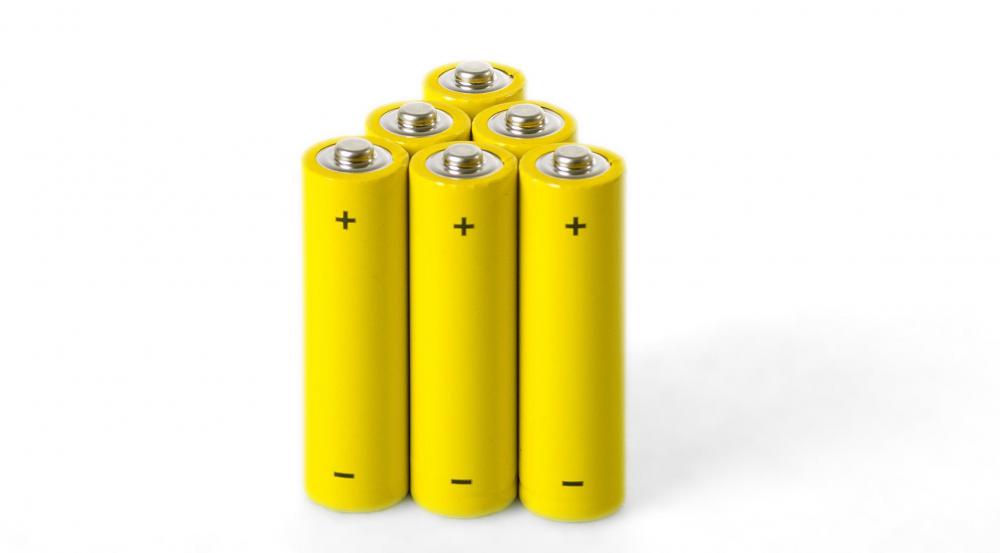
Batteries also employ an electrolyte of some sort, both to conduct electricity between the battery plates and to store energy on the plates themselves. The type used in a battery depends on the battery's type and purpose. Most car batteries, for example, use one that contains sulfuric acid, which is why they require careful handling. Alkaline batteries use an alkaline solution. Lithium batteries use a special organic electrolyte that freezes at much lower temperatures than more traditional water-based ones.

In human health, electrolytes aid in a number of vital bodily processes. Many heart and nerve functions, muscle control and coordination, and the body's ability to absorb fluids all depend on a healthy balance of electrolytes. The most common types found in the human body are sodium, potassium, magnesium, chloride, and calcium. Various hormones in the body help regulate intake of these substances, and the kidneys filter them out when they reach excessive levels. Unhealthy levels of consumption of any or all of them can cause serious health issues. The most common imbalances are hyper- and hyponatremia, or excessive and insufficient levels of sodium, and hyper- and hypokalemia, or excessive and insufficient levels of potassium.

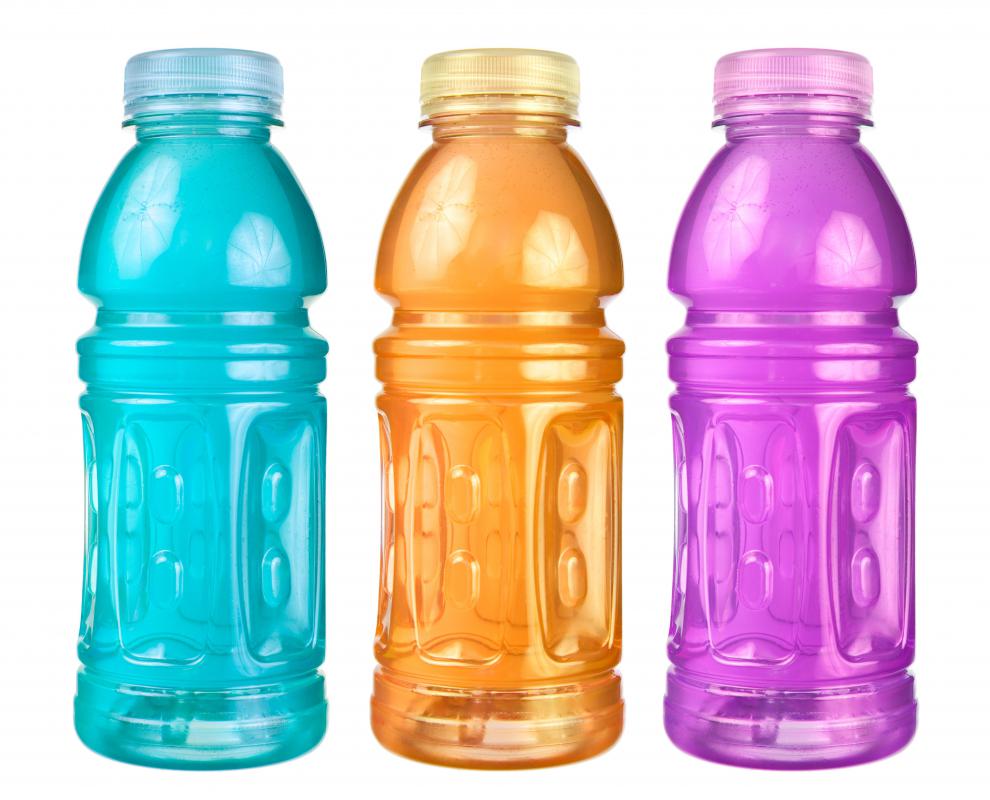
Many sports drinks contain added potassium and sodium to help restore the body's proper electrolyte balance after intense physical exertion. After exercising heavily, it can be dangerous to ingest large quantities of water, because some sodium and other salts are lost as a person sweats. The water can dilute those that remain and cause physical problems. Additionally, a number of enhanced drinks exist specifically for children, and these may be helpful for regular use, particularly to restore a child's electrolyte balance after an illness that has included vomiting or diarrhea.
AS FEATURED ON:
AS FEATURED ON:


-
![Batteries contain an electrolyte, a liquid used to conduct electricity.]() By: ilyatBatteries contain an electrolyte, a liquid used to conduct electricity.
By: ilyatBatteries contain an electrolyte, a liquid used to conduct electricity. -
![Sports drinks often contain added potassium and sodium to help restore the body's proper electrolyte balance after intense physical exertion.]() By: travis manleySports drinks often contain added potassium and sodium to help restore the body's proper electrolyte balance after intense physical exertion.
By: travis manleySports drinks often contain added potassium and sodium to help restore the body's proper electrolyte balance after intense physical exertion. -
![Salt pills, which were once commonly used to treat electrolyte imbalances.]() By: ElenathewiseSalt pills, which were once commonly used to treat electrolyte imbalances.
By: ElenathewiseSalt pills, which were once commonly used to treat electrolyte imbalances. -
![Electrolytes are lost during exercise through sweat.]() By: MaridavElectrolytes are lost during exercise through sweat.
By: MaridavElectrolytes are lost during exercise through sweat. -
![People who exercise strenuously should drink electrolyte-enhanced water or beverages to replace crucial minerals lost through sweat.]() By: geronimoPeople who exercise strenuously should drink electrolyte-enhanced water or beverages to replace crucial minerals lost through sweat.
By: geronimoPeople who exercise strenuously should drink electrolyte-enhanced water or beverages to replace crucial minerals lost through sweat.



Discussion Comments
How can electrolytes in the body affect osmosis and why is this important?
All an electrolyte is, is a metal that is required by the body, you get iron from meat, potassium from bananas,magnesium from chlorophyll, sodium from salt and calcium from milk, all you need to get a perfect electrolyte balance is to eat normal food. There's not this new thing called an electrolyte that's only found in sports drinks; they're in pretty much everything we eat!
signs of imbalance are limbs turning blue.
does anyone know why an aluminum extraction process should be on all the time?
I have a lot of muscle cramps. is this a result of not enough electrolytes?
I am currently dealing with very low BP readings cbsw in conjunction with low sodium, is this a sign of heart failure? I had stage 1 breast cancer and am almost through all my treatments. I feel my body is just shutting down. I am a 62 year female. Thank you.
I was recently seen by a nutritionist for having lack of energy, mainly. He said that I had an electrolyte insufficiency. He gave me a list of 6 different types of salt that I would have to take with a glass of water. Now I am a little questionable about this. Can anyone tell me some information about this? Thanks
What is your qual on Powerade? I drank as much as I could during my bout with this bug I am fighting and realize I am feeling so much better.
Hi, I'm a novice trying to produce hydrogen as a booster for my vehicle to increase mileage and save money. I have a canister with carbon plates that are positive, negative and neutral. I have also experimented with coils of stainless steel wire which seem to work well. My concern is how to find the best electrolyte to use in it. I am currently using baking soda. Anyone have a suggestion for a better one? Loyd
How is an electrolyte harmful for an animal such as a dog??
If I were to attach a ipod to a onion full of Lucozade would the ipod or onion get a voltage?
what are the signs or symptoms of electrolyte imbalance as a result of drinking too much water?
Post your comments