
At EasyTechJunkie, we're committed to delivering accurate, trustworthy information. Our expert-authored content is rigorously fact-checked and sourced from credible authorities. Discover how we uphold the highest standards in providing you with reliable knowledge.
What is an eBook?
 Tricia Christensen
Tricia Christensen
Tricia Christensen
The term eBook has several definitions, but in many cases, it is an electronic version of a previously published and printed book. Usually, readers can download one using one of several free programs or purchase a CD or DVD copy to be downloaded. The book can then be read off a computer screen, a laptop, eBook readers, or smartphones. Some computers offer programs to make the experience more like reading a book, and they feature the ability to “turn pages,” as one would with a regular book.
Not all eBooks are free. Some libraries, particularly college libraries, offer free access to numerous texts, but in general, contemporary popular novels or popular works of non-fiction need to be purchased. This type of book is also not necessarily in the public domain. A person may gain access to reading them, but must still use citation methods if quoting them, or may need to ask the author if the book can be cited or reproduced.

Sometimes, books are written specifically for the Internet, and they may contain helpful features like word or subject searches, and hyperlinks to other sites or other sections of the text. In fact, some authors have found the eBook to be the perfect way to self-publish. They cut out the middlemen like agents and publishers, and can offer their novels or non-fiction for a small fee to interested readers.

There are, however, publishers who market to beginning writers and do take a share of the writer’s profits, sometimes a large amount. Such publishers may seriously enhance the amount of available fiction, or they may ask for upfront fees from the writer, akin to the many vanity presses that will publish an author's book for a price. Usually, advertisement is left up to the author.

Occasionally, a well-adapted eBook from a print source may also include search features, or may include hyperlinks. Some fledgling authors may also publish their work without charging for downloads. When this is the case, it is highly advisable that authors copyright their work prior to offering it, since theft of original work remains a problem on the Internet.

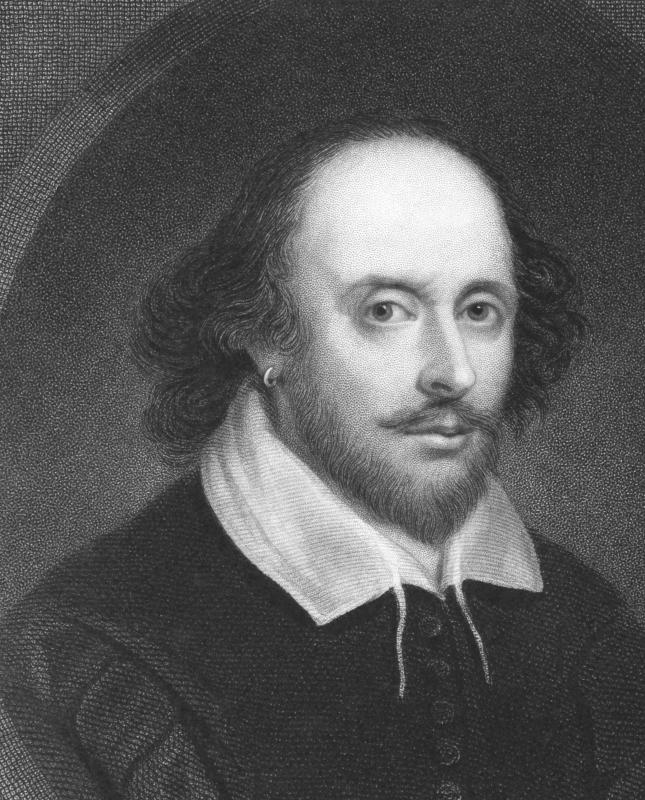
Before purchasing an eBook, consumers should make certain that they cannot get a copy for free. Buyers are most likely to be able to access material in the public domain, where works from classic authors like Shakespeare or Chaucer can be found in abundance. Readers will probably not find books by popular novelists for free, however. It's also a good idea for anyone who has not read this type of book before to try out a free one first. Some people find the format easily adaptable, while others miss the comfort of thumbing through the well-worn pages of a beloved book, or the crisp fresh smell of a new novel.
Tricia Christensen
Tricia has a Literature degree from Sonoma State University and has been a frequent EasyTechJunkie contributor for many years. She is especially passionate about reading and writing, although her other interests include medicine, art, film, history, politics, ethics, and religion. Tricia lives in Northern California and is currently working on her first novel.
Learn more...
Tricia Christensen
Tricia has a Literature degree from Sonoma State University and has been a frequent EasyTechJunkie contributor for many years. She is especially passionate about reading and writing, although her other interests include medicine, art, film, history, politics, ethics, and religion. Tricia lives in Northern California and is currently working on her first novel.
Learn more...AS FEATURED ON:
AS FEATURED ON:









-
![An eBook is an electronic copy of a book that can be downloaded and read on devices like eBook readers and computers.]() By: TaffiAn eBook is an electronic copy of a book that can be downloaded and read on devices like eBook readers and computers.
By: TaffiAn eBook is an electronic copy of a book that can be downloaded and read on devices like eBook readers and computers. -
![Some eBooks come on CDs.]()
Some eBooks come on CDs. -
![A Shakespearean play might be found for free as an eBook.]() By: Georgios KollidasA Shakespearean play might be found for free as an eBook.
By: Georgios KollidasA Shakespearean play might be found for free as an eBook. -
![Some fledgling authors may publish their eBook without charging for downloads.]() By: michaeljungSome fledgling authors may publish their eBook without charging for downloads.
By: michaeljungSome fledgling authors may publish their eBook without charging for downloads.


Discussion Comments
Good. You told a lot about Ebooks and website development.
How can an ebook help an ebookcreator or ebookwriter?
Is there a minimum number of words that an ebook needs to contain? It looks like there are a number of ebooks that are really just articles that can downloaded. Some of the articles are as short as 500 words. To me, as a writer, I don't see how that can be called a book. Hope someone will comment.
I see a great number of ebook creation software out there in the market, both offline and online. There are pros and cons to each, of course. Software installed in your computer could be faster because working offline, users are not subject to internet connection failure or slow bandwidth.
The bad side of is obviously its lack of mobility. More and more online ebook softwares are emerging because of the innate portability of online software.
Millions of ebooks are being bought and sold on the internet. but for individuals like us, we don’t have our own publishers or even a good platform that allows us to create interactive ebooks. Sure, you can get the job done with Microsoft Word and then convert it into PDF like what many people are contented with, but PDF really erodes the core factor that makes ebooks stand out from print books – interactivity.
With this Koobits software, I can add graphics, music, and embed videos and photos from my Facebook account into my ebook. Is that awesome or what?
It is like a combination of Powerpoint, Photoshop, Flip album, packed into one solid ebook software. Is cheap and really easy to use.
Giving out eBooks is good for any business, in almost any situation, simply because it's a proven method of getting a powerful client pool. Selling eBooks can be quite profitable in the end too, and this is more income right now. However, if you aren't well placed online, if your site gets a few hundred hits a week and is six months old, you often won't sell many copies.
Going online in today's economy may seem dangerous, but going online in any economy is all about making a small investment for a possible large gain. After all, some of the largest and most lauded companies in the modern world focus on online sales, namely Google, Yahoo!, Ebay, and Amazon.
An eBook, or special report, may seem to be more about making direct income than passive income, but eBooks are technically passive income and often you give them away for free (and can call them special reports).
Ebook is becoming so popular, but the conventional book is still one of the best selling printed products on earth. What do you predict the future of ebook would be?
How can an ebook help an ebookcreator or ebookwriter?
Post your comments