
At HomeQuestionsAnswered, we're committed to delivering accurate, trustworthy information. Our expert-authored content is rigorously fact-checked and sourced from credible authorities. Discover how we uphold the highest standards in providing you with reliable knowledge.
What is an Awl?
 Mary Elizabeth
Mary Elizabeth
Mary Elizabeth
The name awl refers to a number of small, pointed tools that a feature a sharp, metal blade, often a rod with a shaped tip, which may or may not come inserted in a haft, or handle. Since awls were and are used in a variety of trades, there are many variations to fit the particular needs of the carpenter, tailor, sailmaker. There may be multiple names for the same type of awl, as well as different awls with similar uses.
Historically, the tool was used in ear-piercing. It was used to insert an earring as a mark of slavery, and it is still used for that purpose today by certain Native American tribes, at least in some cases as part of a tribal ritual, to create a hole to hold ornamental earrings or ear disks. Today, awls are usually sold as individual tools. Sometimes the blades and hafts are sold separately, but it’s also worth noting that a specialized type — made both to pierce, and with an eye for threading — is found in Swiss army knives and similar multi-function tools, such as Leatherman models.
There are a variety of different types:

Bookbinder’s Awls. Bookbinders historically used several different types of awls. One version was used to pierce holes in paper for binding by sewing. Another was used for punching holes in the thick “boards” to prepare for attaching them, known as “lacing-in.”
Bradawl or Pricker. This carpentry awl has a beveled tip and is used to make pilot holes in wood for brads and screws.
Bridle or Harness Awl. Used by leatherworkers to make holes in leather prior to stitching, this type has a diamond-shaped point and comes with a range of diameters to suit the work.
Saddler’s Awl. This type is used to adjust the stuffing in the stuffed panels of a saddle, to loosen areas where the stuffing has become packed and to shift it around if it has moved out of place. This process is called awling.
Scratch, Clicker’s, or Joiner’s Awl. This woodworking tool is used to mark wood. The point is tapered and usually round, though there are also reaming blades offered. It's also used to make pilot holes in wood for nails and screws.
Scribe, Scriber, or Scribe Awl. This name is generally used for tools that are meant to mark with a point or a line. This awl is used to make guide marks for sawing, signwriting, metal fabrication, and textile marking. Depending on the design, it may be made to mark stone, ceramic, and glass as well. A drawing compass may also double as a scribing awl.
Shoemaker’s Awl. Shoemaker's used a curved version to create holes to sew the soles of shoes to the uppers. It's also known as St. Crispin’s lance, because by tradition, St. Crispin — a shoemaker himself — is the patron saint of shoemakers, and his awl is imagined as the analog of, say, St. Michael’s spear.
Stabbing, Pegging, and Sailmaker’s Awl, or Pricker. This version is used to make holes in sails, which are then finished with a grommet, and sometimes in making shoes or boots. It may be round or oval.
Stitching, or Leather Awl. This sewing notion used to pierce leather or other material with small round holes. There are two important designs of stitching awl. One is, like a scratch awl, simply a pointed rod in a handle, used as a hole punch. This can prepare material for stitching, as in making gloves, belts, and hoods for hawks, or it can create eyelets, which are later threaded with laces of some sort.
The second type of stitching awl has a hollow handle that holds a bobbin of thread, and interchangeable needle tips of various shapes and weights. The tip usually has a threading eye so that the it can be used to punch the hole and sew the fabric in one motion. It's used to sew items that require heavy fabrics, such as canvas, sailcloth or leather. They are consequently useful for upholstery, awnings, sails, tents, gloves, handbags, and shoes.
Mary Elizabeth
Mary Elizabeth is passionate about reading, writing, and research, and has a penchant for correcting misinformation on the Internet. In addition to contributing articles to HomeQuestionsAnswered about art, literature, and music, Mary Elizabeth is a teacher, composer, and author. She has a B.A. from the University of Chicago’s writing program and an M.A. from the University of Vermont, and she has written books, study guides, and teacher materials on language and literature, as well as music composition content for Sibelius Software.
Learn more...
Mary Elizabeth
Mary Elizabeth is passionate about reading, writing, and research, and has a penchant for correcting misinformation on the Internet. In addition to contributing articles to HomeQuestionsAnswered about art, literature, and music, Mary Elizabeth is a teacher, composer, and author. She has a B.A. from the University of Chicago’s writing program and an M.A. from the University of Vermont, and she has written books, study guides, and teacher materials on language and literature, as well as music composition content for Sibelius Software.
Learn more...AS FEATURED ON:
AS FEATURED ON:


-
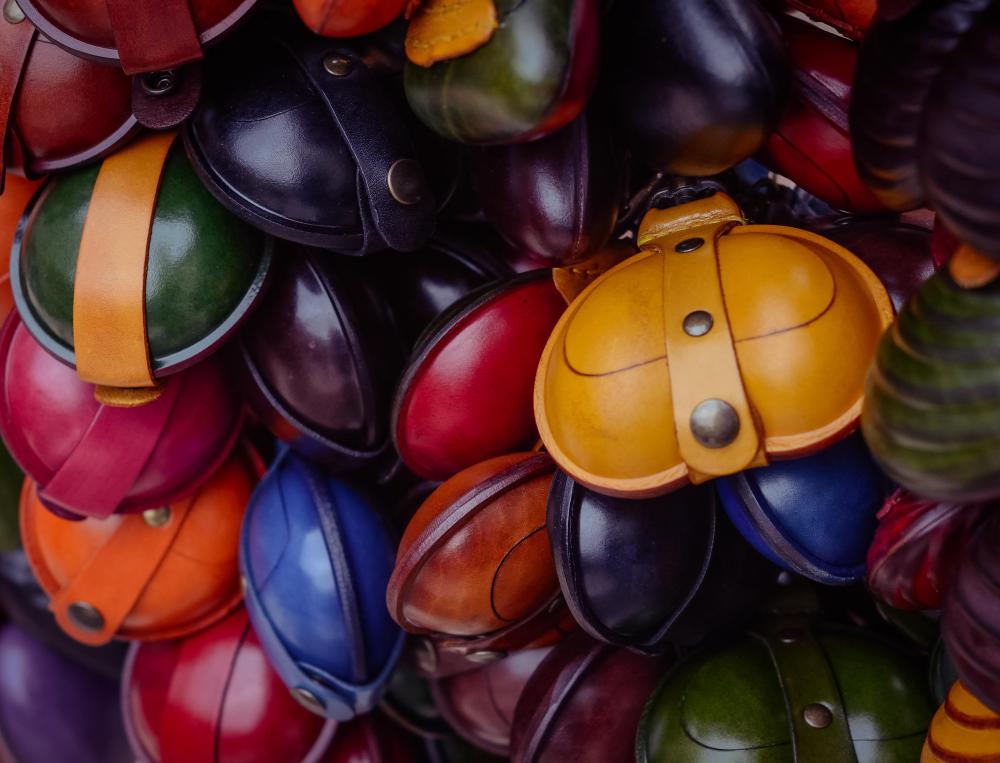
![Awls can be used for making leather goods, such as handbags.]() By: koboliaAwls can be used for making leather goods, such as handbags.
By: koboliaAwls can be used for making leather goods, such as handbags.
Discussion Comments
Louis Braille did blind himself that way. Or rather, he slipped on a piece of leather, poked out one eye, and the infection spread to the other.
I usually use an awl as the first line of poking objects when putting grommets in. (A mandrel is second, and if needed, my little snips used as a pointed object instead of a cutting one.)
Sharp objects always make me nervous. Even things like pencils can made me worry if they are too near to my eye; I cannot imagine using virtually any of the awls listed in this article, because I would be too afraid of poking my own eye out.
@anon135512, if that is true then it is definitely a gruesome story. I would believe, it though, if only because it proves how danger things like an awl set can be in the hands of small children.
Did you know Louis Braille accidentally blinded himself when he was three with a stitching awl?
Post your comments