
At WiseGEEK, we're committed to delivering accurate, trustworthy information. Our expert-authored content is rigorously fact-checked and sourced from credible authorities. Discover how we uphold the highest standards in providing you with reliable knowledge.
What is an Availability Float?
 Tricia Christensen
Tricia Christensen
Tricia Christensen
When a person writes a check, sends it in the mail, and waits for a person or company to deposit it, there is a certain amount of time involved in the money being actually deducted from the person's checking account. Similarly, if a check is accepted from someone and is deposited in an account, the bank may impose certain rules about when that money becomes available, particularly if the check is large, or comes from a private person or foreign entity. This time, either waiting for money to be deducted or added to an account, is called an availability float.
During the time of an availability float, where a person is waiting for someone else to deposit a check, the money in the check writer's bank is still at his disposal. It is not a good idea for him to use it, however, and he may want to record it in his check register to make certain that he doesn't bounce a check. How long an availability float on a check will last cannot always be accurately determined. A company could quickly deposit a check, or not receive or deposit it for a week or more. A person should not use the availability float funds because they have already been allocated.

Similarly, most banks have policies about availability floats on money that is deposited in the form of checks. Some banks, particularly when the account holder has an extended history with the bank, will give him instant access to the money, and no availability float time is assessed. In other cases, checks from private parties, unless they initiate from the same bank, may mean money is not immediately available.

Banks may impose a waiting time of one or more days, usually not exceeding a week, before funds become available. Alternately, an account holder may only be able to access a portion of the funds until the check has cleared. People should be cautious regarding spending money that has not yet been credited to an account so they don't write bad checks.
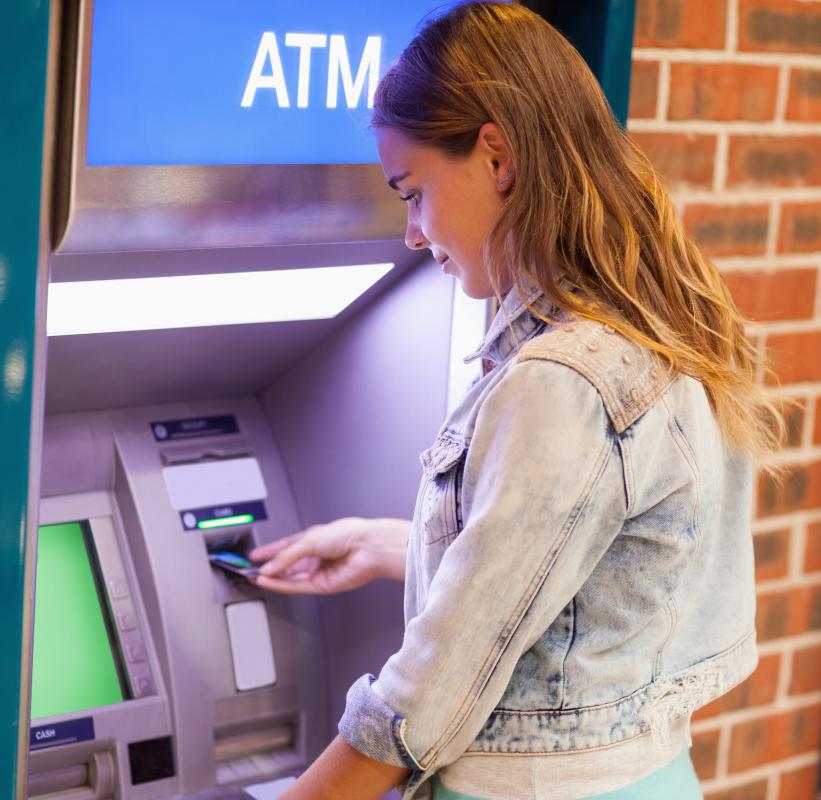
Online and ATM banking has significantly changed availability float times. If a person uses an ATM card, funds are usually immediately deducted from his bank account. There are certain systems in place that treat checks in exactly the same manner. If someone writes a check to a store, the funds might be deducted right away, instead of having any availability float time.
On the other hand, when a check is mailed, at least one day of float is usually guaranteed, since even if the check goes to someplace in the same town, it has to be processed and usually cannot arrive until the next day. If a person knows a direct deposit is going to be in his account on the following day, he can usually safely assume he has enough availability float to mail a check the day before, even if the funds are not in the account yet. People should still observe caution when employing this method; all manner of accidents could cause even a direct deposit paycheck to be delayed.
Tricia Christensen
Tricia has a Literature degree from Sonoma State University and has been a frequent WiseGEEK contributor for many years. She is especially passionate about reading and writing, although her other interests include medicine, art, film, history, politics, ethics, and religion. Tricia lives in Northern California and is currently working on her first novel.
Learn more...
Tricia Christensen
Tricia has a Literature degree from Sonoma State University and has been a frequent WiseGEEK contributor for many years. She is especially passionate about reading and writing, although her other interests include medicine, art, film, history, politics, ethics, and religion. Tricia lives in Northern California and is currently working on her first novel.
Learn more...AS FEATURED ON:
AS FEATURED ON:









-
![The popularity of ATMs and debit cards has drastically changed availability float.]() By: WavebreakmediaMicroThe popularity of ATMs and debit cards has drastically changed availability float.
By: WavebreakmediaMicroThe popularity of ATMs and debit cards has drastically changed availability float. -
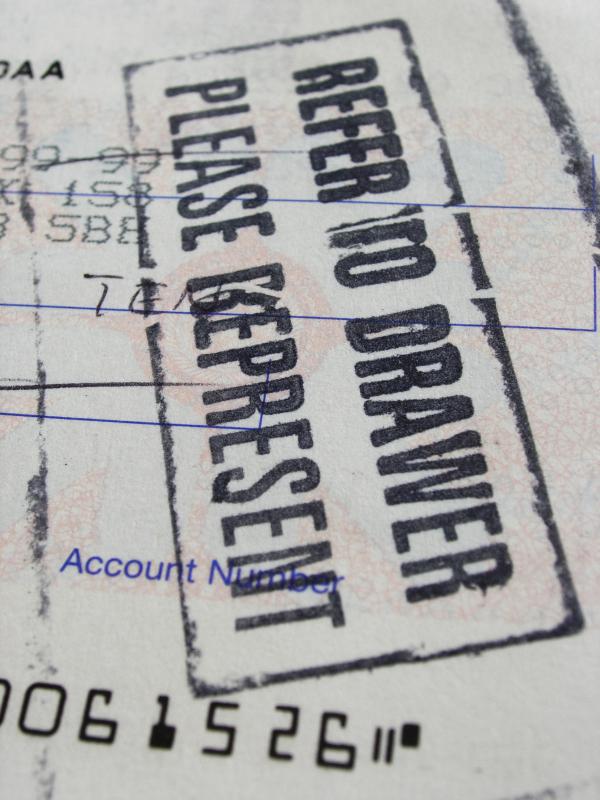
![The length of an availability float will vary based on how long it takes the payee to cash a check.]() By: Alex HindsThe length of an availability float will vary based on how long it takes the payee to cash a check.
By: Alex HindsThe length of an availability float will vary based on how long it takes the payee to cash a check.
Discussion Comments
You have some valid points on your discussion of Bank Float. If someone wants to know about bank float they should access the banks "Disclosure Statement Covering Checking & Savings Account." by federal law, banks must disclose how they calculate float and when they begin to pay interest on interest bearing accounts. The information is very general and can only be properly deciphered by the bank's Deposited Checks Funds Availability Schedule. Then that schedule will vary by what time of the evening the check is processed. Also, on regular savings accounts you must know whether the bank pays on the collected balance or the ledger balance. And that is just the surface of bank float, most articles on bank float are misleading because the writer does not understand bank float and/or check processing.
Post your comments