
At TheHealthBoard, we're committed to delivering accurate, trustworthy information. Our expert-authored content is rigorously fact-checked and sourced from credible authorities. Discover how we uphold the highest standards in providing you with reliable knowledge.
What Is an Antiseptic?
An antiseptic is a spray, ointment, or salve that is applied to cuts and wounds for anti-bacterial purposes. Antiseptics, which is a term of Greek origin, are used to slow down the process of germs and bacteria from spreading through the infected tissue into the body. There are basically two types of antiseptics used for their actions, such as germicides which are capable of destroying the microbes, and bactericidal versions which are used for the general slowing of the growth of the bacteria. Both of these products are effective for protecting the wound and enhancing the speed at which they heal by the natural process of the body’s immune system.
Although an antiseptic is extremely efficient against the bacteria and the germs, their use should be limited and must be used after the recommendation of a doctor. Before application, the cut or abrasion should be cleaned extremely well, and then covered with a bandage or piece of gauze after application. But in specific cases, some antiseptics such as phenol, commonly known as hydrogen peroxide, must be allowed sufficient time to dry before the area is covered. If the person is allergic to the antiseptic, then use it sparingly and only after the recommendation from a doctor, and if possible use an antibiotic ointment instead.

Whether to use a disinfectant or an antiseptic must be taken into consideration before their usage. If the injury needs more than just a slow healing medicine, a disinfectant should be used in place of an antiseptic. Always remember to clean up the wounded area to remove all the dirt and dead tissues, as well as the oils in the skin that will prevent the bandaging from sticking to the surrounding surface. Choose between various application types, such as a spray or ointment, and do not use a large amount because it can cause some negative side effects. Only use enough to effectively cover the cut or abrasion.

An antiseptic is very commonly used for burns, cuts and other minor injuries, but they should never be used for more serious injuries and wounds, such as the deep cuts, long-term infections, possible fatal injuries, animal bites, punctures, and cuts that are causing continual bleeding. In these cases a medical provider should be consulted before attempting to use any type of spray or ointment. Since an antiseptic, whether a spray or ointment, is an antibacterial medicine it should be used in conjunction with other antibiotic creams, solutions, or any other healing type products without consulting a physician or pharmacist first.
AS FEATURED ON:
AS FEATURED ON:


-
![An antiseptic may be applied to cuts and wounds for anti-bacterial purposes.]() By: auremarAn antiseptic may be applied to cuts and wounds for anti-bacterial purposes.
By: auremarAn antiseptic may be applied to cuts and wounds for anti-bacterial purposes. -
![Gauze can be used to protect a wound that has been cleaned with antiseptic.]() By: picsfiveGauze can be used to protect a wound that has been cleaned with antiseptic.
By: picsfiveGauze can be used to protect a wound that has been cleaned with antiseptic. -
![An antiseptic is very commonly used for burns.]() By: SuperingoAn antiseptic is very commonly used for burns.
By: SuperingoAn antiseptic is very commonly used for burns. -
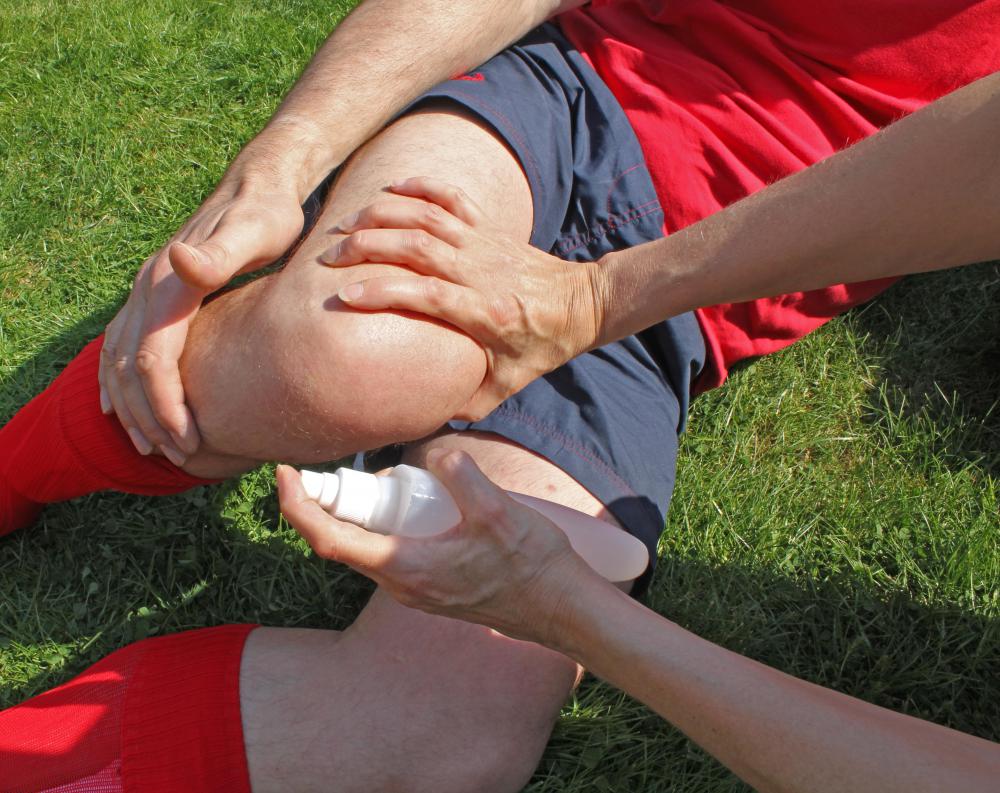
![Antiseptic sprays are often easier to use than ointments or creams.]() By: Nikki ZalewskiAntiseptic sprays are often easier to use than ointments or creams.
By: Nikki ZalewskiAntiseptic sprays are often easier to use than ointments or creams. -
![An antiseptic should only be used after the recommendation of a doctor.]() By: forestpathAn antiseptic should only be used after the recommendation of a doctor.
By: forestpathAn antiseptic should only be used after the recommendation of a doctor.




Discussion Comments
@strawCake - I don't think overuse of antibiotic creams is really that bad. Most of the problems we have with super germs are because of overuse of antibiotics, and because of people who don't finish their whole course of antibiotics.
I've never heard anything about overuse of antibiotic creams being harmful, so I don't think any kind of public health campaign is necessary. It would probably be just a waste of time and money.
@indemnifyme - Yeah, it is a little bit confusing. I think it would probably be better if people were more informed about this stuff, but most people aren't.
It would be great if there was some kind of public health campaign about this, because you really don't need to use an antibiotic ointment when an antiseptic will do.
You know, I see the term antiseptic used all the time. In my bathroom, my mouthwash says antiseptic, and I have betadine antiseptic cream as well as hydrogen peroxide, which says antiseptic on the bottle. But I had no idea what it meant until recently.
I always thought that antiseptics killed germs, when really, they just prevent the germs from growing and spreading. Very interesting.
@DylanB - Wow, honey is really amazing. I've heard the local honey is really good for allergies, but I've never heard of using honey as an antiseptic before. This sounds like a great idea, because I would much prefer to use honey rather than an antiseptic scrub or ointment from the store.
Also, I pretty much always keep some honey around, but I usually forget to buy first aid stuff at the store.
@feasting, @seag47-- If you don't have an infection, then you're supposed to use an antiseptic. If you do have an infection, you should use an antibiotic.
So @seag47 is right. The antiseptic prevents an infection from developing by keeping the area free of bacteria. An antibiotic treats the infection by killing the bacteria that is there. So you can think of an antiseptic as prevention and antibiotic as treatment.
Antiseptic and anti-bacterial, on the other hand, is the same thing. They both kill and prevent bacteria from multiplying.
@DylanB, @honeybees-- My grandmother would always apply honey on our cuts and scrapes when we were growing up. I didn't know what an antiseptic was back then but I remember that the honey really helped relieve the pain.
I think cinnamon, cloves and ginger have antiseptic qualities too but I have no idea how they could be used. I think they might irritate the skin so it's probably not a good idea to use them. Honey is not like that. It doesn't irritate skin, in fact it's good for skin.
@John57-- I know that tea tree oil is a great natural antiseptic but unfortunately I'm allergic to it. So I just use an anti-bacterial ointment that I got from the pharmacy.
I know that we're supposed to limit the use of antiseptics, but I end up using it several times a week because of my cat. My cat hasn't learned how to play without claws yet. So I end up getting cat scratches way too often.
These scratches are so bad. Washing them with soap and water isn't enough. It gets red and inflamed and takes a longer time to heal if I don't use an antiseptic ointment. I don't apply too much though, just a dab spread over the scratch after I've washed and dried it.
If you are looking for a natural antiseptic, I have used tea tree oil as an antiseptic. I always keep a bottle of tea tree oil around because it can be used for so many things.
This is something I always make sure to have in my first aid kit. It really seems to keep bacteria from spreading and the healing process also seems quicker.
Many times people don't think about the natural remedies they can use for cuts and wounds. It is so easy to reach for an antiseptic instead of thinking about a natural product that could give the same results.
@DylanB-- Yes, honey is a great natural antiseptic. When I use this for any minor cut or wound, I like to keep a bandage on just because the honey is so sticky.
This has been used for hundreds of years, and in some studies has shown to work better than other antiseptic creams applied to a wound.
Honey is a good natural antiseptic. I would much rather smear some honey on my wound than pour some harsh chemical into it.
The honey can kill the bacteria and keep it from spreading. I have read that some bacteria just cannot live in honey. Also, it is very gooey, so it seals the wound and keeps anything bad from getting inside your body through it.
When I use honey, I don't really even need a bandage. I only cover the wound if the cut is wide enough to need protection.
I always treat my minor wounds with an antiseptic. I prefer to use hydrogen peroxide instead of alcohol, because it burns less.
If I fall and scrape my knee, there is usually quite a bit of dirt and sometimes small bits of gravel on the wound. Hydrogen peroxide boils out the debris. It's fun to watch it bubble up.
The wound turns white in a matter of seconds as the foam forms. I like an antiseptic that I can actually see working.
@feasting – Antibiotics kill the bacteria, but antiseptics just keep it from spreading. I have used antiseptic liquids on the surface of my skin before, but I have never seen any that could be taken internally.
I have taken antibiotics in pill form to kill bacteria that was causing my strep throat infection. I have also used antibiotic gel on wounds before.
If I have a little scrape or cut, I just use alcohol on it. This is a really effective antiseptic. I don't think I've ever gotten an infection from a cut that I have treated with alcohol.
What is the difference between an antiseptic and an antibiotic? I know that both work against bacteria, but I have a feeling that they are not the same.
It should *not* be used with other antibiotics or creams.
Post your comments