
At WiseGEEK, we're committed to delivering accurate, trustworthy information. Our expert-authored content is rigorously fact-checked and sourced from credible authorities. Discover how we uphold the highest standards in providing you with reliable knowledge.
What is an Amicus Brief?
 Mary McMahon
Mary McMahon
Mary McMahon
An amicus brief is a document that is filed in a court by someone who is not directly related to the case under consideration. The most classic example is a document filed by an advocacy group, such as the American Civil Liberties Union. The additional information found in such a document can be useful for the judge evaluating the case, and it becomes part of the official case record. Many nations allow people or entities to file such documents with their courts.
The tradition of accepting amicus briefs comes from a larger concept, the amicus curiae, or “friend of the court.” A friend of the court may be interested in a case for various reasons, although he or she is not directly involved. For example, a court might be preparing to try a case related to online file sharing, an issue of great concern to many people. A brief might be filed to discuss the larger ramifications of potential case outcomes, since these ramifications might not be brought up by the prosecution or defense during the course of a trial.

Amici curiae can do a variety of things in addition to filing a brief. They can also contribute academic evaluation of various matters related to a case, they may testify, and in very rare cases, they could contribute to closing oral arguments. Many advocacy organizations act as amici curiae, as do some concerned individuals. States and governments may also step in if they believe that a case may impact them.
Once an amicus brief is filed with a court, the court can decide whether or not to accept it. Such a brief may be rejected for any number of reasons, not becoming part of the final court record of the case, and it will not be considered in deliberations. In some regions, briefs filed by other states or territories are automatically accepted, as are briefs from the national government. The brief typically includes a description of who is filing it, and why, since one is generally filed out of a desire to protect the filer's interests.
In a high profile case, many amicus briefs may be filed, sometimes by opposing organizations or individuals. The court may also take advantage of the expert knowledge offered by amici curiae who may volunteer to review various materials related to the case. Like other aspects of legal procedure, the document follows a specific format and there are certain protocols that must be followed when filing it. Individuals who are interested in filing one should consult a qualified lawyer.
Mary McMahon
Ever since she began contributing to the site several years ago, Mary has embraced the exciting challenge of being a WiseGEEK researcher and writer. Mary has a liberal arts degree from Goddard College and spends her free time reading, cooking, and exploring the great outdoors.
Learn more...
Mary McMahon
Ever since she began contributing to the site several years ago, Mary has embraced the exciting challenge of being a WiseGEEK researcher and writer. Mary has a liberal arts degree from Goddard College and spends her free time reading, cooking, and exploring the great outdoors.
Learn more...AS FEATURED ON:
AS FEATURED ON:









-
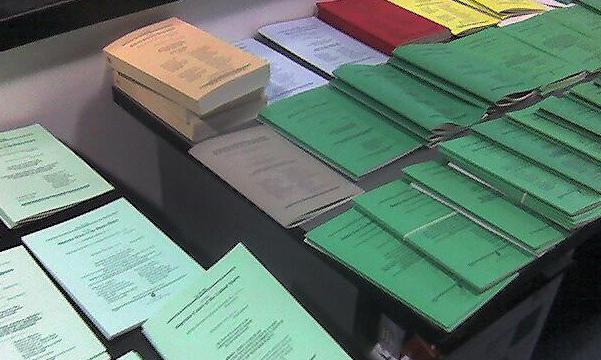
![Amicus briefs on table.]() By: Wendy SeltzerAmicus briefs on table.
By: Wendy SeltzerAmicus briefs on table.
Discussion Comments
Informative. Thank you.
How (or why) in this country can our judicial system now claim that other nations file an Amicus against Arizona? We are (were) a sovereign country and I am appalled to learn of this despicable ruling. --Mr. H.
Actually, vanstootie, it's a great time saver and the court encourages friends of the court with expertise to submit well organized and thoroughly researched briefs illuminating what are often complex and detailed matters.
Take the topic of MERS. Judges have no background in collateralized debt obligations, default swaps, predatory lending, predatory loan servicing, or the conspiracy behind the cloak of secrecy that is MERS.
Today, thanks to the brave pioneers who researched this fraud, more and more judges are putting a stop to unlawful foreclosures.
But it took experts to go down the rabbit hole, figure out the game, and then break it down for judges through the use of tools such as these briefs.
How else would judges know how to make proper rulings if they didn't understand the legal and factual dynamics of the case?
It's a wonder that the courts get anything done if persons not related to a case can file information. How does a lawyer even find out about cases being filed that aren't related to their clients?
WOW!!! Thank you so much. The 'ww' in my name is for 'West Wing', the TV show. I'm a rabid 'West Wing' watcher and more than once, the characters have referred to an amicus brief. Now I finally know what they are talking about. And it makes sense!
Post your comments