
At TheHealthBoard, we're committed to delivering accurate, trustworthy information. Our expert-authored content is rigorously fact-checked and sourced from credible authorities. Discover how we uphold the highest standards in providing you with reliable knowledge.
What is an Alcoholic Seizure?
An alcoholic seizure is a disruption in brain processing that is caused by alcohol poisoning or, in rare cases, by a specific allergy to alcohol. It typically causes a person to lose consciousness and may also cause spontaneous twitching or shaking of the limbs. Many experts consider alcoholic seizures to be a sort of induced epilepsy, though there is some debate on this point. Regardless their specific classification, they are usually very dangerous, and in most people they only get worse with time. The more a person drinks and the more frequently a person drinks, the more serious and debilitating the seizures can be. These sorts of seizures are often confused with those that happen in conjunction with alcohol withdrawal, but they aren’t the same and are usually considered to be far more dangerous.
Understanding Seizures Generally

Generally speaking, a seizure is a brain chemistry problem that that is caused by abnormal electrical activity. The signals sent to and from the brain via the central nervous system (CNS) get jumbled and disordered. The CNS normally has different neurons firing at various times, and is responsible for relaying critical messages about muscle movement and sensation to the brain. When a seizure happens, whether due to a medical condition or due to alcohol or drug abuse, all of the neurons in one area fire at one time. The brain becomes confused as it receives the wrong messages from the rest of the body or, in some cases, no messages at all.

Seizures can happen for many different reasons, and alcohol-related episodes are usually somewhat rare. They happen most commonly in people who routinely abuse or misuse alcohol, and in these cases the seizures are almost always related to alcohol poisoning. Excessive consumption, particularly over long spans of time, can have profound and very detrimental effects on brain activity.
Binge Drinking

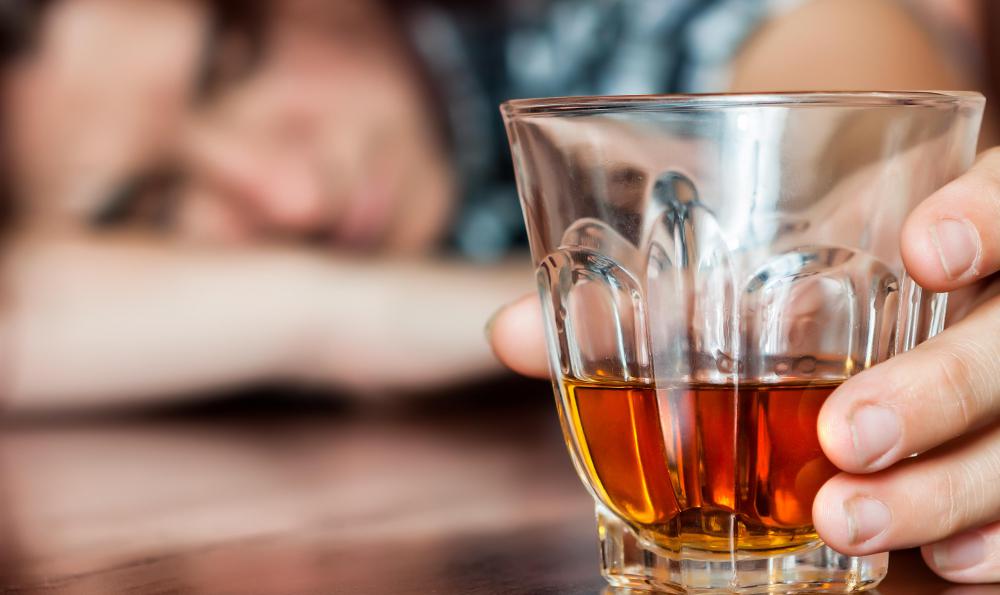
Binge drinking — which is when a person drinks a lot of alcohol in a short period of time — is one of the most common triggers. In these cases, the body is overwhelmed trying to process the toxins in alcohol. A problem known as “alcohol poisoning” typically happens first; this can result in irregular breathing, vomiting, and general confusion. A person with alcohol poisoned isn’t simply drunk, he or she is dangerously ill. Seizures commonly follow in these situations.

When an alcoholic seizure that is related to alcohol poisoning occurs, a person will experience convulsions, stiffness, blackouts, and will sometimes not be able to control his bladder or bowels. Even if a person remains conscious, he or she may experience a lack of control over limbs, which can lead to things like falling down and not being able to get up.Without medical intervention, sufferers can die.
Alcohol Allergies

Alcoholic allergies can also lead to seizures, though this is usually very rare. Most of the time, an intolerance to alcohol only produces mild symptoms, like nausea, headaches, heartburn, facial flushing, a stuffy nose, or a rapid heart beat. In severe cases, though, some people may experience more intense reactions, including a seizure caused by an acute allergy to ethanol or alcohol more generally.
Differentiating Withdrawal Seizures
An alcoholic seizure is often confused with a seizure due to alcohol withdrawal, though the two are different both in terms of causes and physiology. Regular alcohol-related seizures are induced by the consumption of alcohol, while withdrawal seizures, often referred to as “rum fits,” are brought on by the cessation of alcohol consumption — usually in alcoholics or others who have become conditioned to processing the toxin on a regular basis.
Withdrawal seizures often look and seem the same, but are caused not by poisoning but rather due to a temporary “short-circuit” when the brain expected one thing but got another. Some of the most common withdrawal symptoms include nausea, rapid heart rate, anxiety, and hallucinations. Many medical professionals consider fits or seizures to be a more or less normal part of recovery from alcohol addiction, and in general they aren’t usually seen as particularly dangerous to a person’s health. They are a concern and should be carefully tracked and recorded, but in most cases they are not a sign of some larger problem.
The same is not usually true for poisoning-related seizures. Whereas the newly sober person can expect his or her seizures to disappear with time, the binge drinker’s episodes are likely to get more and more serious.
Importance of Medical Care
Alcohol poisoning can lead to death, and as such, immediate medical action is required any time a person has had so much to drink that he or she completely loses control. Seizures are a sure sign that medical intervention is needed, but symptoms like loss of consciousness and profound disorientation typically also signal a need for help. For those with alcohol allergies, any facial swelling can lead to trouble breathing and may cause a person’s throat to swell shut. Without intervention, this can lead to death or serious brain damage caused by lack of oxygen.
AS FEATURED ON:
AS FEATURED ON:


-
![Alcoholic allergies may cause an alcoholic seizure.]() By: Hoda BogdanAlcoholic allergies may cause an alcoholic seizure.
By: Hoda BogdanAlcoholic allergies may cause an alcoholic seizure. -
![When an individual experiences an alcohol seizure, medical attention is required.]() By: ep stockWhen an individual experiences an alcohol seizure, medical attention is required.
By: ep stockWhen an individual experiences an alcohol seizure, medical attention is required. -
![Binge drinking can lead to an alcoholic seizure.]() By: kmiragayaBinge drinking can lead to an alcoholic seizure.
By: kmiragayaBinge drinking can lead to an alcoholic seizure. -
![Alcoholics who do not have constant access to alcohol may experience withdrawal seizures.]() By: PhotobankAlcoholics who do not have constant access to alcohol may experience withdrawal seizures.
By: PhotobankAlcoholics who do not have constant access to alcohol may experience withdrawal seizures. -
![Alcoholic seizures typically include convulsions and blackouts.]() By: Daddy CoolAlcoholic seizures typically include convulsions and blackouts.
By: Daddy CoolAlcoholic seizures typically include convulsions and blackouts.




Discussion Comments
I'm going through the same as your wife. She needs medical treatment and therapy. Hope she's OK.
I had a rum fit seizure six months back. I stopped drinking after that. Can I start drinking moderately?
I believe your wife may alcoholic. Look up the AA (Alcoholics Anonymous) hotline for your wife to call should she wish to recover from the effects of drinking.
I belong to an anonymous group called Al Anon. Our primary purpose is to help people (family and friends) who have been affected by someone else's drinking. We are online and in the phone book.
I will pray for you and your family. Blessings.
My wife consumed mass amounts of alcohol (gin and tonic) for many years. For the past five or six years it has been about a quart a day. She began having seizures when she would stop drinking for a day about five years ago. Since then she has had a total of 11 seizures including four in the past six months.
She has put the gin down and averages about six beers and four glasses of wine per week. She had a seizure on Monday and Tuesday after having a couple of beers. Can she not drink at all?
Post your comments