
At HomeQuestionsAnswered, we're committed to delivering accurate, trustworthy information. Our expert-authored content is rigorously fact-checked and sourced from credible authorities. Discover how we uphold the highest standards in providing you with reliable knowledge.
What is an Acre?
 Tricia Christensen
Tricia Christensen
Tricia Christensen
An acre is a unit of measurement for land that describes the square footage or yardage of a parcel of land, although different countries may measure this unit in slightly different ways. A US football field contains roughly the same square footage as an acre. The perimeter may vary, however.
Both England and the United States use the acre as a land measurement. In the United States, it is 43,560 square feet (about 4,046.8 square meters). The translation to metric measurements usually results in measurement in hectares. An acre is equivalent to about 0.4 hectares. Another way to think of this is to think of a square that's 208 feet and 9 inches (about 63.63 meters) on each side — though it doesn't have to be square; any area of this size can be called an acre, regardless of its shape.

Measuring an acre gets more complicated when yards are used as the means of measurement. In England and the US, a square yard yields slightly different measurement. Thus, saying that this unit contains 4,840 square yards will result in a slightly different metric measurement.
The international measurement of a yard is 0.9144 meters, and the US measurement of a yard is a tiny bit larger, which results in a square yard measurement that is slightly greater. The difference literally comes down to millionths of a yard. Both England and the US essentially have the same acre measurement, which is also considered the international measurement.
This does not mean that all countries use exactly the same measurement for an acre. In fact, Irish and Scottish acres exceed the US and British units in size. A Scottish acre is equivalent to 1.27 standard acres. The Irish measure is even larger, 1.6 British or US acres.
The unit may also be measured in furlongs, equivalent to 220 yards, or by chains, 22 yards. A standard acre would have been measured as 1 furlong by 1 chain prior to internationalizing the measurements.
Acreage measurement is often still used today to advertise property for sale. A house with a "half-acre" might be excellent for growing quite a few plants, and a thriving garden. Some buyers simply don't want the mess of cleaning up an acre of overgrown property, however, and may see property with acreage as a disadvantage. In some US states, those who own 1 acre or more may be legally responsible for yearly maintenance to prevent fire hazards. This may involve keeping open grass at certain lengths and ridding the property of dead brush or plants.
Tricia Christensen
With a Literature degree from Sonoma State University and years of experience as a HomeQuestionsAnswered contributor, Tricia Christensen is based in Northern California and brings a wealth of knowledge and passion to her writing. Her wide-ranging interests include reading, writing, medicine, art, film, history, politics, ethics, and religion, all of which she incorporates into her informative articles. Tricia is currently working on her first novel.
Learn more...
Tricia Christensen
With a Literature degree from Sonoma State University and years of experience as a HomeQuestionsAnswered contributor, Tricia Christensen is based in Northern California and brings a wealth of knowledge and passion to her writing. Her wide-ranging interests include reading, writing, medicine, art, film, history, politics, ethics, and religion, all of which she incorporates into her informative articles. Tricia is currently working on her first novel. Learn more...
AS FEATURED ON:
AS FEATURED ON:


-
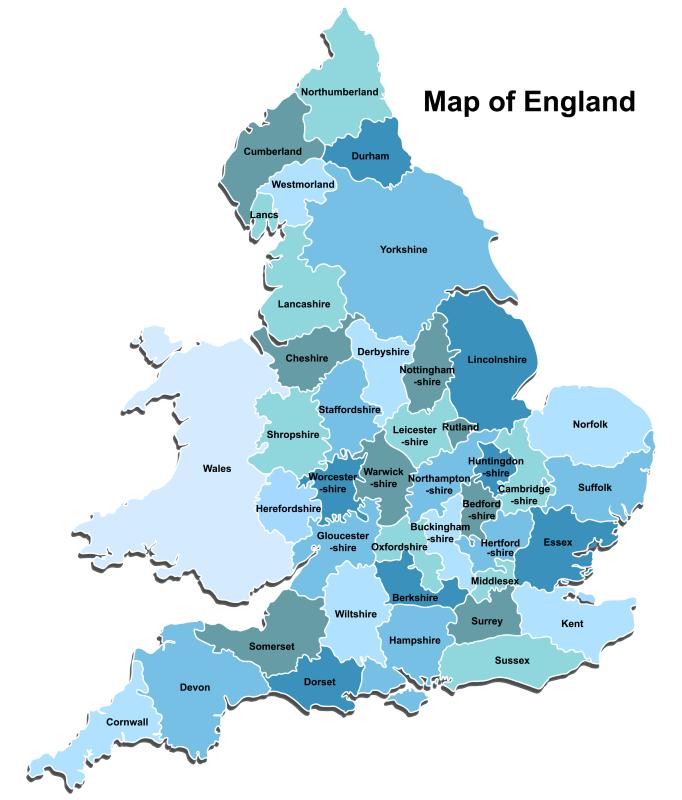
![Acres are used as a measurement of land area in England, despite that country's use of the metric system.]() By: Negura DincoloAcres are used as a measurement of land area in England, despite that country's use of the metric system.
By: Negura DincoloAcres are used as a measurement of land area in England, despite that country's use of the metric system.
Discussion Comments
Make it simple guys. 208.7 ft.sq. = 1 Acre.
Most parcels are rounded up:
For example, 210 ft X 420 ft = 2 acres m/l. This works well for smaller parcels of less than five acres. More than this, and you lose/gain footage to the extent that actual measurements: L X W should be used. Got it?
14233 hectare works out to 35582 acres. That is assuming the 14233 is the correct number, ie not missing a decimal somewhere. If you have that much acreage, I am astounded. Very good. Note, it is not 35 and some odd acres.
i am confused. if we own 14233 Hectare, if i convert it to acres it comes to 35.5825- does it mean 35 acre and rest yards?
Another way to think of a acre is to picture a square that's roughly 209 feet by 209 feet (which is roughly the same as 79 yards by 79 yards or, 64 meters by 64 meters).
Yep, one hectare is just under 2.5 acres. Or, if you prefer it the other way around, 1 acre is a tiny bit more than 0.4 hectares.
What is the unit of measurement they use in Europe for measuring land? Is that the hectare? So where Americans would use acres, Europeans would use hectares?
Post your comments