
At WiseGEEK, we're committed to delivering accurate, trustworthy information. Our expert-authored content is rigorously fact-checked and sourced from credible authorities. Discover how we uphold the highest standards in providing you with reliable knowledge.
What is an Accessory Organ?
An accessory organ is a body part that helps out or plays a role in a system different from the system in which it’s most directly involved. The term “accessory” can be a little bit misleading, since in most cases these organs are essential. Sometimes functionless organs, like the human appendix, are grouped under the title, but this is more of an exception than a rule. Organs typically get this name because of the ways in which they assist in larger processes, like digestion or reproduction, in addition to their main functions. In most cases primary organs bear the majority of the responsibility for these larger processes, but they couldn’t accomplish everything on their own.
Processing and Preparing Food Energy

Several body parts may be classified as accessories to the digestive system, and in general most conventionally known accessories are involved with this process. For example, the teeth and tongue assist in chewing and preparing food for digestion. In turn, salivary glands provide the mouth with liquid saliva that helps break down food so it can be more easily swallowed and digested. The substance in the saliva that aids in this breakdown is called amylase. Saliva also makes food into a pasty substance that can move down the throat more easily.

The pancreas also produces amylase and sends it to the stomach. In addition, it produces other substances that help break down fats and proteins. Despite the seriousness of these roles, the pancreas is generally considered an accessory because its primary function is in the endocrine system.
Filtration and the Liver
The liver is involved in many activities in the body, and it, too, functions as an accessory for the digestive system. Like the pancreas, the liver aids in sugar, fat, and protein absorption. The liver also serves as a storage warehouse for essential nutrients like iron and various vitamins. An organ near the liver, the gallbladder, is similarly impacted by digestive functions because it releases liver bile as fat circulates through the digestive system.
Seeing and Hearing

These organs are not limited to the digestive system. Both the eyes and the ears contain several components that work in conjunction to produce sight and hearing, for instance. The eyelids are one example; their main job is to protect the main sight organs — namely, the eyeballs — from harmful substances, but they also keep the eye from becoming too dry. In the ears, the pinna is a curved structure on the outside of the head that helps direct sound waves into the inner ear, where the sound is recognized by the eardrum and subsequently translated by the brain.
Accessories Related to the Skin

Human skin also contains several accessory parts, including but not limited to hair follicles, sweat glands, and melanocytes. Hair follicles and sweat glands produce hair and sweat, respectively. These substances protect and cool the skin. Meanwhile, melanocyte cells contain pigments that give skin its color and help protect it from environmental effects like sunlight.
The Reproductive System

Both male and female human reproductive systems rely on accessories, as well. For example, the vas deferens and ejaculatory ducts in males help transport and expel the sperm produced in the testes, one of the primary male sex organs. In females, examples of accessory organs include the labia, which lubricate the vagina, and the mammary glands, which help the breasts produce milk for infants.
Functionless Organs
Although less commonplace, the term “accessory organ” may also sometimes be used in reference to appendage organs that scientists have deemed mostly irrelevant. These organs are believed to be relics of evolutionary processes, and thus no longer useful for humans. The human appendix is a common example.
Non-Human Examples
Accessory organs are by no means limited to humans. One example comes from the aquatic animal kingdom of fish. Some certain fish types have adapted to breathing out of water. They have air chambers consisting of specialized skin and blood vessels attached to their gills, which are the primary breathing structures.
AS FEATURED ON:
AS FEATURED ON:









-
![The appendix is known as an accessory organ.]() By: dr_oxThe appendix is known as an accessory organ.
By: dr_oxThe appendix is known as an accessory organ. -
![The pancreas is considered a digestive accessory organ.]() By: CLIPAREA.comThe pancreas is considered a digestive accessory organ.
By: CLIPAREA.comThe pancreas is considered a digestive accessory organ. -
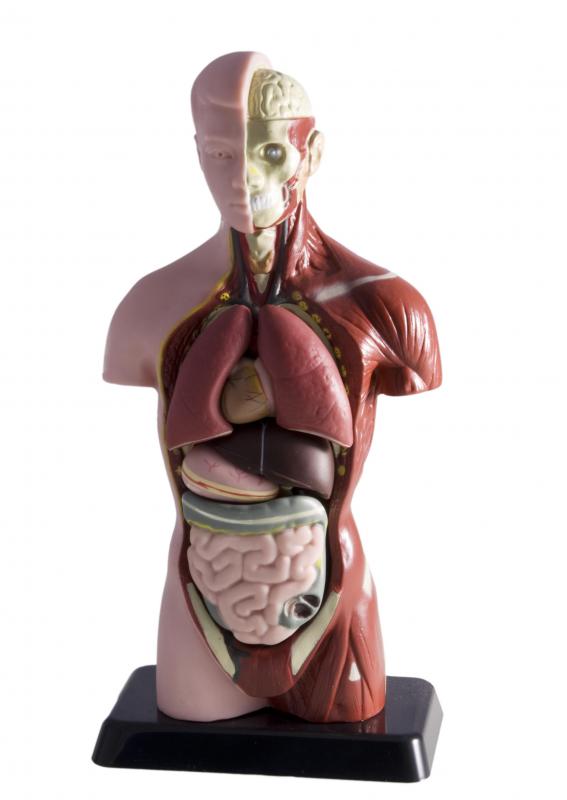
![The torso houses many of the human body's accessory organs.]() By: GabeesThe torso houses many of the human body's accessory organs.
By: GabeesThe torso houses many of the human body's accessory organs. -
![The ear's pinna is an accessory organ.]() By: DenThe ear's pinna is an accessory organ.
By: DenThe ear's pinna is an accessory organ. -
![Considered an accessory organ, the pancreas gland aids in digestion and produces insulin.]() By: pixdesign123Considered an accessory organ, the pancreas gland aids in digestion and produces insulin.
By: pixdesign123Considered an accessory organ, the pancreas gland aids in digestion and produces insulin.




Discussion Comments
Cats have the coolest accessory organ. They have a regular eyelid which we see and then an extra eyelid called "nictitating membrane."
I can see it when my cat is about to fall asleep and suddenly opens her eyes. Its a transparent eyelid for extra protection. It also means that they can blink and still see while they do so. It helps them while hunting because they don't have to loose sight of their prey when they blink!
It's probably the best accessory organ ever!
I think that the term accessory organs is a little misleading. All organs have a purpose in the body. If an accessory organ stops functioning, it might not cause immediate harm to the body and death like vital organs, but it will still cause problems.
Take the pancreas for example. Pancreas releases insulin which helps metabolize sugar. If the pancreas stops working, you won't die, but you will become a diabetic which will damage your health and reduce your quality of life.
That's why I take all organs- vital or accessory to be extremely important and necessary for our survival.
Post your comments