
At MyLawQuestions, we're committed to delivering accurate, trustworthy information. Our expert-authored content is rigorously fact-checked and sourced from credible authorities. Discover how we uphold the highest standards in providing you with reliable knowledge.
What Is an Access Easement?
An access easement is a legal tool that allows a person access to a piece of property that he or she does not own. There are essentially three types. Some are connected to land permanently, and in most cases these are designed for public use; sidewalks that cut through private property are one example, as are telephone and electrical poles and wiring. It’s also possible for owners to grant easements to others in order to allow them to cut through or use limited portions of private land. Easements can also be implied, which usually happens when someone has been using land for long stretch of time as if there was an easement when there isn’t; the law sometimes will decide that an easement exists by implication even if it was never something that was overtly agreed to. It is usually really difficult to prove an implied easement, and not all courts support the idea. In most cases access easements have to be really carefully documented and recorded in order to be enforced.
Easements Tied to the Property

Some of the most common easements are actually tied to the property itself, which means that they are recorded in the official land deed and can’t be removed by subsequent owners, at least not without a lot of legal argumentation. Theses are known formally as “appurtenant easements.” Public easements often take this form. Railways, public utilities, and sidewalks are all examples of things that often cut through private land. A homeowner doesn’t own an electrical pole on his property, but he has to allow the utility company access to the land for its installation, maintenance, and repair.

Private easements might also take this form, particularly in communities where there is a shared resource like a road or a body of water that abuts one lot, but not others. A person who owns beachfront property might be subjected to an easement that allows neighbors and possibly even members of the public to cut through a corner or section of the land in order to get to the shore, for instance, and people who own property on main roads sometimes have to allow access to those in nearby lots so that they can get in and out more easily. These sorts of easements tend to be appurtenant easements since they’re often viewed as more or less essential; taking away an owner’s choice is often a god way to avoid conflict.
Non-Essential Use Grants
Some private easements are between individuals for access that is not essential, and in most cases these sorts of easements are dependent on the individuals. They aren’t tied to the property, in other words, and they can often be rescinded or taken away at any time. Neighbors may grant access over their property to other neighbors to get to a local lake, pond, or forested area more quickly, for instance, or they may allow certain people the right to come onto private land to hunt or fish.
These sorts of easements don’t usually survive the parties that made them, and if either party moves or transfers their land the easement is generally canceled. They aren’t always formalized, which means that they aren’t always written down or recorded, particularly not if they’re structured as agreements or understandings between friends. In most cases this is fine, but it can pose a problem when and if disputes arise. People sometimes remember the terms of agreements differently, and circumstances can also change over time. Having something in writing also makes things more transparent in the event of a sale or transfer.
Implied and Constructive Easements
In some cases easements can arise more or less on their own, either through neglect or “adverse use” — basically when someone uses another’s land knowing it’s not his but is never punished or told to stop. If this sort of use goes on for a long time the courts may declare that an implied or “constructive” easement exists, which will give the person using the land the legal right to continue doing so even though the owner never formally agreed. In most cases the owner has to know about the use but simply ignore it for this sort of easement to arise.
For example, if person A travels over land owned by person B for a years and years with no opposition even though person B sees him do it, or if he enters person B’s land to hunt or camp every year with A’s full knowledge, the situation can generate a constructive easement. The access to the property is without permission, but the owner has done nothing to put a stop to it. Different courts have different laws governing the amount of time it takes for an easement to be implied, and different jurisdictions have different rules, too. This sort of access easement doesn’t exist everywhere.
Recording and Documentation
Attorneys almost universally recommend that access easements be recorded and properly filed with regional registry offices. The agreement should clearly explain what kind of access is granted and who is allowed to make use of it. It should also detail how to terminate the agreement, as well as what course of action to take if either party is in violation. Even if it doesn’t seem necessary to put something in writing, the effort is often worth it in the event of a dispute or problem.
Are Access Easements Tax Deductible?
Access easements as they are understood to grant access to a property by the public, utility, or government agency are not tax deductible. However, if a landowner were to grant an easement for purposes of conservation, then it is possible that this type of easement would provide some tax incentives.
A conservation easement is granted to a nonprofit or government agency in order to protect the habitat of wildlife that resides on the property. This type of agreement does not grant access to anyone other than the beneficiary of the easement. Whether or not public access is granted is decided when the terms of the easement are being agreed upon between the owner of the land and the agency being granted the easement.
The easement would also protect the property from being developed by future owners or heirs. While a conservation easement might provide tax incentives, it can also lower the value of the property since undeveloped land is usually prized for its ability to be developed.
In recent years, the IRS has more heavily scrutinized conservation easements due to landowners using the easements for billions of dollars in tax breaks. Often, owners take deductions that overinflate the value of the land. For a landowner considering a conservation easement, they would need to determine whether the tax incentives are worth the lower value of the land.
Can an Access Easement Be Granted Over a Utility Easement?
A utility easement allows for the utility company to access any lines, cables, or equipment they may have on your property. As long as the utility company has a clear path to their equipment, a landowner may do as they wish with the easement, including landscaping and allowing others access to or through the property.
If a landowner blocks a utility company from accessing their equipment, such as by building a fence or building an addition to their home over one of the utility company's lines, then the utility company is within its right to remove the obstruction. Once a utility easement has been granted or becomes necessary, it is nearly impossible for the landowner to remove or make changes to the easement.
Can an Access Easement Be Relocated?
Laws regarding the relocation of an easement will vary from state to state, but in most cases, a landowner should be able to relocate an easement that is creating a burden to the landowner. In most cases, a landowner will have two options.
1. Agreement By All Parties
The landowner would first obtain the approval of the beneficiaries of the easement. The beneficiaries would also need to approve the proposed new location of the easement. Once both parties are in agreement, the new agreement would be recorded in the county office for which the property is located.
2. Permission of the Courts
Without the cooperation of the beneficiaries of the easement, the landowner may need to make his or her case in court to ensure the proposed new easement location doesn't create a burden on those who were granted access.
There are cases in which it might not be possible to relocate an easement. For example, you might have a neighbor that cannot access their property without first accessing yours. If the terrain allows only one possible route into their property, then you could not reasonably relocate the easement as it would create a barrier to your neighbor accessing their own property. It is their right to have access to their property.
These types of cases have been heard in every state, and while the outcomes will be similar, there may be some minor differences. Consulting with a real estate attorney will provide the best answers to your situation and location.
AS FEATURED ON:
AS FEATURED ON:


-
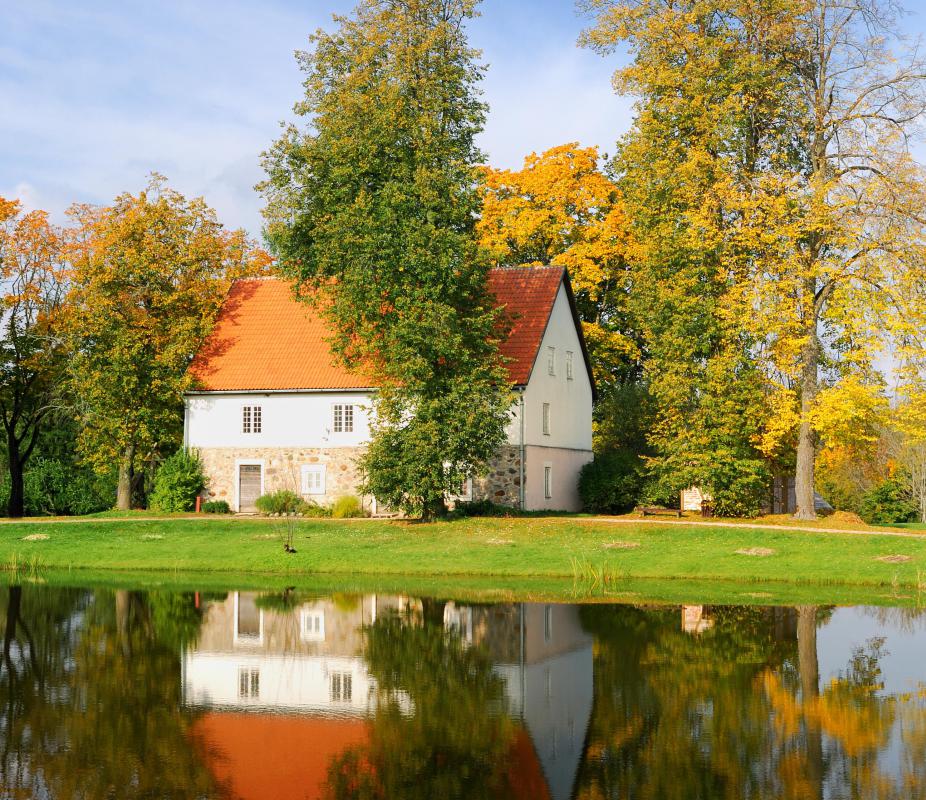
![One example of access easement is when a property owner allows neighbors to walk through his or her property to get to a nearby lake.]() By: Aleksey StemmerOne example of access easement is when a property owner allows neighbors to walk through his or her property to get to a nearby lake.
By: Aleksey StemmerOne example of access easement is when a property owner allows neighbors to walk through his or her property to get to a nearby lake. -
![Utility workers need access to poles on private land to provide maintenance and conduct repairs.]() By: Greg PickensUtility workers need access to poles on private land to provide maintenance and conduct repairs.
By: Greg PickensUtility workers need access to poles on private land to provide maintenance and conduct repairs.

Discussion Comments
I have a major block of flats going up next to my property and the owner-builder has said I can have access to my through his land, because he's sort of doing me a favor (or lying about it as planning permission hasn't gone through yet), and I don't know what to do.
I don't want to upset him by asking for easement, but I also don't want to spend out loads of money changing my garden if he's just making it up. Any advice?
We have an access by permission only license on our ranch. We hesitate to call it an easement or right of way because those are legal terms. It allows landlocked neighbors on the ranch with 4 or 5 acres or less ingress and egress.
The third generation buyer wants to fight over whether it's a right of way or not. His deed from a title company says its a "right of way," but they had to send us a letter asking for permission only.
He keeps tearing up our fences and gates, and we keep calling the sheriff, who for some reason tries to side with the crosser.
We have shown him a dozen court cases in the last year or two that say we can use gates as necessary on the ranch and the crosser does not have the right of unobstructed passage. It's fascinating when city slickers move to the country.
I know one this for sure – people get downright ultra-mad when other folks go messing with their land. I suppose, that in a lot of ways, that is the same as messing with their money.
But the thing about land that has been in families for generations is that it means far more to the landowner than just a real estate investment, often times. And that is why my grandfather went through years of litigation to remove an easement from his family’s farmland.
No one had lived there for years that were in the family, and I suppose that other’s in the area thought that would make it a good opportunity to try to pull a fast one.
They actually hired someone to come in and bulldoze the creek that was the dividing line between the two properties in question. This would give them more land, and keep them from having an easement arrangement with my grandfather.
In the end, my granddaddy showed them just how mad he was that they did this and actually completely and legally cut off the easement that they were trying to steal.
I have been questioning how easements work for years. My husband and I bought a home and land a few years ago, and we apparently own the dirt road that runs right next to our property.
Now we don’t need to use that road, but it is there for the people who do have property that is accessible by the main road. There are three of them, and we’ve only ever had difficulty with one of them. However, that difficulty was major.
Some of our other neighbors actually approached my husband about cutting off the easement to force these people to leave.
Naturally, we told them no. I do wonder, though, why we have to allow people to drive over our land to get to their home if they are immediately posing danger to everyone who lives around them.
There was a man in our neighborhood who bought one of the first houses in the subdivision. He unknowingly built a fence two feet onto the adjacent property. When a house was being built next to him, it became clear that the fence was 2 feet beyond the property line.
This is called prescriptive easement. To resolve this issue, the legal owner of the strip of land decided to give permission to the "hostile" owner to use the land. The neighbor did this to avoid the land becoming part of the property of the person who put up the fence in the first place.
The legal owner wrote a letter to the guy who made the mistake. So in the end, they shared the property. I don't know who mowed the lawn!
I've always had a little trouble understanding all the ins and outs of public easements when it becomes necessary to widen a road. Does the transportation department have an easement on part of the private owner's property? Or does the department have a right to purchase part of the private property to widen the road?
I know tempers flare and homeowners are upset when their property is encroached upon for the widening of roads.
Post your comments