
At TheHealthBoard, we're committed to delivering accurate, trustworthy information. Our expert-authored content is rigorously fact-checked and sourced from credible authorities. Discover how we uphold the highest standards in providing you with reliable knowledge.
What is Ammonium Chloride?
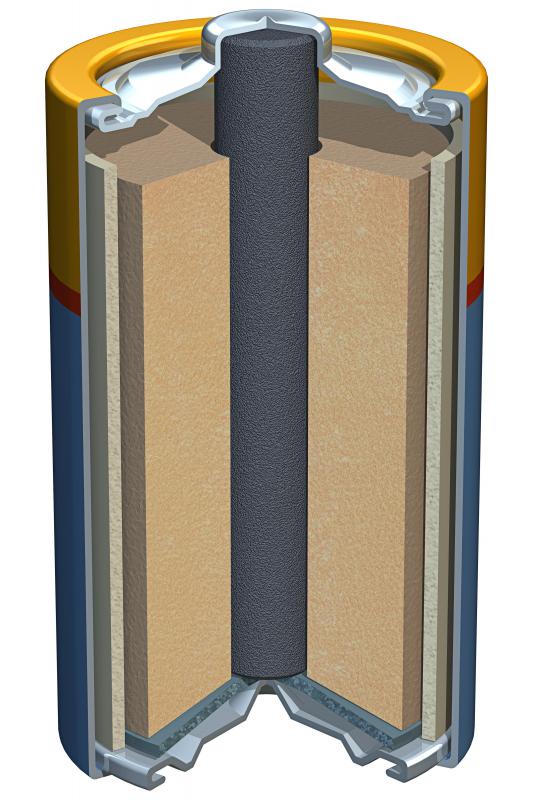
Ammonium chloride is a white, crystalline solid with a number of uses. Industrially, the substance is used in soldering and textile printing and as a component in the manufacturing of dry cell batteries. It is used medically as an expectorant, a cough remedy, and a dietary supplement. It occurs naturally in most volcanic regions, and it can be produced synthetically in an efficient manner.
The primary use of ammonium chloride in the medical field is as an expectorant. An expectorant is a drug that stimulates, depresses, or modifies the secretion from the bronchial or laryngeal mucus membranes and promotes its expulsion. This simply means that expectorants are used to stimulate the production of phlegm and ultimately cause the phlegm to be coughed up.

A common ingredient in many cough medications, ammonium chloride is considered a safe, effective treatment and remedy for coughs. Symptoms of an overdose include nausea, vomiting, thirst, headache, hyperventilation and progressive drowsiness. If a large overdose of has been taken, a medical professional should be consulted immediately.
Ammonium chloride is also used as a dietary supplement. It is used to help maintain proper pH levels and correct any situation where the blood contains too much alkaline or too much chloride. It also is used to support the bodily mechanisms involved in the retention of nitrogen and the regulation of creatinine, blood urea nitrogen, and uric acid.
Historically, this compound was known as sal ammoniac, and it was the earliest known salt of ammonia. It was first manufactured in Egypt and Europe in about the 13th century. The historical name fell out of common use during the 20th century.

The natural materialization of ammonium chloride occurs around the vents of active volcanoes. Crystal particles are produced during the chemical reaction between the volcanic, hydrochloric acid gas and the nitrogen-rich vegetation found in the soil and sediment around the volcano. Mount Vesuvius in Italy is one of the most notable volcanic locations where it is formed naturally.
This compound also can made synthetically by bubbling ammonia gas into water. This will form ammonium hydroxide, which can be combined with hydrochloric acid to produce ammonium chloride.
AS FEATURED ON:
AS FEATURED ON:


-
![A dry cell battery made with ammonium chloride.]() By: Stephen SweetA dry cell battery made with ammonium chloride.
By: Stephen SweetA dry cell battery made with ammonium chloride. -
![Ammonia chloride is considered an effective and safe cough treatment.]() By: Lisa F. YoungAmmonia chloride is considered an effective and safe cough treatment.
By: Lisa F. YoungAmmonia chloride is considered an effective and safe cough treatment. -
![The natural materialization of ammonium chloride occurs around the vents of active volcanoes.]() By: Byelikova OksanaThe natural materialization of ammonium chloride occurs around the vents of active volcanoes.
By: Byelikova OksanaThe natural materialization of ammonium chloride occurs around the vents of active volcanoes. -
![Ammonium chloride is used as an expectorant and cough remedy.]() By: rudisetiawanAmmonium chloride is used as an expectorant and cough remedy.
By: rudisetiawanAmmonium chloride is used as an expectorant and cough remedy. -
![An overdose of ammonium chloride may cause nausea and vomiting, and a large overdose will require medical attention.]() By: alexandre zveigerAn overdose of ammonium chloride may cause nausea and vomiting, and a large overdose will require medical attention.
By: alexandre zveigerAn overdose of ammonium chloride may cause nausea and vomiting, and a large overdose will require medical attention. -
![An overdose of ammonium chloride may cause progressive drowsiness.]() By: AllianceAn overdose of ammonium chloride may cause progressive drowsiness.
By: AllianceAn overdose of ammonium chloride may cause progressive drowsiness.





Discussion Comments
Speaking of ammonium chloride, I find it very useful in getting rid of animals. Many years ago, we had a chipmunk that used to live underneath our steps. He was very persistent, and wouldn't go away. Eventually, my solution was to put ammonium chloride underneath the steps. Finally, the chipmunk left. As you can see, chemicals like these have more benefits than for simple cleaning and cough remedies.
As useful as ammonium chloride is, isn't it also dangerous to inhale? You see, that's the thing with chemicals like these. For all the benefits that they have in cleaning, they are also extremely lethal to inhale, and can lead to long-term complications.
Post your comments