
At WiseGEEK, we're committed to delivering accurate, trustworthy information. Our expert-authored content is rigorously fact-checked and sourced from credible authorities. Discover how we uphold the highest standards in providing you with reliable knowledge.
What is Amish Friendship Bread?
For those who enjoy giving or receiving handmade gifts, Amish Friendship Bread is something to look forward to. Amish Friendship Bread is typically given to friends in liquid form, and the recipient is encouraged to split the dough with another friend, then bake their half at home.
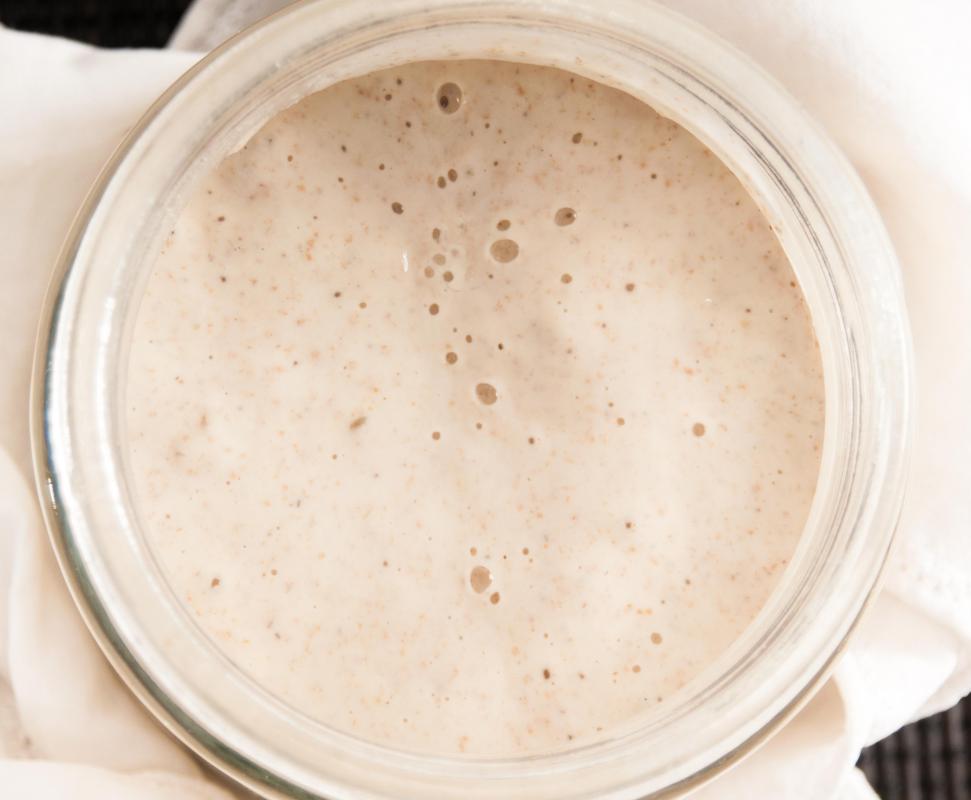
Amish Friendship Bread symbolizes dedication and patience. To give this bread requires a time commitment, typically between ten days to two weeks. Amish Friendship Bread is created by a bread starter, the byproduct of flour, milk, and sugar. On day one, the three ingredients are combined and left at room temperature. For the next four days, the mixture is gently kneaded once a day, continuing to sit at room temperature. During this time, the ingredients will ferment, creating yeast. Yeast will allow the dough to rise, and give the bread a soft texture.

Generally, on the sixth day, additional flour, sugar, and milk are combined with the starter. For the next three days, the dough will be kneaded twice a day. On the tenth day, more flour, sugar, and milk is added, and the starter is split into equal parts. The Amish Friendship Bread is now ready for gift giving.
Once you have received the starter, you can make Amish Friendship Bread in a variety of ways. Most recipes call for the addition of eggs, flour, and baking soda. For a sweeter version of the bread, add cinnamon as well as nuts and raisins. Amish Friendship Bread typically bakes at a low temperature, and is prepared in loaves. Some cooks will enjoy sprinkling a mixture of sugar and cinnamon over the loaves.
Due to the necessity of fermentation, metal bowls, utensils, or baking pans are not recommended for use with Amish Friendship Bread. The metal can interfere with the fermentation process and ruin the bread. Modern kitchen cooks are advised to use wooden spoons as well as re-sealable plastic bags to make the process even easier.
AS FEATURED ON:
AS FEATURED ON:









-
![Amish Friendship Bread, which takes nearly two weeks to make, begins as a starter made of flour, milk, and sugar.]() By: serenacarAmish Friendship Bread, which takes nearly two weeks to make, begins as a starter made of flour, milk, and sugar.
By: serenacarAmish Friendship Bread, which takes nearly two weeks to make, begins as a starter made of flour, milk, and sugar.
Discuss this Article
Post your comments