
At BeautyAnswered, we're committed to delivering accurate, trustworthy information. Our expert-authored content is rigorously fact-checked and sourced from credible authorities. Discover how we uphold the highest standards in providing you with reliable knowledge.
What is Alpha Hydroxy?
Alpha hydroxy is a familiar name to those seeking youthful skin; it is one in a long line of wonder ingredients in cosmetics and skin care products. It is an entire family of acids that can be derived from fruit, milk or sugar. The most widely used in skin care is glycolic acid (made from sugar) and lactic acid (made from milk). They are also called fruit or citric acids; women have been using lemon juice for "bleaching" freckles for centuries. Surprisingly, to those hardened by years of over-hyped product claims, alpha hydroxy acid (AHA) does do what it claims it will.
The way alpha hydroxy works is by exfoliating the skin; that is, causing the surface skin cells to slough off, revealing newer, less damaged skin cells beneath. This can be done in a dermatologist's office, using a high concentration of acid, in which case it is known as a chemical peel. Lower concentrations applied over a longer period of time have a similar effect, but can take weeks or longer for the effects to appear.

Since alpha hydroxy is an acid, it may irritate the skin, leaving it red, itchy or painful. In commercial, over-the-counter preparations, this acid should be in concentrations of less than 10%. Its long-term use also appears to leave the user more sensitive to UV light and therefore more prone to sunburn. The US Food and Drug Administration warns that users should be sure to wear wide brimmed hats or strong sunscreen when outdoors to prevent them from re-damaging the skin they have gone to such lengths to repair.

A recent competitor to AHA is its close kin, beta hydroxy acid (BHA). Unlike alpha hydroxy, there is only one beta hydroxy acid, salicylic acid. Derived from the same acid as aspirin (acetylsalicylic acid), beta hydroxy shares some of its anti-inflammatory properties, is less irritating to most skin types, and can work at much lower concentrations. Unfortunately, it too makes the user more susceptible to sun-damage.

When shopping for skincare products, consumers should look for AHA, BHA, glycolic acid, lactic acid, or salicylic acid in the listed ingredients. They should be in products that stay on the skin, since they must be absorbed to be effective. Users should always remember to wear sunscreen.
AS FEATURED ON:
AS FEATURED ON:


-
![Alpha hydroxy is used in many skin care products, especially for those seeking a more youthful appearance.]() By: picsfiveAlpha hydroxy is used in many skin care products, especially for those seeking a more youthful appearance.
By: picsfiveAlpha hydroxy is used in many skin care products, especially for those seeking a more youthful appearance. -
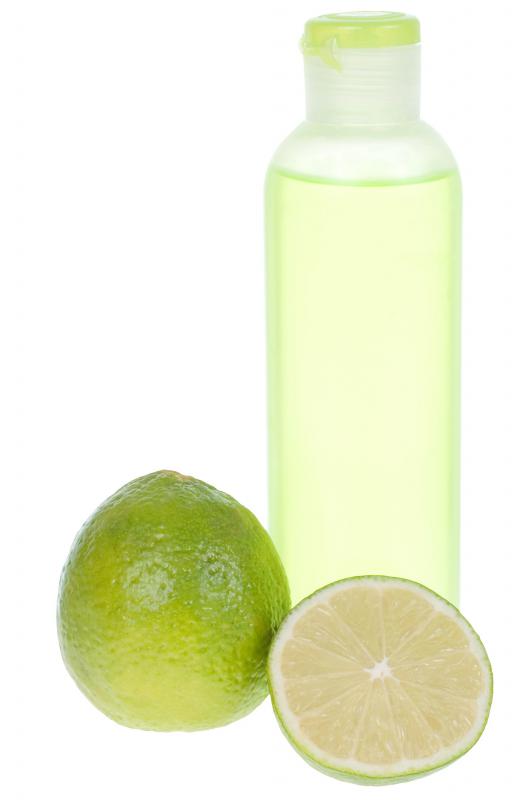
![Alpha hydroxy acids can be derived from fruit and included in skin care products such as toners.]() By: mordeccyAlpha hydroxy acids can be derived from fruit and included in skin care products such as toners.
By: mordeccyAlpha hydroxy acids can be derived from fruit and included in skin care products such as toners. -
![Regular use of alpha hydroxy can leave people more prone to getting sunburns.]() By: Rostislav SedlacekRegular use of alpha hydroxy can leave people more prone to getting sunburns.
By: Rostislav SedlacekRegular use of alpha hydroxy can leave people more prone to getting sunburns. -
![Alpha hydroxy is commonly used by dermatologists to perform chemical peels.]() By: belahocheAlpha hydroxy is commonly used by dermatologists to perform chemical peels.
By: belahocheAlpha hydroxy is commonly used by dermatologists to perform chemical peels. -
![People who use alpha hydroxy products should curtail their exposure to the sun.]() By: AntonioguillemPeople who use alpha hydroxy products should curtail their exposure to the sun.
By: AntonioguillemPeople who use alpha hydroxy products should curtail their exposure to the sun.



Discussion Comments
@anon603: Retin-A works to unclog pores and causes your skin to shed skin cells. Retin-A is great for those fine wrinkles but it is not effective for deep wrinkles. It is also great to treat acne.
Alpha Hydroxy helps the skin to produce its collagen. That makes the skin thicker. AHA comes from things like sugar cane and fruit which are considered a natural skin treatment. You would want to start with a product in which the acid level is no more than 10%.
Comparing the two, many have used retin-A, and reported that it irritated their skin. Alpha hydroxyl is less irritating and it doesn’t dry the skin out. Alpha hydroxy lotion is what I use.
I don’t think it would be a good idea to use the two together.
what is the difference between Retenol A and AHA (alpha hydroxy acid) from the cutomer point of view. Can both be used on alternate days?
Post your comments