
At DelightedCooking, we're committed to delivering accurate, trustworthy information. Our expert-authored content is rigorously fact-checked and sourced from credible authorities. Discover how we uphold the highest standards in providing you with reliable knowledge.
What is Almond Milk?
 Tricia Christensen
Tricia Christensen
Tricia Christensen
Almond milk is a milk substitute created by finely grinding almonds together with water. It enjoys a long history as a popular food. Medieval European recipes frequently called for almond milk. As well, it has always been a popular beverage in the Middle East. The modern blender makes the composition of almond milk much easier than it would have been in the Middle ages, because the blended almonds are much finer, resulting in a finer consistency milk.
One of the reasons for the popularity of almond milk in the Middle Ages was its high protein content, and its ability to keep better than milk from dairy sources. If cow, sheep, or goat milk wasn’t prepared quickly to make cheese or butter, it soon soured. Almond milk, conversely, could be made as needed, in the quantities needed. Further, dry almonds were easy to store and did not require the cold temperatures for storing fresh milk.

Today, almond milk is particularly popular among those who are part of the Raw Food movement. Supporters for Raw Food preparation believe that cooking foods deprives them of their highest mineral and vitamin content. Foods eaten raw, on the other hand, are believed to be higher in natural nutrients. Merely soaking almonds in a jar of water in the refrigerator for a day, then blending and straining the liquid can make almond milk. The high protein content is comparable to milk, and most prefer the taste to soy or rice milk.

Almond milk is indisputably nutritious with little to no saturated fat, unlike cow’s milk, and no lactose, which many find indigestible. Some doctors suggest, however, that almond milk should not be given to children transitioning from formulas, as early introduction of nuts to a child’s diet may predispose the child to severe nut allergies. Obviously, anyone with a peanut allergy should verify no almond allergy exists prior to using the product.

Contrary to the Raw Food movement, most recipes call for the almonds to be boiled, prior to soaking. As well, many recipes call for almond milk made from roasted almonds. Many prefer almond milk made from roasted rather than raw almonds, since it yields a slightly richer flavor.
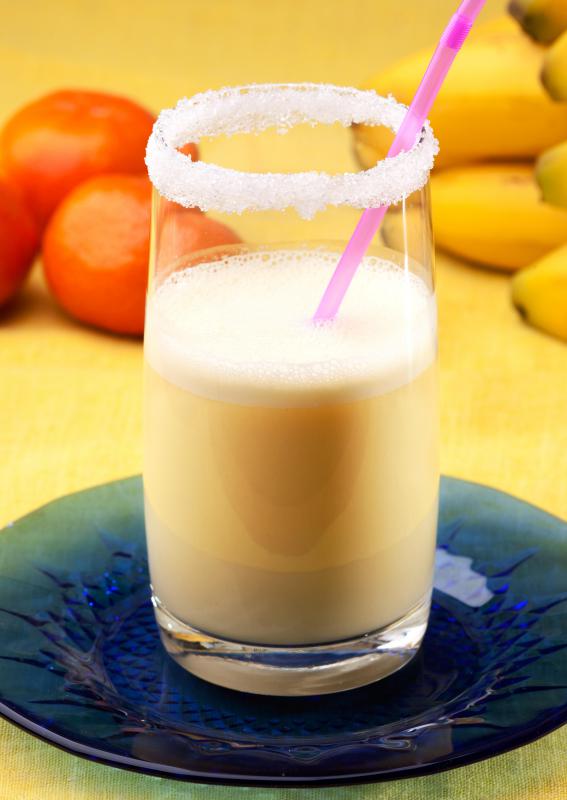
One can find commercially made almond milk in natural food stores. It does not yet have the popularity of soy or rice milk, so it is a little harder to find. It makes an excellent substitution for milk products in many recipes. However, recipes that require a high fat content milk or half-and-half may not produce the same results with almond milk. Almond milk lends itself particularly well to recipes for pancakes, for blancmange and is also excellent in smoothies.
Tricia Christensen
Tricia has a Literature degree from Sonoma State University and has been a frequent DelightedCooking contributor for many years. She is especially passionate about reading and writing, although her other interests include medicine, art, film, history, politics, ethics, and religion. Tricia lives in Northern California and is currently working on her first novel.
Learn more...
Tricia Christensen
Tricia has a Literature degree from Sonoma State University and has been a frequent DelightedCooking contributor for many years. She is especially passionate about reading and writing, although her other interests include medicine, art, film, history, politics, ethics, and religion. Tricia lives in Northern California and is currently working on her first novel.
Learn more...AS FEATURED ON:
AS FEATURED ON:


-
![Almond milk looks very similar to dairy milk although it can have a very slight browinish color.]() By: Marius GrafAlmond milk looks very similar to dairy milk although it can have a very slight browinish color.
By: Marius GrafAlmond milk looks very similar to dairy milk although it can have a very slight browinish color. -
![Shelled and whole almonds.]() By: ElenathewiseShelled and whole almonds.
By: ElenathewiseShelled and whole almonds. -
![Many people are allergic or intolerant to the lactose found in dairy products.]() By: lidanteMany people are allergic or intolerant to the lactose found in dairy products.
By: lidanteMany people are allergic or intolerant to the lactose found in dairy products. -
![Almond milk lends itself particularly well to recipes for pancakes.]() By: Magdalena KucovaAlmond milk lends itself particularly well to recipes for pancakes.
By: Magdalena KucovaAlmond milk lends itself particularly well to recipes for pancakes. -
![Both fruit and green smoothies can be made using almond milk.]() By: PixelblissBoth fruit and green smoothies can be made using almond milk.
By: PixelblissBoth fruit and green smoothies can be made using almond milk. -
![An orange-banana smoothie made with almond milk.]() By: Tyler OlsonAn orange-banana smoothie made with almond milk.
By: Tyler OlsonAn orange-banana smoothie made with almond milk.


Discussion Comments
I have been drinking almond milk in place of cow's milk for several months twice a day due to lactose intolerance. I was beginning to feel and started going to the doctor. Blood tests revealed high blood sugar. Now on top of everything else, I have diabetes to contend with due to magnesium overload.
Is a brand new carton of almond milk that very lumpy and thick safe? This is the first time I saw this.
Are there any allergic reactions to almond milk? --concerned customer
I have been drinking Almond milk for a little over a year. I find it's richness of flavor to be the best. The two products I mainly buy are Silk: Pure Almond and Blue Diamond Almond Milk. Usually when I buy it, I buy multiples (simply because I love the stuff!).
However, I noticed that when I buy the almond milk and put a carton in the freezer, once I take it out to defrost, I see a white pasty material and then water like liquid. It's not past the expiration date (because I drink it all up before then).
Just this evening as I was pouring out some on my cereal a big lump of the white paste came out.
Anyone knows what that is happening? I got a bit disgusted.
Side note: Always loved dairy milk even as a child. Never been lactose-intolerant. I discovered soy and rice milk and loved them too, and when I discovered almond, I replaced the soy and rice milk with it.
If you live near a Hy-Vee grocery store, they also sell their own brand of Almond Milk. For about 1/2 the price of name brands, it tastes just as delicious!
Where do you get the Almondine?
Is almond milk still good if you open a new container and it is thick and lumpy? And there is a new almond milk out with added protein for those who asked. It is sold at walmart.
I just bought almond milk for the first time. The brand is Blue Diamond and it is very creamy and so delicious!
To those of you who have complained about the consistency of your almond milk, make sure you shake before each time you use it, like orange juice! I find that if you don't shake it, the consistency will get weird towards the end of the container. You could also try re-straining it through cheesecloth or a coffee filter.
what is the percentage of calcium in almond milk, and will two eight-ounce glasses meet the daily calcium requirement? How about absorbency.
Why does almond milk have lumps in it when i only just opened the carton? How long can it last once being opened? On the packet it says three or four days, but everything i read on the internet is saying seven to 10 days or months?
I would like to know why the almond milk in my fridge from a commercial seller has consistency of mucus when it gets to the bottom of the box
It pours out in strands and goo. It's still long before the date by 2.5 months and is the 1.89 size.
I too would like to know why commercial almond milk has only one gram of protein -- the amount in fewer than four almonds. Is it something in the process or do they use very few almonds?
I have on more than one occasion, including this very moment, had almond milk that was sitting in my fridge for weeks. I taste no difference and smell no difference. It is from Trader Joes. The last time I opened a container it was the same I had some weeks after opening it and tasted no difference and had no ill effects/reactions.
Can almond milk be frozen? I can only find almond milk in store in half gallon size which says "discard after 7-10 days. It's expensive to throw out half of it out every week. Guess I'd better learn to make my own in smaller quantities.
correction for no. 18, again someone changed what i wrote. not every almond butter is good for making almond milk. Almondie is a concentrate and it's processed and ground using no heat, and no additives.
How about the carbohydrate count per serving?
to number 18 - that's why i recommend mixing almond butter with water since they don't add anything or use heat! try it and let me know.
Use raw almonds, almond milk from the store has been cooked and treated and lost all the goodness and they add sweeteners.
I've made a concentrated almond milk kept in glass jar with lid. So far kept for over a week in cold fridge. Just add 1/3 of a cup of almond to 2/3's cold pure filtered water. Make it once every 2 weeks. Have a glass or two per day.
I began drinking almond milk (enjoy both the natural and vanilla flavors) just before I came across an article by Prof. Jane Plant about the connection between dairy products and breast cancer. She had had breast cancer and did some research. Discovered the reason Chinese women rarely get breast cancer is because they do not use dairy products. Very interesting. eabh
Wow, i don't know how this happened, but I wrote in my post "Almondie" which is the name brand that I love and somehow someone changed it! weird.
In any case, as to the last comment, if a person can have regular milk - great. But if not, this is a great and nutritious alternative.
Almond milk I've found in the store is in fact lower in protein than regular milk. Had 17g of sugar and 1g protein per serving.
Well, I tried posting a comment but I'm not sure it went in, so I'll try again. I was just saying that I personally love making almond milk with Almondy almond butter. (regular milk doesn't like me nor does soy.) I mix like 1/3 cup of Almondine with 1/5 cup of water and blend them. It can be refrigerated then for up to 24 hours, they say. Because I have IBS and am a nature freak (lol, not a freak of nature) I always have to have the best of the best.
The Almondy almond butter is as far as i know the only one in the states that removes the inner skins of the almonds before grinding (that's what helps my IBS) and do everything cold press.
They are also the only ones that are like 100 percent natural since they don't pasteurize the nuts or anything. (that's because they are imported and ones made in America by law have to pasteurize them, I heard).
Anyway, that's my daily input. They are really creamy and yummy, by the way, if you wanted to know about their consistency. Worth my $18.
I have just started drinking almond milk for the last month and a half and am loving it. I don't care for regular milk for many reasons. On the way to the gym in the morning a drink a glass and I am satisfied but not too full for my work out. If it feels good to you in your body that is a good sign. I think our bodies have wisdom and that it would be good to listen to that inner wisdom.
I just made my first batch of almond milk and it was very easy to do.
All I needed was almonds, a quart jar, water and a blender. I soaked 1 1/2 cups of almonds for eight hours, drained them and put them plus four cups water in my blender and turned it on for five minutes. It tasted remarkably like milk after I put some sweetener in it.
I am extremely lactose intolerant, soy milk gives me gas, and coffee creamer does too. I am so happy, now I can eat cereal again using almond milk.
You didn't answer the question of why almond milk sold in stores only has one gram of protein per serving. *That* is not "rich in protein".
does it have a sweet taste?
Why does my commercial almond milk list only one gram of protein per serving (8oz) if almond milk is rich in protein?
Is there a way to make it more concentrated? I'm looking for a substitute for half & half.
Anon 2157 and 11330,
Both of you have excellent questions. Almond milk does require refrigeration in order to avoid spoiling. If kept in the fridge in an airtight or at least sealed container (a jar with a lid will do), it should keep for 4-5 days. Of course this depends on whether you can resist drinking it all up by that time.
Does almond milk need to be refrigerated after opening?
how long does it keep?
Post your comments