
At DelightedCooking, we're committed to delivering accurate, trustworthy information. Our expert-authored content is rigorously fact-checked and sourced from credible authorities. Discover how we uphold the highest standards in providing you with reliable knowledge.
What is Alfalfa?
Alfalfa is a plant used widely as animal feed and occasionally as a food for human consumption. It has been cultivated since at least the 5th century BC, with a surge in popularity around the start of the 17th century.
The plant has a number of rare characteristics that differentiate alfalfa from other food crops. It is toxic to itself, so it cannot reproduce in areas where a crop already exists. For this reason, it is necessary to plow a crop that has finished before planting the next season's crop. The mature plant is very high in fiber, making it less than ideal for human consumption, though fine for most domesticated animals.

Alfalfa intended for use as hay is harvested just before it begins to flower. The crop is cut down and left to dry before being collected and bound into large bales. It is full of nutrients and vitamins, making it a wonderful feed supplement for horses and cattle.
Dehydrated alfalfa is also widely used as a feed, for horses particularly. Densely packed with vitamins and minerals, it will consistently outperform specialized horse conditioners for supplying healthy energy, according to many horse health experts. A diet that consists exclusively of alfalfa can sometimes cause intestinal problems in farm animals, so grass hay is usually included in an alfalfa-rich diet.

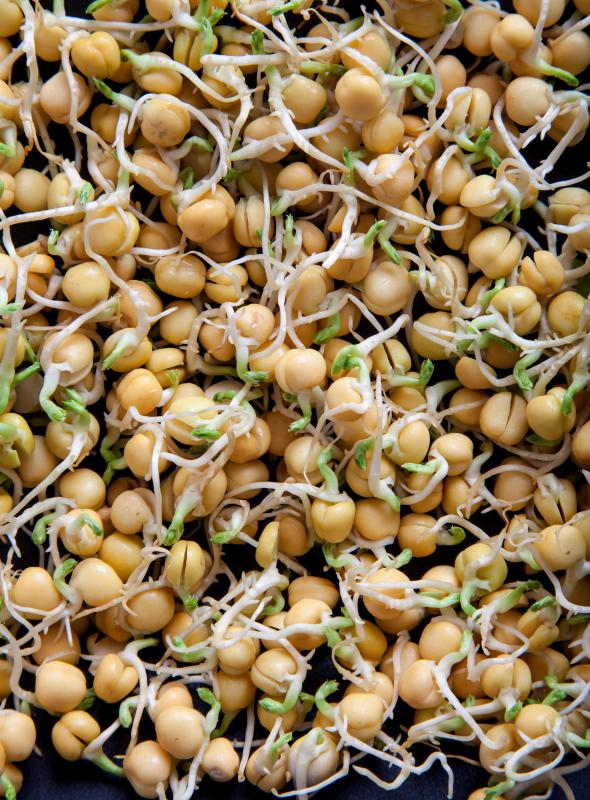
Alfalfa sprouts are very popular as a healthy supplement to salads and other raw foods for people. They are often touted as one of the best sources of a wide range of minerals and vitamins. One cup (33 grams) of sprouts contains 0.6 g of fiber, 1.3 g of protein and a minuscule amount of sugar. It is vitamin rich, with small amounts of beta carotene, vitamin C, thiamine, riboflavin, niacin, vitamin B6 and folate, and a substantial helping of vitamin K. It also contains a good range of minerals, with some calcium, iron, magnesium, phosphorus, potassium and zinc, and larger helpings of copper and manganese.

Some experts feel that people should not eat alfalfa sprouts because they contain a small amount of a non-protein amino acid called canavanine. Studies suggest that high levels of this chemical may disrupt immune function, leading to autoimmune disorders. The amount of canavanine in the sprouts is very low; however, research is ongoing.
As a horse feed, its compact size, high levels of protein and vitamin rich composition make alfalfa an ideal choice. Its quality varies widely, however, so it is recommended that people buy it from a trusted distributor to ensure that the feed is the right for a particular animal. For humans, alfalfa sprouts are only good news. With no unhealthy qualities, and more than enough vitamins, minerals and proteins for anyone looking to live a more healthy lifestyle, they are ideal for adding to a salad or sandwich.
AS FEATURED ON:
AS FEATURED ON:


-
![Alfalfa is a versatile crop.]() By: voraornAlfalfa is a versatile crop.
By: voraornAlfalfa is a versatile crop. -
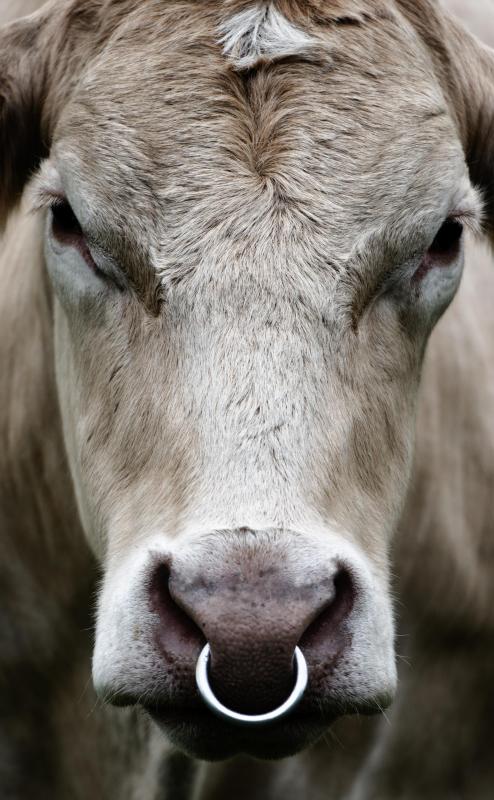
![Alfalfa makes a good feed supplement for cattle and other livestock.]() By: Tim AßmannAlfalfa makes a good feed supplement for cattle and other livestock.
By: Tim AßmannAlfalfa makes a good feed supplement for cattle and other livestock. -
![Alfalfa seeds and sprouts are a good source of vitamins and minerals.]() By: LevAlfalfa seeds and sprouts are a good source of vitamins and minerals.
By: LevAlfalfa seeds and sprouts are a good source of vitamins and minerals. -
![The alfalfa plant has a number of rare characteristics that differentiates it from other food crops.]() By: Sunny ForestThe alfalfa plant has a number of rare characteristics that differentiates it from other food crops.
By: Sunny ForestThe alfalfa plant has a number of rare characteristics that differentiates it from other food crops. -
![Alfalfa sprouts are a popular and healthy supplement to salads.]() By: Minerva StudioAlfalfa sprouts are a popular and healthy supplement to salads.
By: Minerva StudioAlfalfa sprouts are a popular and healthy supplement to salads.



Discussion Comments
Alfalfa is a leguminous plant which is an excellent fodder for cattle. -Twinkle
Alfalfa is a largely used supplement in china.
Alfalfa has deep roots that supply plant leaves with many vitamins and minerals. The plant is helpful in digestion, inflammation, and building of energy.
Post your comments