
At TheHealthBoard, we're committed to delivering accurate, trustworthy information. Our expert-authored content is rigorously fact-checked and sourced from credible authorities. Discover how we uphold the highest standards in providing you with reliable knowledge.
What is Agoraphobia?
 Jeff Petersen
Jeff Petersen
Jeff Petersen
If you break down the word agoraphobia, you can quickly see what it means. A phobia is a fear of something. Agora comes from the Greek language, and refers to a place where people meet, or more specifically a marketplace. So this is the fear of being in crowded or open spaces.
Sometimes, agoraphobia is thought of as the fear of being out in the open, but that isn't strictly correct. People suffering from this condition are more often fearful of places where they are crowded in, where getting away would be difficult. A person may be reluctant to leave the house, but it is usually not simply being outdoors that frightens him or her.

Situations such as being in a crowded building, a long hallway, a large, exposed place, or any unfamiliar territory can be intensely disturbing to someone with agoraphobia. This fear is most associated with being unable to get to a safe location, or the feeling of being exposed and unprotected. A return to familiar territory may relieve the symptoms of an phobia-related panic attack.

Symptoms of agoraphobia can range from mild feelings of discomfort or anxiety in large, crowded spaces, to intense fear and panic attacks. Agoraphobia is actually diagnosed differently according to whether the patient experiences panic disorders or not. In fact, many different psychological disorders, such as social phobia, separation anxiety disorder, and depression, can share symptoms with this condition. A professional diagnosis is required to determine whether a person has agoraphobia or not.

There are several possible treatments for patients with agoraphobia. If other disorders contribute to the condition, or compound it, these can be treated separately. Helping patients to take control of their fear by slowly exposing them to environments which may cause them fear and anxiety can decrease the symptoms.
Patients can determine which situations trigger their agoraphobia, and make an effort to overcome these fears. By slowly dealing with each situation in a way that feels safe, the patient can learn to deal with their fears and face them rather than allowing the fear to control them. A patient who is afraid of shopping malls might start by visiting a small corner store until he or she feels comfortable. Once a small step is overcome, the patient will be ready to try to push his or her comfort zone a little further. A medical or mental health professional will be able to help design a program, and provide advice and medication if necessary.
Jeff Petersen
Jeff is a freelance writer, short story author, and novelist who earned his B.A. in English/Creative Writing from Creighton University. Based in Berkeley, California, Jeff loves putting his esoteric knowledge to good use as a TheHealthBoard contributor.
Learn more...
Jeff Petersen
Jeff is a freelance writer, short story author, and novelist who earned his B.A. in English/Creative Writing from Creighton University. Based in Berkeley, California, Jeff loves putting his esoteric knowledge to good use as a TheHealthBoard contributor.
Learn more...AS FEATURED ON:
AS FEATURED ON:


-
![Shopping malls can be terrifying for someone with agoraphobia.]() By: Andris PiebalgsShopping malls can be terrifying for someone with agoraphobia.
By: Andris PiebalgsShopping malls can be terrifying for someone with agoraphobia. -
![Someone suffering from agoraphobia may fear riding in elevators.]() By: Carsten ReisingerSomeone suffering from agoraphobia may fear riding in elevators.
By: Carsten ReisingerSomeone suffering from agoraphobia may fear riding in elevators. -
![Symptoms of agoraphobia range from discomfort and anxiety to panic attacks.]() By: thenikonproSymptoms of agoraphobia range from discomfort and anxiety to panic attacks.
By: thenikonproSymptoms of agoraphobia range from discomfort and anxiety to panic attacks. -
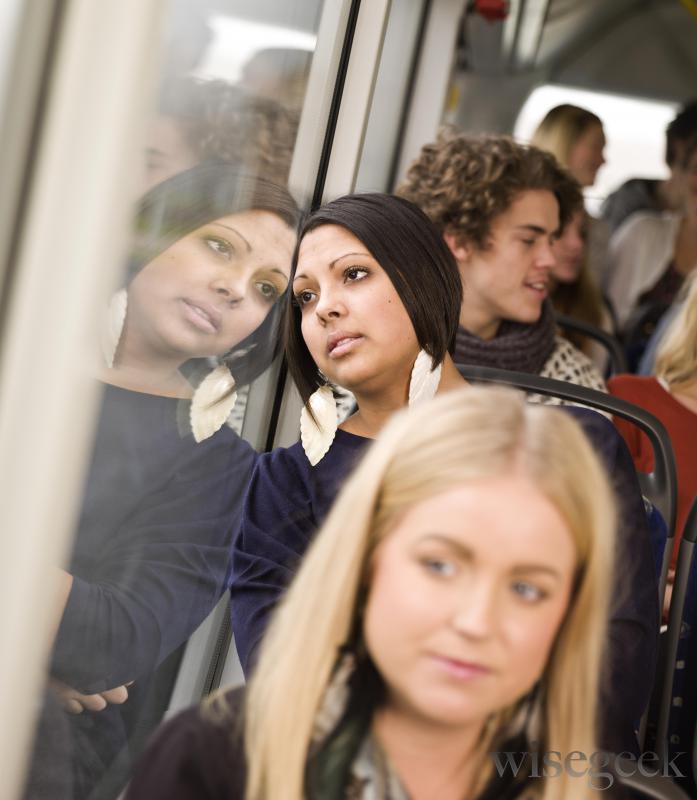
![Someone with agoraphobia might feel anxious in crowds.]() By: gemenacomSomeone with agoraphobia might feel anxious in crowds.
By: gemenacomSomeone with agoraphobia might feel anxious in crowds. -
![Those with agoraphobia can develop nervousness and even panic attacks when in either crowded places or in vast, open spaces.]() By: connel_designThose with agoraphobia can develop nervousness and even panic attacks when in either crowded places or in vast, open spaces.
By: connel_designThose with agoraphobia can develop nervousness and even panic attacks when in either crowded places or in vast, open spaces.



Discussion Comments
One well known person that was agoraphobic was Sigmund Freud. Maybe there was no treatment available in his time, but there is agoraphobia treatment available today.
This disorder can be treated with medicine, and or exposure therapy.
I am not sure if it can be completely cured but it can certainly help, and help the person be functional again.
An interesting fact is that women are more likely to have this disorder, but men are more likely to get the treatment.
I don't know whats been wrong with me. I have been just feeling bubbly almost slightly intoxicated for the past few days.
I will admit I do get nervous sometimes in big crowds and get this same feeling but I am here at home doing it as well. My blood pressure is fine, and far as I know I don't have any infections or a cold. I do suffer from allergy problems so I don't know if that is the cause or not.
I just go out to do my business, then i can't wait to get back home, where i feel happy and content.
All my family and friends keep telling me to get
a life? i have one; they just won't let up.
i call myself a homebody. What am i doing that is so wrong?
I am going to be 60 years old, and i want them to get off my case. They stress me out and ask too
many damn questions. Live and let live!
I have a problem with being a recluse and agoraphobia.
Are there different severities of this fear? Can there be mild agoraphobia? I don't suffer from intense fear, but I don't like to be "out." Mild agoraphobia?
Post your comments