
At PracticalAdultInsights, we're committed to delivering accurate, trustworthy information. Our expert-authored content is rigorously fact-checked and sourced from credible authorities. Discover how we uphold the highest standards in providing you with reliable knowledge.
What is Aeronautical Engineering?
Aeronautical engineering is the study of how things fly in the Earth's atmosphere and the application of that knowledge to design and build aircraft and missiles. It is a branch of aerospace engineering, which also includes astronautical engineering. There are many different subfields in aeronautical engineering, ranging from research and development to aircraft maintenance. The broad range of the field means that it is also very interdisciplinary, incorporating elements of math, electronics, and physics, among other things. There are many different types of jobs available in this field, but most require advanced degrees.
Areas of Focus

Aeronautical engineering encompasses an extremely broad range of areas, including the research and development, testing, assembly, and maintenance of aircraft and missiles and their parts. Other areas of focus include the effect that aircraft have on the surrounding environment, the potential dangers of specific aircraft, and their fuel and systems efficiency. Aeronautical engineers use many different elements in working on these areas, including math, electronics, software design, risk analysis, aerodynamics — the study of how air interacts with solid objects — and propulsion, which is the study of how to create enough force to achieve and remain in flight. The design of aircraft systems, or avionics, is also an important subfield, as is materials selection, which involves choosing materials that can withstand large amounts of force but are relatively light.
Work Environment

Aeronautical engineers tend to specialize in one or more of the areas above, but they also often work together with other specialists. Some areas of employment in this field include fuel efficiency testing, airframe design, engine design, flight testing, and investigating airplane crashes. Other jobs include gathering information through test flights, interpreting aircraft performance data, supervising the assembly of aircraft and missiles, analyzing the environmental impacts of flights, and assessing the potential risks of new aircraft designs. Training for aeronautical engineering varies regionally, but almost always includes a graduate degree. Some universities offer degrees in this field specifically, but degrees in related fields like mathematics, physics, and mechanical engineering can be useful as well.
Aeronautical vs. Astronautical Engineering

The main difference between aeronautical and astronautical engineering is the physical area of focus. Aeronautical engineering focuses on flight within the Earth's atmosphere, while astronautical engineering focuses on the research of space flight and the design of spacecraft and satellites. This includes research on how to best launch spacecraft and the effects the surrounding environment has on them, as well as developing systems to control spacecraft and designing materials that can withstand space flight. Like aeronautics, astronautical engineering is highly technical and very interdisciplinary.
AS FEATURED ON:
AS FEATURED ON:


-
![Aeronautical engineering may encompass the maintenance of aircraft.]() By: senohrabekAeronautical engineering may encompass the maintenance of aircraft.
By: senohrabekAeronautical engineering may encompass the maintenance of aircraft. -
![An aeronautical engineer may supervise the assembly of missiles.]() By: nikkytokAn aeronautical engineer may supervise the assembly of missiles.
By: nikkytokAn aeronautical engineer may supervise the assembly of missiles. -
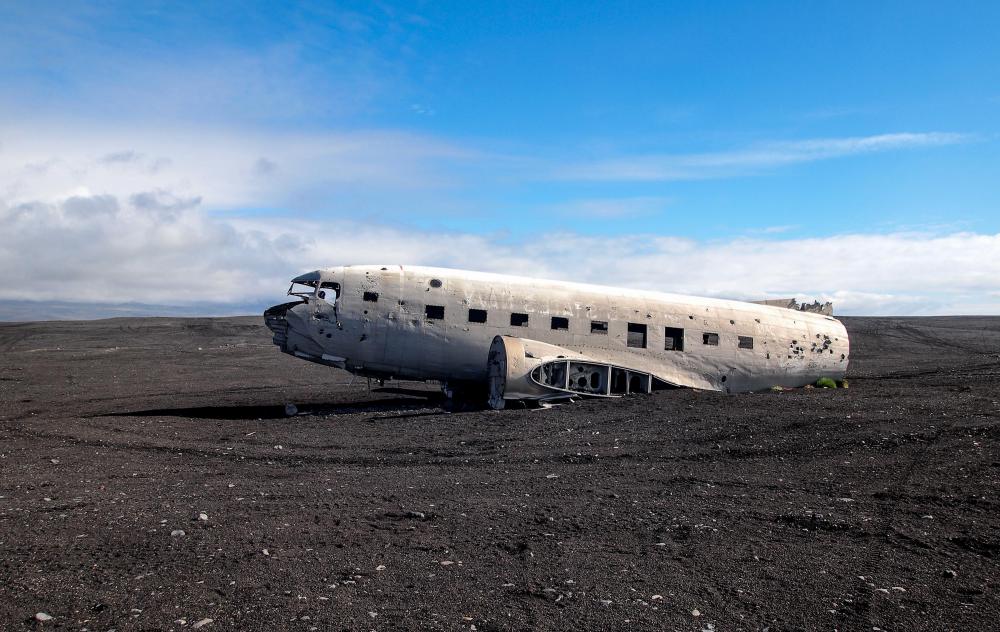
![An aeronautical engineer may assist in the investigation of airplane crashes.]() By: bozulekAn aeronautical engineer may assist in the investigation of airplane crashes.
By: bozulekAn aeronautical engineer may assist in the investigation of airplane crashes. -
![Early airships, which spurred the expansion of aeronautical engineering.]() By: lyneaEarly airships, which spurred the expansion of aeronautical engineering.
By: lyneaEarly airships, which spurred the expansion of aeronautical engineering. -
![Knowing that it would be used for flights over oceans, the aeronautical engineers at Boeing designed the 747 so that it would stay aloft even in the event of multiple engine failures.]() By: hallucion_7Knowing that it would be used for flights over oceans, the aeronautical engineers at Boeing designed the 747 so that it would stay aloft even in the event of multiple engine failures.
By: hallucion_7Knowing that it would be used for flights over oceans, the aeronautical engineers at Boeing designed the 747 so that it would stay aloft even in the event of multiple engine failures. -
![Crop dusters are engineered to survive the stresses that occur during tight turns at low altitude.]() By: SlyCrop dusters are engineered to survive the stresses that occur during tight turns at low altitude.
By: SlyCrop dusters are engineered to survive the stresses that occur during tight turns at low altitude. -
![The Lockheed Martin F-22 Raptor uses radar absorbent materials and a blended, low profile exterior to absorb and diffuse radar waves.]() By: dreamnikonThe Lockheed Martin F-22 Raptor uses radar absorbent materials and a blended, low profile exterior to absorb and diffuse radar waves.
By: dreamnikonThe Lockheed Martin F-22 Raptor uses radar absorbent materials and a blended, low profile exterior to absorb and diffuse radar waves. -
![An aeronautical engineer may develop non-rigid dirigibles.]() By: itsallgoodAn aeronautical engineer may develop non-rigid dirigibles.
By: itsallgoodAn aeronautical engineer may develop non-rigid dirigibles. -
![The development of rockets such as the Soyuz-FG orbital launch system falls under astronautical engineering, which is a branch of aeronautical engineering.]() By: unclepodgerThe development of rockets such as the Soyuz-FG orbital launch system falls under astronautical engineering, which is a branch of aeronautical engineering.
By: unclepodgerThe development of rockets such as the Soyuz-FG orbital launch system falls under astronautical engineering, which is a branch of aeronautical engineering.




Discussion Comments
I have worked in this subject for ten years now and I promise you, you will not like it. I started working in it because I am interested in planes, but every day all day I report to work in a cubicle and absolutely hate my job.
I am still in high school. What grade do I need to achieve to study aeronautical engineering? I have so much interest in this course.
To be an aeronautical engineer, how much do you need to be educated?
Is this course of Aeronautics expensive or is it affordable for a middle class family too? Which country is best for learning Aeronautical engineering and which university is the best one?
I learned some things from this article, but an aircraft maintenance engineering college provides different training programmes for their students' skill enhancement and they also provide practical knowledge for further industrial implementation usage.
These institutes provide different kinds of training programmes for aeronautical engineering, aerospace, aeronautical engineering, etc. These fields are very important and sensitive, so special attention is required for these programmes.
I want to know about the scope of aeronautical engineering in Pakistan.
What are the main reasons why aeronautical courses are unpopular?
What is the future scope of aeronautical engineering?
who specializes in the engines between an aeronautical and an aircraft engineer?
awesome. but do many students take an interest in aeronautical engineering?
so, Aeronautical engineering involves everything included before assembly? Cool.
depending on location, e.g. country. for example, the australian military engineering isn't too good due to the fact only ultra light aircraft are produced here. all the military use are british and usa aircraft so all the engineering side comes from those places.
i like this information and especially pelestears comment. thank you very much!
thank you very much! it's just what i need.
at present which field in aeronautics has an extreme importance so that aeronautical engineering graduates can find plenty of jobs?
@ Amphibious54- The BLS outlook for aeronautical engineering jobs is good. Graduates should expect to find plenty of work, especially since there has been a recent push to develop new and more efficient military and commercial aircraft as well as new weapons systems.
Aerospace engineers are also the fourth highest paid engineers behind petroleum, computer hardware, and nuclear engineers. The average aerospace engineer earns over $90,000 a year.
@ Amphibious54- At first glance aeronautical and aerospace engineering may seem like a narrow field, but there are numerous options and specialties within the field. In fact, aerospace engineering has the seventh highest employment distribution of all fields of engineering, topping environmental, chemical, materials and petroleum engineering.
Aerospace engineers can specialize in guidance systems, structural design, manufacturing, control and navigation or communications systems. Aerospace engineers can also specialize in a specific type of air or spacecraft, and often become experts in certain areas of physics like thermodynamics, aerodynamics, or acoustics. There are many different options for those interested in aerospace engineering.
Aeronautical engineering seems like a narrow engineering field. What kinds of jobs can someone with an aeronautical engineering degree expect to find? What is the pay compared to other fields of engineering?
Very useful information. Thanks a lot.
Post your comments