
At WiseGEEK, we're committed to delivering accurate, trustworthy information. Our expert-authored content is rigorously fact-checked and sourced from credible authorities. Discover how we uphold the highest standards in providing you with reliable knowledge.
What is Acute Myeloid Leukemia?
 Tricia Christensen
Tricia Christensen
Tricia Christensen
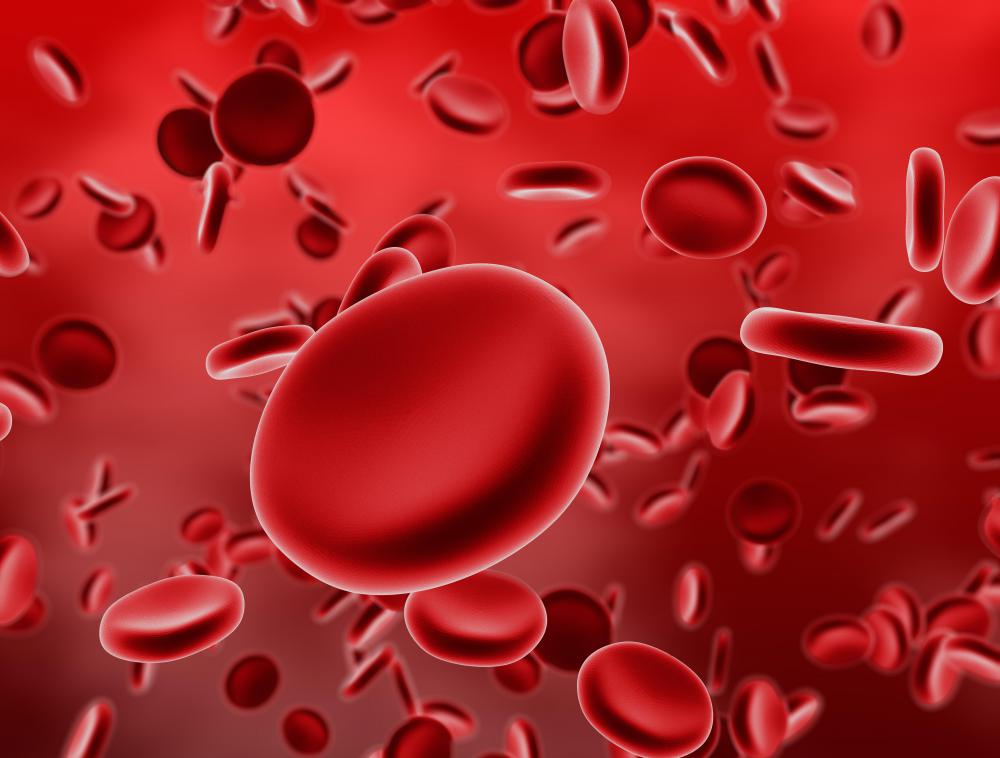
Acute myeloid leukemia (AML) is a rare form of cancer that affects white blood cells formed in the bone marrow. Myeloid means "from the bone marrow," and in this form of cancer, the bone marrow begins to produce abnormal or atypical cells. These new, cancerous cells interfere with the normal production of blood cells, which decreases red and white blood cell and platelet production.
This form of cancer remains challenging to treat because only a few patients are strong enough to undergo the aggressive chemotherapy used to cure it. Younger patients are likely to have a higher survival rate, but older patients, the population among which the disease is most prevalent, are less likely to respond to treatment.

Some conditions are more likely to cause acute myeloid leukemia. It is 10 to 18 times more likely to occur in people with Down’s Syndrome. Ironically, treatment with chemotherapy for other cancers can increase risks of developing the condition. Further, radiation exposure is a common cause, and high numbers of people who survived the Hiroshima and Nagasaki atomic bombings later developed the condition. A few current studies suggest that repeated exposure to the chemical benzene may increase the risk as well.

The early symptoms of acute myeloid leukemia may not always suggest the illness. People may feel like they have the flu and have aching muscles, feelings of fatigue, fever, a loss of appetite, and weight loss. As more abnormal white cells inhibit normal blood cell production, symptoms like difficulty breathing, reduced immunity to illnesses, frequent infections, and tiny rashes on the skin called petechiae may emerge.

Often people are not accurately diagnosed until they have a complete blood count (CBC) that displays abnormal counts of all blood cells. When a CBC exhibits lower than normal counts of blood cells, medical professionals may extract a small amount of bone marrow to analyze the types of white blood cells that are abnormal. This is sometimes unnecessary, since abnormal blood cells may be readily found in the bloodstream if the disease is in a late stage.

Treatment has two phases of chemotherapy. The first, called the induction phase, involves seven days of continuous intravenous injections of chemo medications like cytarabine. The goal is to attack all abnormal white cells and hopefully to reduce them to levels that can’t be detected.
The second phase of treatment is called post-remission or consolidation treatment. Patients who survive the induction phase often undergo a bone marrow transplant, and receive three to five more treatments of chemotherapy in order to kill remaining cells. Hospitalization is normally necessary for both phases of treatment since resistance to infection is very low, and the high doses of chemotherapy can have adverse effects on the body.

Acute myeloid leukemia is unfortunately difficult to treat, with only about 20 to 30% of patients cured. These statistics may actually be slightly off, since many elderly patients elect not to treat the condition at all when survival is unlikely. The condition remains a rare form of cancer, but medical researchers expect a rise in cases because people are living longer: the disease is most likely to affect those who are elderly, and the average age of onset is 63.
Tricia Christensen
Tricia has a Literature degree from Sonoma State University and has been a frequent WiseGEEK contributor for many years. She is especially passionate about reading and writing, although her other interests include medicine, art, film, history, politics, ethics, and religion. Tricia lives in Northern California and is currently working on her first novel.
Learn more...
Tricia Christensen
Tricia has a Literature degree from Sonoma State University and has been a frequent WiseGEEK contributor for many years. She is especially passionate about reading and writing, although her other interests include medicine, art, film, history, politics, ethics, and religion. Tricia lives in Northern California and is currently working on her first novel.
Learn more...AS FEATURED ON:
AS FEATURED ON:









-
![Acute myeloid leukemia is 10 to 18 times more likely to occur in people with Down’s Syndrome.]() By: karelnoppeAcute myeloid leukemia is 10 to 18 times more likely to occur in people with Down’s Syndrome.
By: karelnoppeAcute myeloid leukemia is 10 to 18 times more likely to occur in people with Down’s Syndrome. -
![Many who survived the Hiroshima and Nagasaki atomic bombings later developed acute myeloid leukemia.]() By: Ig0rZhMany who survived the Hiroshima and Nagasaki atomic bombings later developed acute myeloid leukemia.
By: Ig0rZhMany who survived the Hiroshima and Nagasaki atomic bombings later developed acute myeloid leukemia. -
![Individuals suffering from acute myeloid leukemia may experience fatigue and weakness.]() By: Kirill KedrinskiIndividuals suffering from acute myeloid leukemia may experience fatigue and weakness.
By: Kirill KedrinskiIndividuals suffering from acute myeloid leukemia may experience fatigue and weakness. -
![Samples of blood from a healthy person and from one with leukemia, a type of blood cancer.]() By: AlilaSamples of blood from a healthy person and from one with leukemia, a type of blood cancer.
By: AlilaSamples of blood from a healthy person and from one with leukemia, a type of blood cancer. -
![Fever can be an early symptom of acute myeloid leukemia.]() By: evgenyatamanenkoFever can be an early symptom of acute myeloid leukemia.
By: evgenyatamanenkoFever can be an early symptom of acute myeloid leukemia. -
![A blood test can determine if someone is suffering from acute myeloid leukemia.]() By: Wojciech SobiechA blood test can determine if someone is suffering from acute myeloid leukemia.
By: Wojciech SobiechA blood test can determine if someone is suffering from acute myeloid leukemia. -
![A person diagnosed with acute myeloid leukemia will have decreased red blood cell production.]() By: mystockA person diagnosed with acute myeloid leukemia will have decreased red blood cell production.
By: mystockA person diagnosed with acute myeloid leukemia will have decreased red blood cell production.


Discussion Comments
My dad was diagnosed in December of 2015 with AML at the age of 83. His doctor told him that with treatment (Dacogen) he could maybe go nine months, and without, weeks. That worked for over a year, which is pretty wonderful. Two weeks ago, we signed him up for in home hospice. He is still fighting every single day and is truly a warrior. I know that each and every day we are coming closer to the end of his journey but I am so very proud of him. Don't give up hope and ask questions. Be your loved one's voice.
My name is Denyse and I live in Johannesburg, South Africa. In December 2000 at the age of 47, I was diagnosed with AML after almost bleeding to death from my uterus and nose. As soon as the excessive bleeding stopped (the Oncologist had had to put me on Premarin which is a hormone drug to stop the bleeding), I had seven days and seven nights of high-dose chemotherapy. Unfortunately the bleeding started again and I had to again take Premarin. Three weeks later I had a further seven days and seven nights of chemotherapy. I developed a lot of side-effects but managed to survive these.
I was due to have a stem cell harvest and if this did not work, a bone marrow transplant but fortunately, one of the oncologists who was treating me was in Paris at a seminar while I was in hospital and he discovered that a woman who had had exactly the same diagnosis as I had, had been put onto three oral chemotherapy drugs, post intravenous chemotherapy, for two years and she was doing very well.
I immediately started the three different oral chemotherapy drugs and continued taking them for two years. I am now aged 62 and healthy and fit as a fiddle. Have faith as AML need not be a death sentence!
My dad was diagnosed with AML a couple of weeks ago. He is 73. He started with heavy vomiting and diarrhea, and then some fever. Right now he is in the ICU to monitor his heart since his blood pressure tanked. They believe it might be an infection but no one knows for sure at this point. I just hope he survives this round. They did the classic 7+3 treatment on him and its so hard, I am so scared of the complications.
I lost my dad in February 2014. As we were mourning his loss, my mom began to complain that she had a UTI. Two weeks later, she was diagnosed with AML. She began chemo the next day and she lost the ability to respond to our voices. She was intubated that night.
A week later, she began to hemorrhage in the brain. She died that afternoon. My mom was with my dad when he took his last breath. I was with my mom when she took her last breath.
I am having a very difficult time wrapping my head around the fact that I will never be able to pick up the phone and hear her voice. I miss her so much. For those of you fighting this horrible disease, keep up the fight. I am praying for you.
My son has recently been diagnosed with AML at four months of age. His diagnosis took so long for them to confirm. He has had three bone marrow aspirations and two biopsies and finally, on his last biopsy, they found that his bone marrow was predominately monocytes.
His leukemia is only found in the bone marrow and not his blood stream. The only signs we had were frequent fevers and low neutrophil counts. Now we have just started chemo and he seems to be tolerating it quite well. He hasn't changed and so far no side effects.
Researching all these stories makes me so scared. This is a horrible disease and my heart goes out to all the ones who are still fighting it. I hope for nothing but a fast battle and recovery.
My brother of 16 years got acute myeloid leukemia and spleen megaly. He found out after five days and having symptoms of vomiting and fever. He died on the sixth day. Why did this happen so suddenly? Please, can anybody answer this?
My mother (68) was diagnosed with AML in May 2013, admitted to hospital in June for aggressive chemo and died from complications, due to her platelets being so low because of the chemo, in July 2013. I am still finding it hard to believe that she is no longer with us and so angry at this horrible disease.
Our daughter was 24 years old when she noticed unusual bruising and went to the doctor thinking she might be anemic. She had two rounds of chemo and a stem cell transplant from an unknown donor. She was doing fantastic, but four months later (yes, past 100 days) the leukemia returned and she never could reach remission again. They tried chemo and experimental treatments. She passed away 21 months after diagnosis. It's been two and half years. I miss her every day! She was my joy and I thought we would have more time.
I lost my husband due to AML M2 in July 2012, only five weeks after his diagnosis. He was only 37 years old. Nothing had happened to him. He only had fever, but it was not high. After a week of tests, he was diagnosed with the disease. His induction chemo went well, but after four days of completing his induction, suddenly he had pain in his stomach and on the second day, his urine stopped. The doctor said that his kidneys were not working and it was a side effect of the chemo so I changed hospitals.
After five dialysis treatments, his kidneys started working but after two days, the urine stopped again. Then they tried dialysis again, but it was all in vain.
The doctor informed me there was a blockage in his bladder, so they needed to operate it. They operated and he never opened his eyes again. For one week, he was on a ventilator after his operation. His body was responding well, but I don't know what happened. After three days, he stopped responding and a couple of days later, he left me and my 12 year old daughter alone in this world.
The doctor told me that the cancer cells attacked his brain, which is why his body did not respond. Until his diagnosis he was a very healthy person. He was 6'2 and was also a healthy weight. By the way, he was on the police force and never drank or smoked in his life.
Ny sister is 26 years old, diagnosed with apml m3 leukemia. During her first round of chemotherapy, she responded well but she developed differentiation syndrome and is now in a very bad state, and receiving platelet transfusion every day. Can anybody please give some response regarding her survival?
This disease is just really terrible. Acute myeloid leukemia -- I can never forget it. It hurts the person diagnosed and the surrounding people in their lives.
My dad, whom I loved dearly and who was my best friend as well, was diagnosed in July 2010. He underwent induction phase chemotherapy and consolidation. Everything looked good, with no more leukemia cells detected and he returned to work January 2011. Then in May 2011, some leukemia cells were detected in a blood test. Once again, he went through another induction phase of chemotherapy. After this, it was gone again and they decided it would be best to do a bone marrow transplant in August-September 2011. All these treatments really affect someone. My dad was a very active man and to see him lose his strength just really hurt.
After the bone marrow transplant, he was good and no more cancer cells detected. He returned home and had to continue going to the hospital twice a week to receive blood or platelets. This continued until February 2012 when they told him the leukemia returned and at that point, there was no treatment available. What a terrible thing to hear. We are a strong family so no one ever cried. We just spent every day being positive and my father asked if there was anything he could do. They told him to enroll in clinical trials, so that is what we did. I drove him to many of his visits to the hospital and loved my father.
He tried without success and in Jun 2012, I was with him at the hospital when he took his final breath with me. I miss him so dearly and hope never to see anyone have to go through this. After this, my objective is to become a nurse and treat every patient as if they were my father! Thank you all for reading and I hope this can help some people cherish the moments you have with the person and also provide you with the steps taken. Please let's find a cure! Donate!
I am so grateful to have found this site. My Dad is 73 and has AML after having MDS for about a year. They have tried mild chemo and now he is at home and they are considering another round. It is prolonged rather than curative in any case. But now he has pneumonia as well, so we are even more worried. Thank you for sharing your stories. It makes me feel our family is not alone in this.
My brother, 52, had mouth cancer and was in remission. He was a decades-long alcoholic and had finally given up alcohol and become committed to improving his overall health. He went to the hospital last Tuesday feeling tired and anemic. He'd had no appetite.
The doctors suspected leukemia from the blood count and began giving him transfusions. He had the bone marrow biopsy on Friday, got the results which showed AML on Monday, and died several hours later that night. His children and ex-wife were with him. I drove in from another city but he was gone fifteen minutes before I arrived at the hospital.
He was admitted Tuesday, got the AML diagnosis and died six days later. He would have been three months sober tomorrow.
I was diagnosed with AML-MLL in September 2012. Treatment (induction chemo and three rounds of consolidation chemo) have gone well so far. My numbers recover after transfusions. But this disease came on so fast, and disappeared so fast. I keep in mind that it can reappear just as fast. I'm researching alternative therapies in case they don't find a marrow match for me (none found yet). I am 27 years old.
Our beautiful, funny, clever, cheeky 5 year old daughter died 36 hours after being diagnosed with AML. I miss her so much it hurts, but she slipped away gently after getting a cuddle from me and then falling asleep (coma). She died in our arms.
We are numb and broken, but not angry or guilty. We are so privileged to have had her, so relieved that she didn't suffer, and so sorry that we lost her. My heart goes out to anyone who is lucky enough to fight AML. Keep strong and keep fighting. My love is with you.
I was diagnosed at 25 in 1986. I had no transplant, just chemo and the great staff at Westmead Hospital in NSW. They did their job and left me to do mine: live my way. I did and still do. Even if I do the wrong things health wise, you can't change what's happening so let the doctors stress over it. Your mind can work wonders or hinder you -- your choice.
I was diagnosed with AML January of this year 2012. I've had three chemotherapy cycles already. My doctors advised I need to undergo a bone marrow transplant, but it's very expensive and my family couldn't afford it. At the moment, I'm feeling no infections at all and as per the last CBC result, there are no abnormal cells found in my blood anymore, but I need to undergo bone marrow aspiration again for them to check if there are really no cancer cells left in my bone marrow but I haven't had it yet.
I don't know if you have ever heard of Graviola fruit? Studies found that it kills cancer cells 10,000 times faster than any drugs that are given to cancer patients. You might want to search what it looks like, etc. and have your cancer patient loved ones take this and hope for the best.
I know this may sound cliche but nothing is impossible. Prayers always work. For those of you who are battling with this illness, let's savor each day, stay positive, and everything's going to be all right. Hugs and kisses.
I love reading everyone's comments and all of these brutal stories. They comfort me and it makes me think I am not alone. I'm 12 and my eight year old brother has been battling AML for four years and has had four bone marrow transplants two from anonymous people, one from my dad and one from my my mom that he is getting this week.
Hopefully four will be our lucky number because there is only so much he can handle. But I believe in him. I have never given up hope. He is in the great hands of St. Jude. Also I wish everyone visiting this website the best of luck. God bless you all!
I was one of the lucky ones. I was diagnosed with AML in advanced stages in Nov 2011. I was in hospital for three months receiving chemo, then out in February before intense radiation and chemotherapy in March and a bone marrow transplant. I eventually left the hospital in June. Then I was back in due to graft-versus-host disease for a month and then out.
It was the most difficult period of my life and for my family, friends and children. I remain convinced that a positive mental attitude helped me. I was lucky, had a laptop and internet and was able to read a lot of inspirational material of people surviving against the odds.
I listened to a lot of classical music, read many books, drank plenty of beer (ginger! non alcohol!) and did some drawing and painting. I was on anti-depressants, which helped. I took one day at a time. I resisted lying in bed and sat most days in a comfy chair when receiving chemo. I also used the exercise bike, trying to maintain a level of fitness.
Yes, it was a major, challenging period in my life. My prognosis was poor (70 percent against). But somehow I survived it and that was seven years ago.
I was also very lucky to have the support of a great medical team. I often felt "we" (the team and I) were working closely together to rid my body of this uninvited, parasitic guest. I developed visualization techniques. I even, somehow, managed to maintain a sense of humour. I don't know how. I recall the times friends visited and I was wearing the giant afro wig and sunglasses. It was mid-winter!
In summary, somehow I was very lucky and survived. I think a lot of this was down to some of the techniques I developed, great support from friends and the great medical team who were looking after me. I wish all those patients and families the best of luck.
I lost my 9-year-old daughter to AML six days after diagnosis. She went to school, participated in her church group and played softball in the front yard the day she got sick. There were no symptoms except for a fever and pain in her chest that night.
Two doctors said it was a viral infection. A third finally drew blood six days after her first complaint. Six days after the AML diagnosis, she was gone. I can't even wrap my head around it all.
My 19 year old son Stefan was diagnosed with AML in April 2011. (I was getting the house painted and he was complaining that he was feeling nauseated and asked me to take him to the Dr for a check-up). We were shocked and he started chemo in hospital immediately. They told us he is young and it's curable.
Nine months later, my beautiful blue-eyed boy was dead! He completed his three rounds of chemo and was running out of the hospital. He was in remission for three months when we he was told the AML had returned as aggressively as the first time but in a different form (Scarring in the bone marrow).
The hospital sent him home to die and I took care of him at home and couldn't believe the western medical system that I had to fight them every week for my son to get blood transfusions.
My son asked me to advocate on his behalf for himself and other people who are suffering. I still can't believe my kind, honest, brave son is gone.
I count myself very lucky. I was diagnosed with AML in 1993 and had brutal treatment, which very nearly did me in, but I am still here today.
It was the most difficult period of my life and I remain convinced that a positive mental attitude helped me. I saw other young patients seemingly give up and sadly fade away. After nearly 20 years, it is still with me and helps me focus on the truly really important things in life. Take one day at a time, I was told by the NHS staff, and that still holds true today.
I wish all patients and relatives on whom a huge burden falls, the very best of luck while going through this brutal treatment.
I am a 30 year survivor of AML. I was diagnosed at age nine and had three years of difficult chemo. With amazing doctors and miracles I survived and even had two children (no radiation). Some people do survive!
There is no hidden cure for AML. There is no goldmine of ill-gotten profits accruing to physicians, hospitals, drug companies, governments, or anyone else. This is a rare disease, and we are fortunate that it is being studied and that a cure is being sought. The pharmaceutical manufacturers of Vidaza just gave my mother 14 additional precious months of life. God bless them. Please, this forum is to help those of us who are suffering and in need of answers. Enough of the craziness.
Just reading all these accounts makes me understand how my husband of 68 years goes in with a really bad back pain and no other symptoms, and dies two weeks later with AML. I was devastated did not know this could happen so quickly.
He arrived at the hospital that night, was put on a ventilator and taken off a week later to die. I have kept thinking for a year I could have done more, but after hearing all your stories, I realize he did not have to suffer too long. They said he would not survive any treatment.
My father, who is 57 years old, is fighting AML M2. He completed his first induction Chemo four weeks ago. He had got a pneumonia infection while in hospital after the chemo. His blood count is 8 today with 19,000 platelets. His platelet count is very low and so doctors have asked him to come in tomorrow for a transfusion.
I want to know how much time will it take him to come to normal platelets count with a normal hemoglobin. He is still very weak and has a mild cough. Yesterday, he had a 101-degree fever.
My wife, aged 46 passed away in December 2011 and was diagnosed with AML 3. She was admitted to the hospital a week before. At first we thought it was a brain stroke, since her left side was paralyzed, and then she lost consciousness on her arrival at the hospital, After a brain scan they discovered that there were serious lesions on her brain and after blood analysis, she was diagnosed with AML 3.
The doctors were powerless. They said they could not stop it. Half of her brain was damaged and they could not start chemo, because of her unconsciousness.
When she passed away, her brain was 90 percent gone. What baffled us was that it was so sudden. True, she had headaches, some flu and was tired two weeks before. But how many people go to a doctor and ask for a scan and blood analysis when you have a headache? Doctors prescribed her with medication for headaches and fever. The disease was probably in her three to four weeks before. I feel so guilty for not acting sooner.
This is to show that AML does kill, so let's not fool ourselves. For every person who survives AML, many many more around the world get killed.
I totally agree with anon238355. The government and pharmaceutical companies are to blame. Money, big money is involved. Instead of spending billions and billions in wars, governments should invest in a simple and efficient way to detect cancer, stop it and treat it. Secondly, there's the benzene case. We are killing ourselves with all those chemicals! What are governments doing about it?
I lost my beautiful wife at 28 years old, my one and only angel back in september 2007. It was one true love story that will never end. I want to let every person out there know that money is not going to save your loved one when it comes to the point of a stupid freaking disease that washes away your life and the tears of your kids and your family and friends. There is a cure and we all know it. The government and pharmaceutical companies are at fault. They don't want to have the cure available to society and this is the truth!
I traveled the whole world and spent thousands to get my wife back to her normal life and nothing helped her and no one even had an answer for it! Until then as a widowed father of my two princess daughters, seven and eight years old, I have done a lot of research to find that answer. After losing almost $2 and a half million, my house, business, cars etc., I had only $2,800 left, no job, nothing except God and my two daughters. It was really scary and hard but I understood that I would never give up!
There is a lot to tell and talk about my loss, but I'm letting the whole world know that we are stupid and dumb and hard working citizens keep this country alive by paying thousands of dollars for taxes, that support cancer programs, and all those stupid donation programs go nowhere but to build a dumb building or a hospital or to a bogus non profit organization that puts that money in their pocket. They only provides jobs to those stupid human mechanics that you and I call doctors! It's funny but it's the truth. My wife was a strong, trained sportswoman. You would never think that she would get cancer at 28. That was impossible and also it is impossible that there is no cure. There is! It's just not at this point in time.
There are billions of dollars being made from this illness! From chemo, bone marrow transplant, all those stupid medications, etc. That brings a lot of money to the government and creates a lot of jobs and we let our innocent patients die with no cure? They have the cure and I swear in the name of the Lord, the reason that they don't have it available is because the population will grow fast and a lot of hospitals will shut down, there will be no more jobs, and you can imagine the rest by yourself.
Why? It's all crap, and it's just business and money that they care for! Mostly the disease starts from the food that we eat and this dirty air that we breathe, by this stressful life we live every day and night!
On the other hand, there are those who get pregnant one after another, and especially those who have cesarean surgery! That anesthesia those stupid nurses give through stinging through your bone marrow. I researched a lot and found some common answers that it mostly is from getting pregnant periodically, from having the first baby and then pregnant with the second one again. And for all those males and others. it's the stress and depression that kills our mood and gives us unhappiness and we worry.
I recommend to all loved ones out there to start fighting to demand the government to release the cure for those innocent ones. We are human beings, for God's sake! We are not robots and we all have to live and survive is the way it should be. There are many diseases that people get is because of all these new technologies, substances, chemicals, food, etc. They make them but they don't care and think that it causes many reactions in our human society.
The average person's life today is 55 to 75. Back in earlier times people didn't have plasma televisions or a red ferrari, but they ate fresh eggs,fresh meat and breathed clean, fresh country air and lived up to 100 years or more? If they can cure a simple flu, they can cure cancer. Stop lying and making money. We have to step up and fight for our families? We don't need to worry and work our butts off to drive fancy cars or buy that new television. That's a scam. We all work to pay off those debts to own something new that just been created for our pleasure! We don't need that! Our lives are more precious than anything that exists.
If all of us rise up and fight we would get the cure. The government pays billions for war and to find oil, etc., if you know what I mean. But we citizens are suffering with this deadly disease that provides jobs to the hospitals pharmaceutical companies to get rich and bring a lot of revenue to the government! It's freaking hard see a mother tell her child that she is not going to make it to see her daughter on her birthday. What are we? Why are we working? For who we are working? Why do we have to suffer? What do the doctors do? Are they God? They make a lot of money just to visit you and tell you what to do, and whatever they know is available on the internet, just like an auto mechanic changes your tire. I think the cure is that it's time to rise and fight!
I should never go online to read about this disease, but my curiosity got the better of me on this. It's, my second anniversary of being diagnosed with AML at the age of 51. I had a bone marrow transplant in April of '10 and am in remission. My life is back to as normal as I can make it.
Don't ever let anyone tell you this is a death sentence. Attitude is everything. Don't ever give up hope -- ever.
My Dad was diagnosed with AML at 75 in May this year. He was a very healthy and strong man who was never ill. He had one round of treatment that lasted a month, he went off his food and lost 3 stone. He also got an infection in his arm and had to have a skin graft the looked like a shark bite!
He was told in July that he was in remission but then he hit problems again in September went on a drugs trial. All seemed to be going well until he started with diarrhea and sickness at the end of October. He was taken in hospital but died in early November. Apparently it had come back aggressively.
I am sure that in the long term, we will look back and be glad that he did not suffer for a long time, but it is still hard at present to deal with what took my strong father from us so suddenly.
I lost my beautiful wife, 52 years old, to AML in February, 2009. She was diagnosed in February, 2008, after being treated for extreme back pain for a month. She went into remission for almost nine months, but bruises began appearing on her legs and arms, so we knew it was back. She fought so hard but to no avail.
After 35 days in the hospital there wasn't anything else to be done, so we went home for 19 days until she passed. Make sure to love and hug your family every day!
Don't let anyone tell you, you can't survive this disease. I had AML at 33, a bone marrow transplant and it's been five-plus years in the clear. A long road, yes, but completely possible. Don't give up hope and stay off the Internet! It will scare the crap out of you! All the best to anyone who reads this.
My daughter was diagnosed at 18 months old with AML and fought through many treatments we nearly lost her many times with infections she is now 14 year old and is looking at having to do treatment again with a relapse what are her odds of beating it twice?
I've read all your posts, and I'm glad I'm not alone. My husband was diagnosed in May 2011 with AML. He had three rounds of intense chemo and was told without a bone marrow transplant, he would have 12 months to live.
We have two children who ask me every day if Daddy will get better, and I tell them we hope so. He has just undergone a bone marrow transplant, and I suppose when I looked at the posts, I expected to be told it was a cure, but sadly that's not the case and I wish we knew what the future held.
I never imagined at our age we would need to deal with cancer. It's a difficult time. He's been transferred to a hospital too far to see him on a regular basis, which makes it all the more painful, and we're keeping our fingers crossed he'll be home for Christmas.
I suppose its nice to find a site where I can see first hand other people going through the same torment, both physically and mentally, as I am.
My dad, 67 years old, was diagnosed with AML in early July, 2011. My family and I were all devastated after we learned about this news. He has now completed two cycles of chemo, but his second cycle was a lot more complicated with viral infections and minor pneumonia, where in between he had two or three weeks of constant fever. Also, his WBC abd platelets etc. haven't recovered as well as after the 1st cycle. In a few days' time, he will be starting his third cycle of chemo. My family and I are all very anxious about this, because we really have no idea what this cycle will bring to him.
The doctor told us that his initial prognosis showed that he has eight abnormal chromosomes, which is rare and has made his condition tough to treat. Although he always tries to act as if he is okay and fine, we can see that he is getting weaker by the day. We all wonder how long he will still be around us. We would love to spend as much time as possible and hope he can do whatever he wants to before he's too tired to do it. So it's already been 3 1/2 months since he was diagnosed. What is his life expectancy in this case?
Also, do you think the doctors already know how many months he has left? Can anyone share experience or knowledge on this? Your response will really help, thank you!
My husband is 75 and has had MDS for seven years. Five years ago he underwent 2 and a half years of Vidaza + enbrel treatment at the Fred Hutch in Seattle and that kept him from going into AML and having to have transfusions. However, he is having two to three weekly transfusions, has iron overload so he is on Exjade and now his platelets are down to 7 lowest ever for him.
He gets very tired but still has a certain quality of life, walks most days for a little while and reads a lot. How long for is in the hands of the 'gods'.
My mother has had MDS for six years and is now 69 years old. She went to birmingham al for a bone marrow transplant but they turned her down and were very negative about it.
She has now gone to MD anderson in houston tx, There they were very very positive about the treatment. She was given two years to live without treatment. There they have given her a 40 percent success rate. Do pray for me and my family (Fay) is her name. Any one out there that receives negative attitudes from doctors, please get second options. MD Anderson and Fred Hutchinson Cancer Research Center are the best places in america.
It was lovely to read all your comments and know that those of you who are ill, have such caring friends and relatives worrying about them.
My mother in law has just been diagnosed at 78, and unfortunately, she is back in hospital with numerous infections, including c diff, which seems to be inevitable, due to the lack of platelets and lower immunity. She is on weekly transfusions, as palliative care. The treatments are too aggressive for her.
It was very comforting to know we were not alone in the fight to make her last few months as comfortable as possible. God bless you all and remember, those who are no longer here, will always be around, in memories.
i had aml when i was 35 and was fit and healthy, i thought. i got lots of chemo then radio and stem cells from my brother. that was in 1998 and i am still here in 2011. I received excellent treatment from nhs in edinburgth and family and friends too. there is light at the end of the tunnel but it is a long tunnel.
My father was diagnosed with acute promyelocytic leukemia in 2006 and was treated with numerous rounds of chemotherapy, he was hospitalized for 6 months and eventually got into remission. He went back to the hospital for regular monthly check-ups.
He lasted nearly four and a half years in remission and on one of the visits his hematologist told him that he will get sick again because the types of chemotherapy he received caused him to develop a secondary leukemia, AML. At 47 years old he was officially diagnosed with AML back in February of this year. They immediately started him on chemotherapy again in the hopes of once again achieving remission so that he could receive a bone marrow transplant. He was in remission and went for several appointments with a bone marrow transplant specialist, but in the end they decided that it would not benefit him and he would not survive the treatments.
They gave him 6 - 18 months (news which the specialist delivered over the phone. I thought this was heartless and rude, good on you Auckland City Hospital, way to go.) At the moment he is in hospital receiving more chemotherapy, the doctors have told him this round is not going to cure him, just buy more time.
As his daughter, it is hard to see the strongest man I know, mentally and physically be drained of all his strength. Every day we just hope and pray for the best but try to remain as realistic as possible.
Further to my post 31. It's now been seven months since my mother died. I still can't believe that my mother who was so well one day died within one hour of the diagnosis the next day.
As I read the other posts that have since followed mine, it seems that no one survives much more than a couple of weeks even with intense chemo and treatments. I now realize how blessed we were not to have to watch my mother suffer. Chemo wouldn't have saved her. I now see that.
Further to post 31 which I wrote in December 2010, my mother has since passed away in excruciating pain, 12 weeks after diagnosis. There must be a cure found for this illness. I am in total shock at how quickly it acted on my mother. We were told she had the most aggressive form, but weren't prepared for it taking her that quickly. God bless her.
My mother was diagnosed August, 2010. It was a tough road for her. after five different rounds of chemo, they just could not get her into remission and the aml took over. She died peacefully three days later. She was 68.
My 56 year old husband got diagnosed with AML in November 2010,after having fought another form of bone marrow cancer called Myelofibrosis. Just a year after feeling better and having almost normal blood counts the disease came back as AML. It is very hard to see him getting weaker every day.
He was refused chemo because the doctors thought he might not have survived it after his MDS but it is so unfair to watch him fight this disease with no chance of getting better, losing his strength more and more every day. Right now, his platelets and neutrophils have bottomed out and the transfusions don't seem to be working anymore. He mostly sleeps during the day and survives on Ensure. He gets terrible headaches.
I know the end is close and I only wish that he does not feel more pain. I am beyond despair and already miss him very much because I know that soon he will not be here with me. I only hope that one day they find a cure for this terrible disease.
My five year old baby daughter was diagnosed with MDS back in Nov. Last year and since has undergone aggressive chemotherapy, radiation and a bone marrow transplant and remains cancer free. Every day i thank the lord above and my hearts and prayers go out to all persons stricken with this horrible disease. Leo
My dad was diagnosed with AML back in late September 2010. We expect him to last maybe another week two, tops. Chemo had no effect. Transfusions helped a bit but they just stopped those last week. My dad is in no pain and is just tortured every minute of every day, unable to reconcile with the fact he is going to die.
I don't know what's worse: the pain of body, or the anxiety and fear he is enduring. He doesn't feel like he's dying, he says.
I am trying to wrap my head around this disease, but on second thought, maybe not. Either way i lose. God bless you all. -- Stormy in Ontario, Canada
My sweet wife, 51, was an athlete with a strong heart and an angelic personality. She never ate sugar, and was and worked out religiously. She was diagnosed with AML in June of 2010 after complaining of a sore throat and an aching back. It was affecting her workouts.
She went to the doctor, who misdiagnosed her for three weeks, as they assumed she had strep throat. We switched doctors when she wasn't getting better with the antibiotics, and he took a blood test. She was in the hospital the next day.
She fought valiantly for six months. A week before she was going in for her bone marrow transplant, she developed pneumonia, and was gone in three days. She probably would have been gone sooner has she not been such an athlete. Now I'm so lost without her.
My dad was diagnosed at 48 with AML, has had extremely aggressive chemotherapy and is currently in remission. it's a horrible illness to watch. i just hope my dad can fight on. mentally and physically it has drained him.
My grandad has just got a letter from the hospital advising him that he's got AML. I can't believe he has got it and may not be with us long. I am totally devastated and am dreading when something does eventually happen. I got upset reading everyone's posts.
Sorry to hear that so many people have lost or are losing loved ones to this horrible and dreadful disease. My thoughts go out to everyone.
This is such a horrendous thing. Nobody should ever have to go through this. A close friend of mine who is 14 was diagnosed with acute myeloid leukemia on Christmas eve. Before this she had been getting eye infections and felt fatigued etc. Never would have imagined this. It's terribly unfair. She is only 14.
At the moment I don't think her chemo has started, but it will be such a shame to see her long golden locks go. My best wishes are with her.
My 52 year old mother has been recently diagnosed with AML. She is starting chemo next week and awaiting a bone marrow transplant. Every day is a hurdle. She is very weak and tired. But I know she has the strength and determination to fight this horrible disease.
My wonderful husband was diagnosed with AML in March of 09. He had induction chemo, unable to get into remission due to poor cytogenetics. Went to the Cleveland Clinic, and he did get into remission, had a stem cell transplant (mini). He was doing well until April of 2010, relapsed, went back to CC for the "big transplant" unable to make it through, died while in the hospital from an infection, VRE.
In retrospect, I wish we would have thought of other options but he was a fighter and wanted to try. Our two kids love and miss him and our lives our changed forever, but he is resting with Jesus. I and my oldest daughter are on the BeTheMatch registry to help anyone out there in any way, if we are able, to be a donor. God's blessings to everyone who has experienced this devastating disease.
I'm looking for some honest opinions of those who have experienced this disease. My mother is 59 and has mild/moderate alzheimers disease. A week ago she nearly collapsed and within a week has been diagnosed with AML. We have been told chemotherapy isn't a possibility as the alzheimers does not make it possible and they will control it with blood transfusions for as long as possible. I want some idea of how long she's got?
my mom was diagnosed with mds in November. she has had several transfusions, completed one round of treatment and is now in the hospital becoming weaker as each hour passes. she walked herself to the hospital on friday because of concerns with an infection in her right arm.
today, she has taken a dramatic turn for the worse and the doctors are not optimistic. we are overwhelmed with sadness and shock by how quickly mds became leukemia. please keep her in your prayers.
My heart goes out to all of you who have and are fighting this type of cancer. There are miracles each and every day and you must never give up hope. Each day is a blessing.
Our son also has cancer. He just turned 20 and has a cancer called Non Hodgkin's B-Cell Burkitt's Lymphoma. He had surgery Oct 7 for a thyroid cyst that was growing rapidly and it ended up being cancer. Our world has been turned upside down. He just finished his fourth round of chemo and has one more round to go. His prognosis is very good according to his doctors.
A young man aged 20 was just admitted to our hospital with AML and his family is in shock. His mother and I have become friends. Our sons are the same age, are both sophomores in college at the same college and lived in the same dorm last year and now are in the same hospital two doors from each other.
Many prayers to our new friend in his recovery.
My fit, healthy, active mother (aged 70) who never had a day sick in her life, danced nightly rock n roll and the salsa, power walked,and watched everything she ate and drank, got sick with what we thought was the plain old flu in August 2010.
After the course of antibiotics didn't work, I took her to the hospital where she was initially diagnosed with pneumonia then AML. One hour later she was gone. Thankfully, she suffered no pain and peacefully went to sleep and we got to say our goodbyes. We are dumbfounded as to how quickly it took over and killed her. I still ask how could this have happened.
I am glad we didn't have to watch my mother endure the treatments I am reading about on this site. She is in a better place. God bless you all.
Thanks everyone for sharing. My active 85 year old father was just diagnosed yesterday. The treatment is
harsh for the elderly and yes, there is a high chance of infection. So he has 3-6 months.
He plans to get in as much more golf as he can. I will savor the time I have left with him. He tells me he's had a great 85 years! Blessings all you families that
have a loved one going through this horrible disease.
My mom had a pain in her chest right above her stomach for a few days. I urged her to check it out with the doctor. We went down together to have it checked out and she was diagnosed with AML. We were in complete shock. I have never even seen my mom sick before let alone hospitalized.
They immediately put her in the hospital and started chemo. The chemo is so extremely hard on your body, but she went through it with dignity and grace. It looked like she was going to get through it and we were scheduling the blood stem cell transplant and she suddenly took a turn for the worse. Her organs started shutting down. Her body couldn't handle the toxic chemo therapy any longer. They admitted her into critical care and by that evening she was gone. It was so sudden. I had to say my goodbyes at her funeral. She was only 63, diagnosed in August 2010 and gone by November. The most amazing human being I have ever met, taken from me and my family by this crappy disease.
My 82 year old mother just died of AML, six days after diagnosis.
My Mum has been diagnosed with AML. I feel guilty because I thought the tiredness was grief for my Dad, who died suddenly a few months earlier. Also, we were helping Mum to move house to somewhere nearer us, and more manageable.
Two days after she moved, and three days after my Mother-in-Law died, Mum's face swelled to an extraordinary degree and I whizzed her to the doctor, expecting ear, or tooth, problems. No, it was AML.
She's had 12 days of chemo tablets, and two blood transfusions, I'm not sure how much she can withstand - it is hard for her - but she is wanting to live.
This is the most awful thing to discover and I feel that life is all death and destruction.
My wife was diagnosed in July of 2001, endured chemo and then a bone marrow transplant in November. She did well for several months but the AML returned at the first of July 2002 and she died just a few days after the return of the disease. It all started with a couple of small boil like infections. This is a deadly, fast acting disease.
I lost my father to AML one month ago, and am in total shock. He was a vibrant, healthy, youthful 67 years old. He had flu-like symptoms and fatigue for about a week, and was diagnosed with AML during a follow-up doctor's visit. That was on a Monday.
They checked him into the hospital and started prepping him for chemo, but early Wednesday morning he had a major brain hematoma directly related to the AML, and was dead by that night. We were able to be with him at the end, and in hindsight, I feel fortunate that he didn't have to suffer through painful treatment and physical decline. I always knew leukemia was horrible, but I had never heard of it progressing so quickly until now.
My heart goes out to all of you who have also lost a loved one, or are battling this yourselves. Appreciate every day with each other, because you never know what tomorrow will bring.
My brother is 71 and was diagnosed beginning of September, 2010. He has had the induction chemo and is in a study with another drug given as well. He has been having a hard time with fevers and low blood counts and it is now late October. He picked up some c diff and is being treated for it.
He also is getting a powerful antifungal for some slight pneumonia in his lungs. He had been doing pretty well and has no cancer cells left but since the c diff he has been sleeping a lot with all the medicine and some bloating. The doctors still seem hopeful because his counts have started to go up after neupogen.
They are thinking that once his neutrophils reach 1000 he can go home for a while. I want to be able to give him stem cells when he is strong enough. --uebu
My father in law was diagnosed with Aml in June 2010. He is 82 years old. His white blood count is 0.8 and has hovered around there since diagnosis. He has had no treatment but has had two blood transfusions. He has even travelled to India for 10 days in September.
He has had two infections and been treated in hospital. He is home but is getting weaker by the day. He was active but now stays home all the time.
We have been blessed with the time we have had with him and hope he stays round for his grandson's wedding next year. Thinking of all you with aml and your families.
I lost my mother aged 77 to AML. She lived for 46 days after diagnosis. She was an active and fit woman prior to June 2010 when she fainted and her hemoglobin was found to be low. She was given a blood transfusion while tests were being done to find cause of the low HB.
She a developed high fever in July and blood tests then revealed AML. We were advised that chemo at her age would not be helpful. It was hard seeing her decline so fast and I still cannot accept that she is no more.
My dad is 64 years old, and he was diagnosed with AML in April 09. The doctor said he would not make it but thank god we took him home and he did good for one year. we are back in the hospital and his white cells count is 0.6. A normal person usually has from 60 to a 70 count. I don't know how long he's going to live for, but we will keep fighting. I refuse to give up.
God bless you all and my prayers are with you all!
I lost my 43 year old husband eight weeks ago in July 2010, to AML. A fit healthy guy who, troubled with what we and the dentist thought was a wisdom tooth problem, with severe swelling and infection and had been losing weight.
We came home to St. Helena for a six week holiday, and on our third week he became very tired, out of breath and very yellowish and pale in color. He went for a blood test and was diagnosed with AML.
He was gone by sunday lunchtime. R.I.P Timothy. We miss and love you so much, from your wife Kim and son Daniel.
my 'healthy' active 81 year old mother was just diagnosed with AML. I am glad to read about life expectancy so I can prepare myself. is that possible? God bless you all.
Last Feb,my 78 year old dad was taken to the ER with a heart attack. They found AML. The saturation was so high that they didn't think he'd last the night.
Two months in intensive care/oncology, and he was discharged with hospice. Three weeks ago, Hospice discharged him. He did not need the equipment/oxygen,etc. Last week, his oncologist called. His counts are back up, and he cannot do a second round of Chemo. We will just fight with dignity.
We have been blessed to have him this summer, and he feels blessed to have left the hospital and been on his patio this season. We are grateful to God for the extra time, and continue to spend it with dad. We don't know if we have days or weeks at this point, but dad is our motivator, as his sense of humor through this has show us all that he is truly a man of great strength and grace.
I pray that all of you with AML, and your families, are able to have enough time to let each other know how much you care, and my prayers are for you as you fight this disease.
My father was diagnosed with AML. He is turning 66 years old in September 2010. It is a very harsh disease. I hope he will keep fighting on. Thanks!
My father (88)was diagnosed with AML in May but it progressed from MDS (that was diagnosed in 2008). He had chemo for MDS late last year that was not effective and has chosen to not have any other treatment.
With that said my father's platelet count has not been above 30 since last August and hovers now around 10-18. He has not had a platelet transfusion but does get a Procrit shot.
He is weak/tired but still gets up every day and gets on his mower to mow his 16 acres in Florida. He is fighting it with dignity and I'm very proud of him!
my dad was diagnosed in march 2009 and died april 2009. just three weeks after diagnosis he died. he began aml 16 trial and got through the week of chemo, ended up in intensive care and died through hospital infection. To think he was symptom free and active, a husband, dad and grampa and now gone. i feel sick and shocked. His counts from day one of diagnosis were 0.1 and never improved but they gave chemo anyway. What if he never had it?
I also just recently lost my Dad to aml. He was a young and active 81 year old. No warning signs, just one day had flu-like symptoms. Doctors tried Dacogen, but it did not work. He passed away three weeks after diagnosis.
Just lost my dad at 87. He had a long life, but I am very grateful there was no pain and a quick death with dignity. He was able to say goodbye to us and that is a comfort.
To sawhneyrohit, you need to talk to your dad's consultant but life expectancy is short without treatment.
My husband, 55, has been fighting AML since being diagnosed in October, 09. He has had so much heavy chemo it is starting to take its toll. He relapsed in May this year and has just had more chemo. We are still waiting on a bone marrow transplant.
This is a horrible and debilitating disease which takes its toll both mentally and physically.
My husband was diagnosed with aml in May 2009. He had induction chemo and four months of high dose ara-c. He is in remission as of now. There were many complications from the chemo. He has a hole in his lung from a fungal infection. This is healing.
He goes back in June. If the infection is healed, they will want to continue with more chemo. Every day in remission is a blessing.
I was diagnosed with AML in March of 2008 at the age of 33. I spent my 34th birthday in the hospital undergoing a new treatment- sprycel (dasatinib) instead of chemo.
I responded well and underwent a Bone Marrow Transplant in August. It's been tough since with Chronic GVHD. The doctors just noticed a positive reading on my last molecular test so I may need to go back on Gleevec.
This is a tough disease and I fight every day to survive.
My wife found out she had aml in feb 2009. She went through all the treatments and even had a bone marrow transplant. Her cancer was in remission. She went back for her twice a week check up in dec 2009. Her cancer had come back. She tried to go through the treatments a second time but her body could not take the treatments. I lost my wife in February. She lived one year.
my dad was diagnosed with aml and he died four days later because of it. only two weeks ago he was 59 and very active. he had no symptoms of this illness at all. It's such a fast acting illness that takes lives. my heart goes out to anyone with this illness or family with it.
my da only lasted three weeks after he got diagnosed.
I lost my Dad three weeks ago to AML. He was a very good 89 years of age and extremely active.
He fell ill suddenly, was taken to hospital and after testing etc. diagnosed with AML.
He had seven days of chemo treatment but it was too much for him at his age and he passed away just three days later. It was very quick but I feel so lucky to have had my Dad in my life as long as I did.
I just lost a dear friend, age 56, to AML. She was diagnosed in Sept. 2008 and passed away in Nov. 2009. She had multiple rounds of chemotherapy, but her blood count (red cells, platelets) continued to drop in spite of multiple blood transfusions. From diagnosis to death, it was 14 months. They were never able to give her a bone marrow transplant.
Sorry to hear, but i just read somewhere that it's three to four months average life expectancy for someone with AML, with no treatment.
Hi! My Dad has been detected with AML. His age is 71 years. Doctors have have given him 3 low dosages of chemotherapy due to his age factor, and also given a mild dosage of oral chemo. His HB today is still at 8.2, TLC at 4400 and platelets at 39000. His treatment is going on for last 4 months wherein he has been given blood transfusion of 17 bottles and platelets transfusion of 22 bottles. Still nothing seems to stabilize. Whats the solution? Whats the average life span of patients who have AML who do not take any treatment or who take mild treatment? I need to know this to motivate my dad. He has been fighting it but seems to lose hope in between... Your response will really help! Thanks!
Post your comments