
At HomeQuestionsAnswered, we're committed to delivering accurate, trustworthy information. Our expert-authored content is rigorously fact-checked and sourced from credible authorities. Discover how we uphold the highest standards in providing you with reliable knowledge.
What is Acrylic Latex Caulk?
Acrylic latex caulk is one of several types of caulk used to seal gaps between building materials. It is water-soluble when wet, and can be painted over. Acrylic latex is also inexpensive and a serves as a good general purpose caulk. Unlike silicone caulk, it is easy to apply and to remove when it needs replacement.
The composition of acrylic latex caulk includes acrylic polymers, water, latex, and fillers. This particular mix of ingredients bonds very well to rough or porous materials such as masonry, wood, drywall, and plaster. It is not well-suited to filling large cracks, but good for small gaps in things like wood trim. This caulk cures, or dries, as the water in it evaporates, and it has a slight odor until it cures, which is not as strong as the sharp smell of vinegar that silicone caulk typically emits as it dries.

Some types of acrylic latex caulk contain silicone, or at least small amounts of it. This is mainly an attempt by the manufacturer to combine some of the qualities of silicone caulk with those of acrylic latex. It works to an extent, but these caulks also usually have a high filler content that tends to detract from their overall performance.
Acrylic latex caulk is best suited to indoor use because of its low tolerance for direct sunlight and temperature extremes. Because it does not contain oils, the caulk can be painted over, leading some to call it painter’s caulk. There are actually a variety of caulks to suit just about every need, including those that resemble brick mortar, concrete, and blacktop. For these applications, a type of foam called backer rod can be stuffed into the crack for stability and to take up space before the caulk is applied.

Caulk has been in use for many decades, but it wasn’t until the 1960s that acrylic latex was used. This is partly because the latex has to be derived chemically, and processes such as these have only been perfected in the relatively recent past. Newer chemical processes have also led to the creation of chemical blends with interesting properties. Some specialty caulks are available that are tailored for use on cold, damp surfaces, as well as surfaces that expand and contract with temperature extremes, such as aluminum gutters.
AS FEATURED ON:
AS FEATURED ON:


-
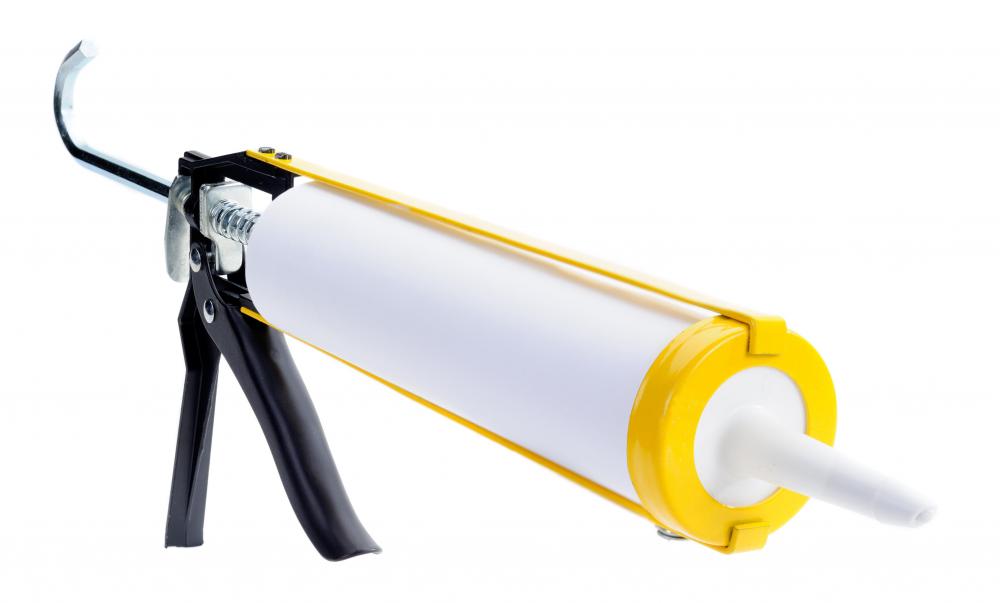
![Acrylic latex caulk in a caulking gun.]()
Acrylic latex caulk in a caulking gun. -
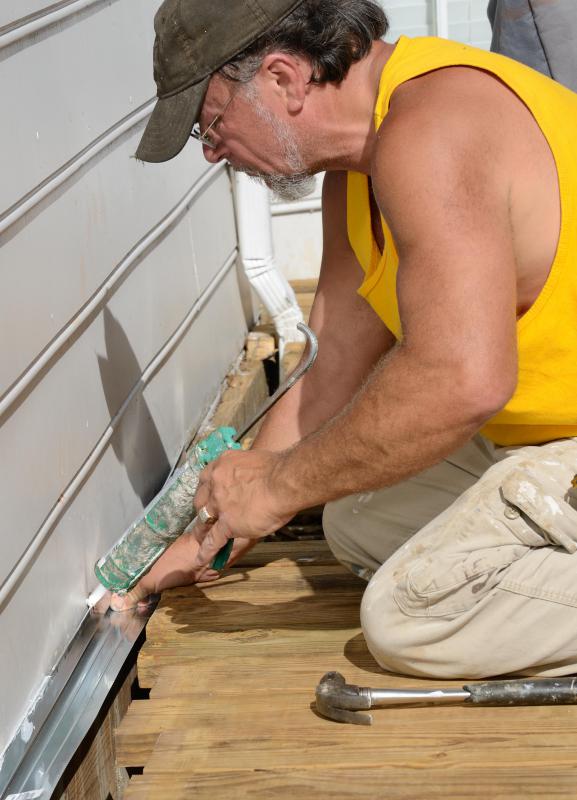
![Caulk is used to seal gaps in between construction materials.]() By: SeanPavonePhotoCaulk is used to seal gaps in between construction materials.
By: SeanPavonePhotoCaulk is used to seal gaps in between construction materials.
Discussion Comments
My dad used to use silicone caulking, and it smelled horrible! I had to leave the area for hours until the odor had gone, because to me, it was unbearable.
Acrylic latex caulk smells so much better than silicone caulk. I had been living with small gaps around the baseboards for years, because I did not want to use silicone caulk, and I thought that was my only option. After finding out about acrylic latex caulk, I finally was able to fill them.
The paint covered up the caulk perfectly. I had never seen caulk that would hold paint like that before. Now, I use it whenever I have a gap pop up.
The concrete slab of my house has cracked. The pattern is irregular, starting from one corner to the other. The cracks are not visible from the roof.
What are the reasons and how do I remedy these cracks?
Post your comments