
At TheHealthBoard, we're committed to delivering accurate, trustworthy information. Our expert-authored content is rigorously fact-checked and sourced from credible authorities. Discover how we uphold the highest standards in providing you with reliable knowledge.
What is Acne?
Acne is a skin disease often characterized by inflammation in the skin, erupting in lesions. This condition is widespread, particularly during adolescence, and the majority of people experience it at some point during their life. There are many myths about what causes and cures acne, and an enormous industry has built up around products intended to help prevent and treat the disease, especially in teenagers.
To understand acne, it’s important to understand at least basically what a hair follicle looks like. The follicle is buried in the skin, and a hair grows out of it, breaking the skin surface. Attached to the follicle are sebaceous glands, which produce an oil, called sebum, that helps keep skin healthy. Acne occurs when, for whatever reason, that hair follicle gets blocked and the sebum builds up under the skin. In that rich environment, bacteria start to grow, eventually causing pimples.

Although many people think of acne only as the erupted, red form often referred to as a zit or pimple, it also includes some non-inflamed forms, known as comedones. Comedones come in two forms: whiteheads and blackheads. A whitehead is formed when the mass of bacteria and sebum formed by a blocked follicle stay underneath the surface of the skin, and can be extremely small, sometimes even invisible to the eye. A blackhead is formed when the erupted mass is open to the surface, allowing the melanin in the trapped sebum to oxidize and become black.

Ideally, these non-inflamed forms of acne eventually drain the built up sebum and bacteria to the surface and the skin heals. Often, however, the interior wall of the follicle ruptures either because of internal pressure or, more commonly, because of picking at the skin. Once this happens, white blood cells flood into the already engorged follicle to battle the bacteria, and the acne becomes inflamed in what is called a papule.

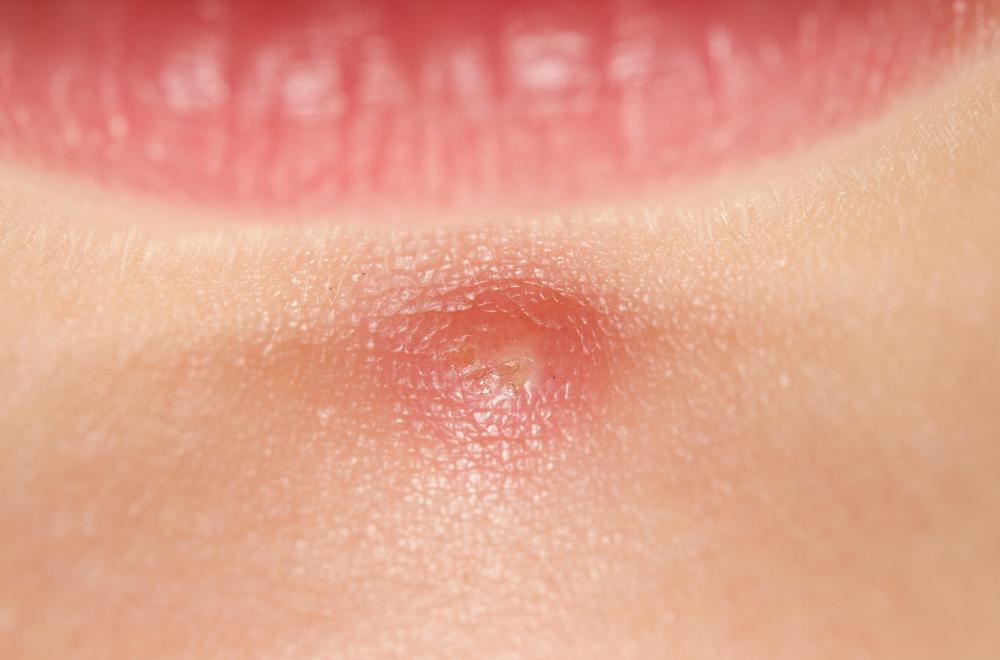
At this point, the acne is still largely below the skin, and although it is visible to the naked eye, it is more as an angry section of skin than as what most people call a pimple. The pimple forms when the white blood cells doing battle with the bacteria make their way to the surface of the skin, erupting into a large white or whitish-yellow lump. Truly severe cases can lead to extreme inflammation in the form of cysts or nodules as well.

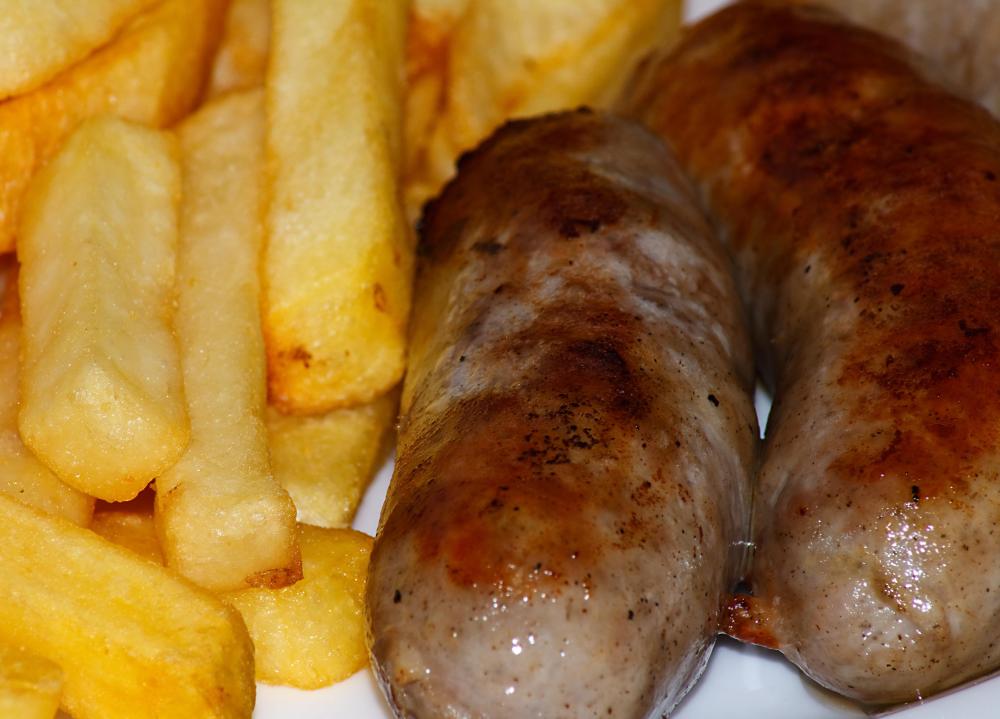
Acne isn’t entirely understood, but it is thought by most people that diet actually has little to nothing to do with its development. Traditionally, many people believed that certain foods, such as greasy foods or chocolate, caused pimples, but most studies have shown this not to be the case. Treating acne can be done with any number of lotions and creams, mostly containing benzoyl peroxide or salicylic acid, but one of the best ways to treat the condition is simply to regularly wash your face with warm water and a very mild soap, reducing the amount of oil on the skin that can build up and cause blockage.
AS FEATURED ON:
AS FEATURED ON:


-
![There are various methods available to help reduce acne.]() By: Picture-FactoryThere are various methods available to help reduce acne.
By: Picture-FactoryThere are various methods available to help reduce acne. -
![Acne is made up of pimples.]() By: S.A.N.Acne is made up of pimples.
By: S.A.N.Acne is made up of pimples. -
![A comedone extraction is one option for dealing with acne.]() By: ampyangA comedone extraction is one option for dealing with acne.
By: ampyangA comedone extraction is one option for dealing with acne. -
![Acne is one symptom of stress in adults.]() By: Piotr MarcinskiAcne is one symptom of stress in adults.
By: Piotr MarcinskiAcne is one symptom of stress in adults. -
![Whiteheads are a form of acne caused by the buildup of pus resulting from inflammation.]() By: F.C.G.Whiteheads are a form of acne caused by the buildup of pus resulting from inflammation.
By: F.C.G.Whiteheads are a form of acne caused by the buildup of pus resulting from inflammation. -
![While many people believe greasy food causes acne, studies have shown that to not necessarily be the case.]() By: stocksolutionsWhile many people believe greasy food causes acne, studies have shown that to not necessarily be the case.
By: stocksolutionsWhile many people believe greasy food causes acne, studies have shown that to not necessarily be the case. -
![In most cases, acne can be treated with over-the-counter cleansers and does not require prescription gels.]() By: ipagIn most cases, acne can be treated with over-the-counter cleansers and does not require prescription gels.
By: ipagIn most cases, acne can be treated with over-the-counter cleansers and does not require prescription gels.




Discussion Comments
I have suffered with acne for 11 years. I always have scars and loads of black heads. I have tried pretty much everything out there. I’m using red and blue light treatment. I’m also going to the dermatologist. I have been going for three months now and they have really helped with the black heads and my pores are smaller.
I use the cleanser, light exfoliator, toner, moisturize, and night serum, and I have noticed the skin quality is so much better and I’m looking more radiant and it's so soft, but the spots and scarring are all still there at the moment.
I have just started the pill again to see if that makes a difference. I am also using a small amount of benzoyl peroxide but the thing I found that works the best is good old Sudocrem at night. I will continue going to the dermatologist. If it's your first time, have a face mapping done and see what they recommend. It's free.
my daughter has used guggulipid with niacin and zinc for 1 month - this has cleared up her acne on her face and back....after 4 years of suffering she is thrilled
surflover00-I definitely recommend visiting a dermatologist if you have severe acne. I suffered from very bad acne as a teenager and visited many dermatologists. I was prescribed many topical medications including Differin and Retin A Micro. These medications were effective at getting rid of my acne. They are stronger than over the counter medications and are much more effective.
However, in my experience, you have to keep using these treatments or the acne just comes back. I was finally put on Accutane by my dermatologist. Accutane can have severe side effects but is very effective. It is necessary for your dermatologist to monitor you closely when taking Accutane.
Accutane was very effective for me. I used the medication over 5 years ago and I am yet to break out with acne again.
I have a serious case of acne. I have many pimples and blackheads and have tried many over the counter medications to get rid of them. Nothing is working. My acne is only seeming to get worse and more irritated with each new medication that I try.
Does anyone have experience visiting a dermatologist? Did they help you get rid of your acne?
anon65321- No, acne is not similar to stretch marks. Acne is caused by bacteria underneath the skin and stretch marks are caused by rapid weight gain or weight loss.
Tretinoin cream has been found to be effective in treating both acne and stretch marks. Therefore, even though acne and stretch marks are caused by different things, taking tretinoin can help treat both conditions.
is acne similar to stretch marks? if I'm going to use the tretinoin cream can it heal or lighten the stretch mark?
Post your comments