
At DelightedCooking, we're committed to delivering accurate, trustworthy information. Our expert-authored content is rigorously fact-checked and sourced from credible authorities. Discover how we uphold the highest standards in providing you with reliable knowledge.
What is Absinthe?
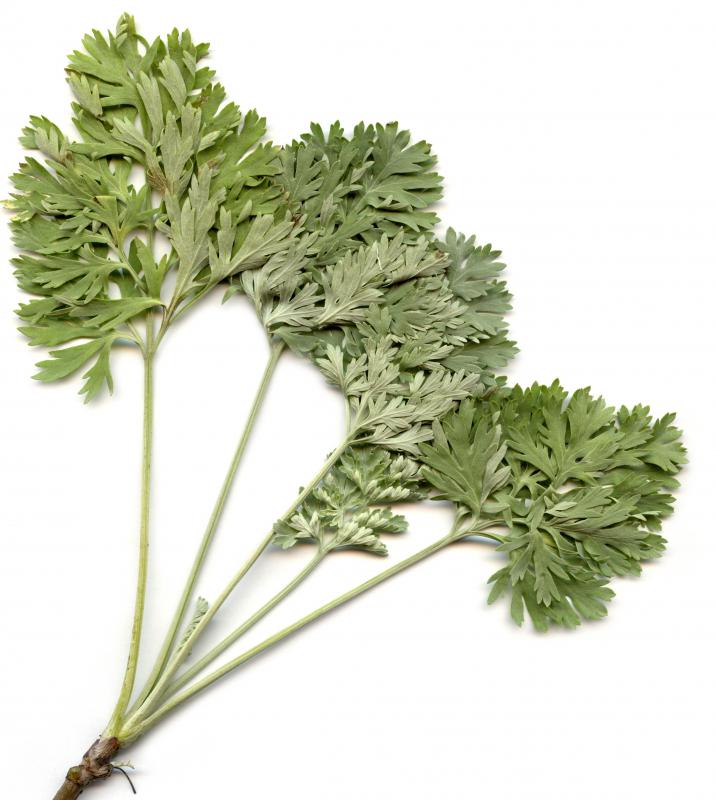
Absinthe is an alcohol made from a number of different herbs, most notably wormwood or Artemisia absinthium. It was very popular among the artist and writer crowd in the 19th and early 20th centuries and was known for its mild hallucinogenic properties. This alcohol was banned in most Western nations by the 1920s and remained virtually unavailable until a widespread revival in the 1990s, following its re-legalization.
This drink has a very bitter taste on its own, a result of absinthine, a substance found in wormwood. For this reason, sugar is often added to it as it is being prepared for consumption to take some of the bitterness away. Most connoisseurs consider the need for sugar to be a sign of a poorer quality absinthe, with the best versions needing only water to be added.

There are many different recipes for absinthe, particularly now that it is once again becoming internationally popular. Most recipes contain at least the “holy trinity” of herbs, however: wormwood, fennel, and anise. Other herbs that are added, depending on the recipe, include star anise, coriander, nutmeg, juniper, hyssop, and dittany. Many of these herbs, like the anethole in both fennel and anise, are known for their psychoactive properties.

When first distilled, a mixture of wormwood, fennel, and anise leaves a clear spirit of about 80% alcohol. This mixture is then usually dyed green, either with artificial dyes or by leaving hyssop and petite wormwood in the liquor to leech out the green chlorophyll. At this point, the spirit is usually diluted somewhat, leaving a drink with anywhere between 50% and 75% alcohol content.

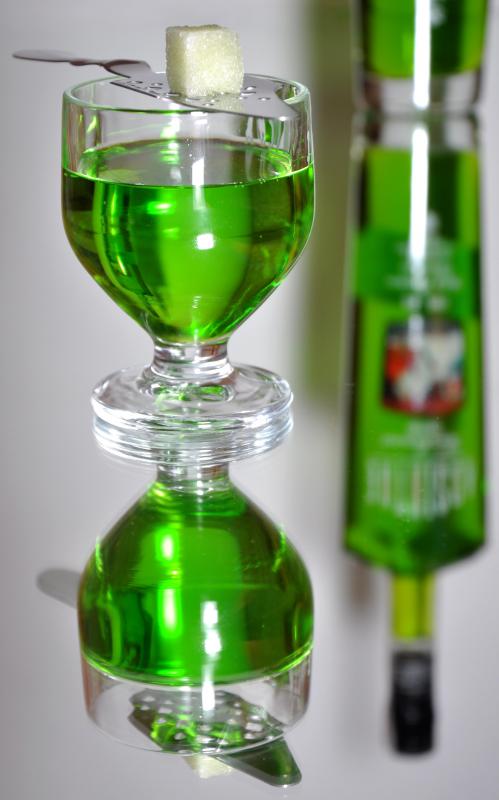
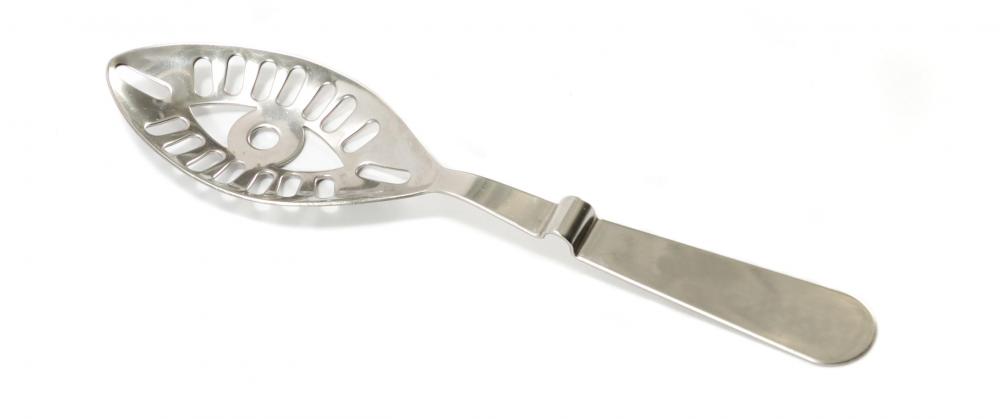
The ritual of drinking absinthe is perhaps one of the most ornate surrounding any alcohol, with special glasses and slotted spoons made exclusively for its consumption. The slotted spoon is placed resting over the glass, and if sugar is being added, it is placed in the spoon. Cold water is then poured or dripped slowly over the sugar and into the spirit itself. When the water reacts with the drink, non-soluble parts emerge and cloud it, turning it a milky white.

One of the main reasons this spirit was banned in so many countries during the early part of the 20th century was a widespread belief that it was incredibly harmful and could cause serious mental problems resulting in violence. While undistilled wormwood does contain a substance called thujone that can cause serious problems, properly distilled absinthe appears to pose no greater risk than any other alcohol, and a number of contemporary studies seem to show that it is as safe as other high-alcohol spirits.
AS FEATURED ON:
AS FEATURED ON:


-
![A small glass of absinthe with a sugar cube and absinthe spoon.]() By: dimchaA small glass of absinthe with a sugar cube and absinthe spoon.
By: dimchaA small glass of absinthe with a sugar cube and absinthe spoon. -
![A slotted absinthe spoon.]() By: kaetanaA slotted absinthe spoon.
By: kaetanaA slotted absinthe spoon. -
![Some absinthe includes star anise.]()
Some absinthe includes star anise. -
![Absinthe is sometimes flavored with coriander.]() By: zoë biggsAbsinthe is sometimes flavored with coriander.
By: zoë biggsAbsinthe is sometimes flavored with coriander. -
![Nutmeg is often used to flavor absinthe.]() By: Thomas FrancoisNutmeg is often used to flavor absinthe.
By: Thomas FrancoisNutmeg is often used to flavor absinthe. -
![Absinthe is made from wormwood.]() By: GETAbsinthe is made from wormwood.
By: GETAbsinthe is made from wormwood. -
![Fennel is a common ingredient in absinthe.]() By: JessmineFennel is a common ingredient in absinthe.
By: JessmineFennel is a common ingredient in absinthe.



Discussion Comments
marilyn manson the singer, actually uses absinthe to mix with his paintings. he paints himself.
read the last bit of the article! it is just as safe as other liquors....
so, is absinthe no longer hallucinogenic?
Post your comments