
At WiseGEEK, we're committed to delivering accurate, trustworthy information. Our expert-authored content is rigorously fact-checked and sourced from credible authorities. Discover how we uphold the highest standards in providing you with reliable knowledge.
What is Abatement?
Taken from the French word abattre and the Latin word battere, both meaning "to beat," abatement in its simplest terms means "to beat something down." When discussed in terms of finances, it is the beating down or lessening of debt or taxes. Also known as a tax cut or tax relief, it is a helpful measure used to reduce the amount of taxes or debt that a party must pay on his or her personal property, business, or inheritance. This can help a financially struggling party or organization that is unable to meet financial obligations.
An abatement of debt and legacies provides protection when a person dies and does not have enough money left in his or her estate to meet all financial obligations. When filed for, the estate's executor then asks for leniency in meeting the debts. Interest payment, tax amounts, and debt totals can be abated or lessened to help the estate meet the debt obligations.

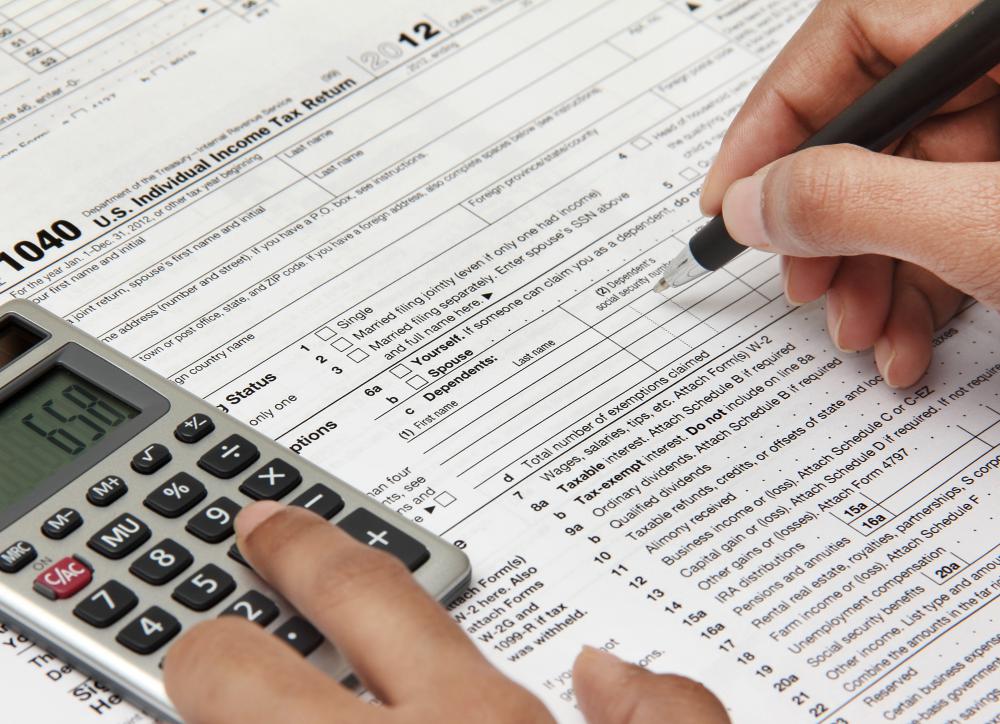
IRS penalty abatement is often authorized to help citizens meet their IRS tax penalties. Providing the taxpayer made an honest mistake, the IRS is often willing to grant such a reduction in order to allow the taxpayer to pay back the penalty over time. Often, the IRS will ask for a valid reason for the incorrectly declared taxes. As long as substantial proof or explanation is provided, the agency will offer a chance to meet obligations without enduring severe financial hardship.

In a select number of US states, elderly homeowners are often allowed an abatement on their property taxes, town water bills, and sewer bills if they can prove hardship. Lower property taxes may also be available for organizations or businesses located in areas in need of economic revitalization. This special dispensation is awarded to companies that use a portion of their savings to purchase new business equipment, computer systems, or other critical business upgrades to help the business expand or become more efficient. It also allows companies to upgrade without being immediately hit with a much higher tax bill. Typically, it reduces the tax bill for no more than ten years.
AS FEATURED ON:
AS FEATURED ON:









-
![The IRS might grant a taxpayer an abatement on tax penalties.]() By: pkstockThe IRS might grant a taxpayer an abatement on tax penalties.
By: pkstockThe IRS might grant a taxpayer an abatement on tax penalties. -
![Property taxes may be abated if real estate is overvalued.]() By: emiliezhangProperty taxes may be abated if real estate is overvalued.
By: emiliezhangProperty taxes may be abated if real estate is overvalued. -
![In some US states, elderly homeowners are allowed an abatement with proof of economic hardship.]() By: riccardo bruniIn some US states, elderly homeowners are allowed an abatement with proof of economic hardship.
By: riccardo bruniIn some US states, elderly homeowners are allowed an abatement with proof of economic hardship.


Discussion Comments
I always wondered what happened if a person died in debt.
I thought that their heirs just had to take it on, but it's nice that there are measures in place to help mitigate that cost.
I wonder though, does the person have to file for an abatement before they die, or can the executor file on behalf of the estate afterward?
I can only imagine the mountains of paperwork that you have to go through with this sort of thing!
Filing taxes is hard enough for me, I can't imagine filling out more paperwork for an abatement.
Of course, I suppose it you are in that situation there's not much you can do, but talk about adding insult to injury!
Post your comments