
At SmartCapitalMind, we're committed to delivering accurate, trustworthy information. Our expert-authored content is rigorously fact-checked and sourced from credible authorities. Discover how we uphold the highest standards in providing you with reliable knowledge.
What is a Whistleblower?
A whistleblower is a person working within an organization who reports misconduct. He or she may be a current or past employee, and the misconduct may be ongoing at the time of the report or may have taken place in the past. In most cases, the misconduct reported by the whistleblower violates a law and threatens the public in one way or another, though any form of misconduct may be reported.
There are two types of whistleblower: internal and external. An internal whistleblower reports the misconduct to another person working within the place of business, such as another employee or a superior. An external whistleblower, however, reports the misconduct to an outside agency, such as the media, a lawyer, law enforcement, or special protective agencies.

In many countries, the whistleblower is protected by law. The United Kingdom, for example, passed the Public Interest Disclosure Act in 1998. This act protects employees from being fired when reporting malpractice or other forms of misconduct. The United States also has laws in place to protect whistleblowers, though the specific protection depends on the state in which the report takes place as well as the type of misconduct reported.

Despite the protective measures in place to protect whistleblowers, it can be quite stressful to report the misconduct of an employer. Not only does the person feel concern about future employment, but he or she may also be ostracized by others who look unfavorably on person reporting the misconduct. In addition, it is possible for a person doing the reporting to face legal persecution if the employer takes action against him or her for being involved in the misconduct in the first place.

There have been many famous whistleblower cases in the United States. One of the most notable involved Enron, a corporation that caused millions of people to lose money in their financing scam. Another famous case is that of Joseph Darby, a military police officer who reported the abuse of prisoners in Abu Ghraib, Iraq.
AS FEATURED ON:
AS FEATURED ON:









-
![One of the most notable whistleblower cases involved Enron, a corporation that caused millions of people to lose money in their financing scam.]() By: IgissOne of the most notable whistleblower cases involved Enron, a corporation that caused millions of people to lose money in their financing scam.
By: IgissOne of the most notable whistleblower cases involved Enron, a corporation that caused millions of people to lose money in their financing scam. -
![Whistleblower laws aim to protect workers from getting fired in retaliation for reporting misconduct within a company or government office.]() By: Monkey BusinessWhistleblower laws aim to protect workers from getting fired in retaliation for reporting misconduct within a company or government office.
By: Monkey BusinessWhistleblower laws aim to protect workers from getting fired in retaliation for reporting misconduct within a company or government office. -
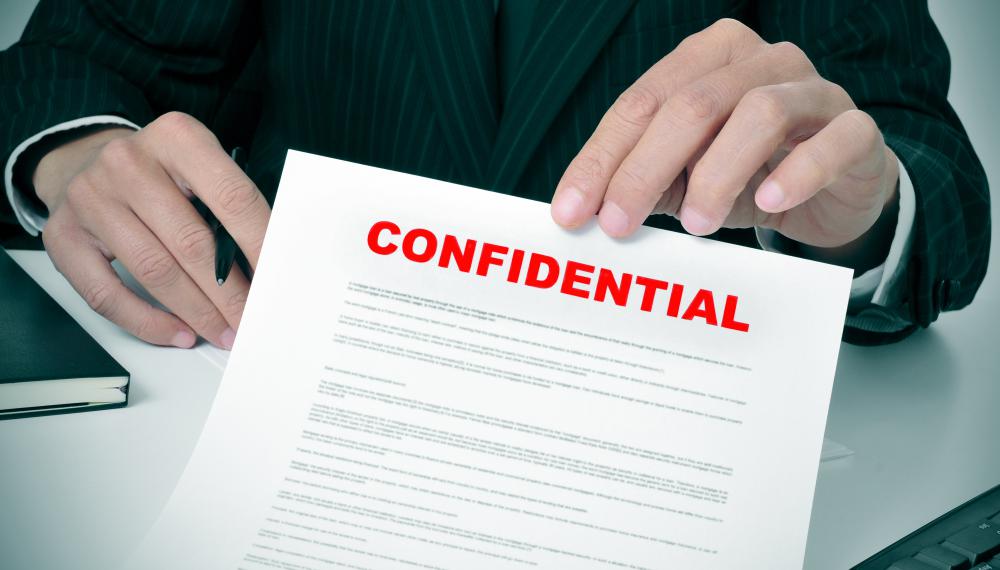
![A whistleblower may share confidential information about a company if they feel the actions are morally unacceptable.]() By: nitoA whistleblower may share confidential information about a company if they feel the actions are morally unacceptable.
By: nitoA whistleblower may share confidential information about a company if they feel the actions are morally unacceptable.


Discussion Comments
I can relate. I was terminated from the Postal Service. I was harassed, intimidated,and physically assaulted by a supervisor. I got fired and the saga continues.
I am going through a divorce and am a supervisor at a truck body builder company. However i am not divorced yet, and my ex-wife-to-be came to my place of work to have lunch with a co-supervisor of the company. They spent the lunch break in his office, and she does have an ex-parte against me. Are these grounds for this to be considered a hostile work environment for myself?
my assistant manager verbally abuses me and because she is a woman, when i have spoke to the branch manager, he laughs and tells me to man up.
the other day i missed work because i was in the emergency room due to my blood pressure out of control. i called work as soon as i could.
the next day, she asked to see any paperwork i had from my supposed visit to the hospital, and because i didn't have the paperwork with me, she refused to cover my missing day with vacation pay.
Due to my confusion and worry leaving the hospital i misplaced my release paperwork. again she asked me for proof of my visit. When i asked her what would happen if i could not produce said documentation, she said if i were you i would not show up to work.
fortunately for me i had a follow up with my primary doctor, who provided me with this paperwork. the point is she is relentless in her attacks.
My problems is slightly different, but I, too, have had the experience of my co-workers not standing up for me for fear of also being retaliation. For me, it arose from my reporting some co-workers age biased and then (another co-workers) sexually suggestive and offensive comments. Those who've witnessed these acts have chosen to not speak up, even when directly questioned by management, and have chosen to remain silent even as harassment by those I've reported has increased over the last several months (because my allegations remained my word vs theirs, they are still employed and in the same department as I am). I've recently been denied promotions with the discord between my co-workers and myself being given as the primary reason and I've endured several months of harassment in the form of making false reports about me (but they're together, so they have each others support). I've been asked by them, Why won't you just quit already?, and told, We just want you gone...
These articles have helped me a lot in my workplace. It is so bad that, my co-workers won't talk to each other in fear of being connected to someone that the manager has targeted as a problem employee. We all disagree, but the main link to managers in power is fear of standing up for what is right.
1) when should an employee blow the whistle?
2) when should an employee keep quiet?
3) what are the considerations to be taken to consider before deciding to take action?
Post your comments