
At WiseGEEK, we're committed to delivering accurate, trustworthy information. Our expert-authored content is rigorously fact-checked and sourced from credible authorities. Discover how we uphold the highest standards in providing you with reliable knowledge.
What is a Wart?
A wart is typically a small, rough, non-cancerous tumor that grows on the top layer of skin. They often resemble a solid blister or a cauliflower, and can seem either very light or very dark compared to the normal skin surrounding it. They're usually painless, but can cause itching and burning if they are in high-friction areas.
The condition is caused by a viral infection called the human papillomavirus virus (HPV). The HPV is contagious and can be passed from person to person by either direct or indirect contact. The virus can also spread from one body location to another on the same person. The virus enters the body through an area of skin that is cracked, peeling, or moist. The amount of virus present, the location of contact, and the state of a person's immune system are all factors that determine if an HPV infection will cause a wart to form.

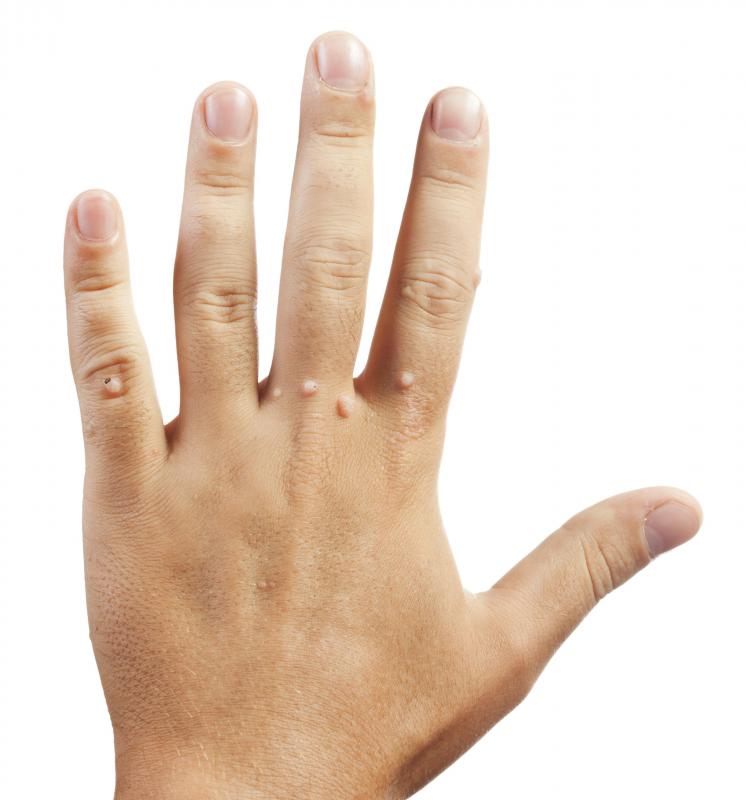
There are many different kinds of warts, including common, flat warts, plantar warts, and genital warts. The common wart is generally raised and dome-shaped with a rough, grayish-brown surface. These usually grow on the fingers or the backs of the hands and are sometimes called "seed warts” because they contain little blood vessels that look like black seeds.

The flat variety is a small, slightly elevated, smooth tumor which is usually pink, light brown, or flesh colored. These are most commonly seen on the face and forehead of an infected person. They can occur in large numbers, with as many as 100 flat lesions clustered together. They are more common in children than in adults and are also called “juvenile warts.”

Plantar warts grow on the pressure points on the bottom of the feet, and large numbers of these tumors may cause difficulty with walking, running, jumping, and even standing. If several cluster together in one area, they are called “mosaic warts.” They usually resemble a thick callous, so it is a good idea to have a physician diagnose the growth as a wart before treating it.

Genital or venereal warts grow on the genitals, in the pubic area, between the thighs, and inside the vagina and anal canal. Transmitted through sexual activity, they can vary in size from small, shiny papules to large cauliflower-like lesions. They are likely to reoccur because there is no cure for the virus that causes them and because warts thrive in moist environments. Because chemicals can really harm the genital area, these tumors should only be treated by qualified medical personnel.

Most warts will eventually disappear on their own, expelled by the body's immune system. However, they can also last for years or repeatedly reoccur. Although they are not life-threatening, many people think they are disfiguring and wish to have them removed.
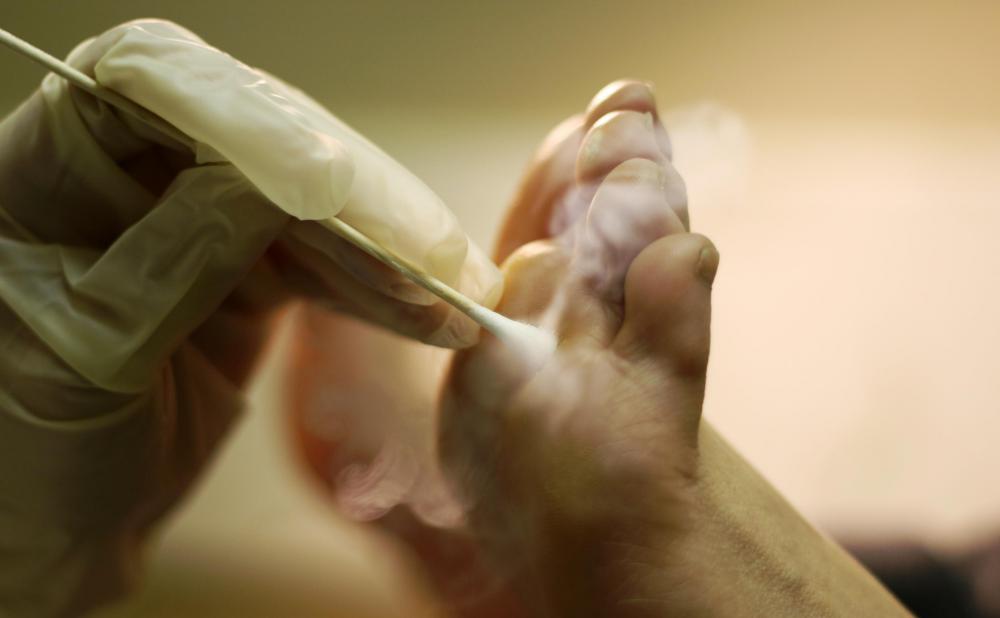
There are several ways a physician can remove a wart. The most common method is cryosurgery, which involves freezing the area with a special chemical, usually liquid nitrogen, after which the deadened tumor will soon falls off. This treatment is not too painful and rarely results in scarring.

Electrosurgery, which entails burning the wart off, is another good alternative treatment. Some physicians use laser treatments to remove them, but this procedure tends to be more expensive. Physicians can also treat the condition with keratolysis, which uses salicylic acid to remove the dead surface skin cells.
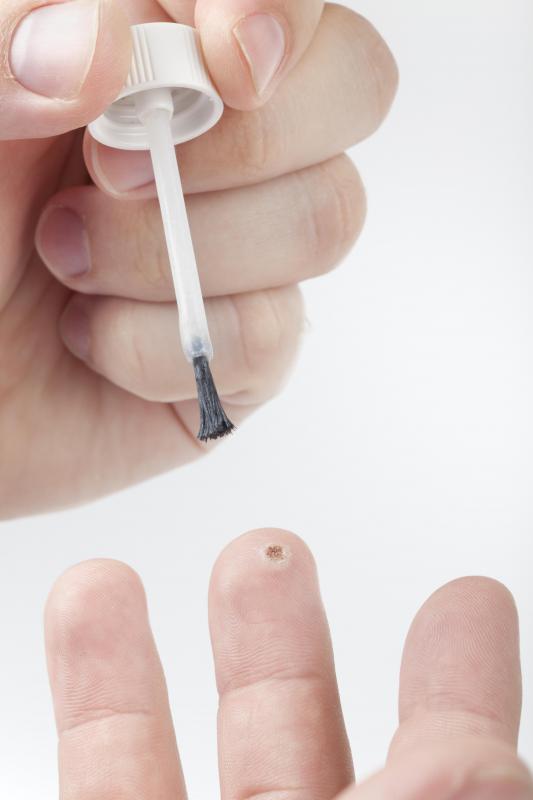
There are several over-the-counter options for removal available at supermarkets and drugstores. The most popular treatments involve salicylic acid or silver nitrate. These procedures will require several treatments. Over-the-counter cryosurgery kits are also available, but they cost much more than the other treatments.
It is important to realize that these over-the-counter treatments can kill healthy skin too, so people must be extremely careful when applying them. It is always a good idea to seek a physician’s advice before treating any type of questionable skin growth.
AS FEATURED ON:
AS FEATURED ON:









-
![Warts on a hand.]() By: Tiler84Warts on a hand.
By: Tiler84Warts on a hand. -
![Brush-on medicines that remove warts are available.]() By: leschnyhanBrush-on medicines that remove warts are available.
By: leschnyhanBrush-on medicines that remove warts are available. -
![Warts can be removed using liquid nitrogen.]() By: Gordon LauWarts can be removed using liquid nitrogen.
By: Gordon LauWarts can be removed using liquid nitrogen. -
![Freezing warts with liquid nitrogen often causes blisters to form where the treatment was performed.]() By: F.C.G.Freezing warts with liquid nitrogen often causes blisters to form where the treatment was performed.
By: F.C.G.Freezing warts with liquid nitrogen often causes blisters to form where the treatment was performed. -
![Plantar warts can generally be prevented by avoiding walking barefoot in public places.]() By: Jürgen FälchlePlantar warts can generally be prevented by avoiding walking barefoot in public places.
By: Jürgen FälchlePlantar warts can generally be prevented by avoiding walking barefoot in public places. -
![Plantar warts tend to grow on the areas of the feet that are under pressure, such as the balls of the feet.]() By: Arve BettumPlantar warts tend to grow on the areas of the feet that are under pressure, such as the balls of the feet.
By: Arve BettumPlantar warts tend to grow on the areas of the feet that are under pressure, such as the balls of the feet.


Discussion Comments
I've had one of my elbow for the past few months and heard apple cider vinegar works in helping remove warts. I took a paper towel, dipped it in apple cider vinegar, and duct taped it so no air could get in. After three or four days, you'll notice it soften up and see visible "black seeds" protruding through the wart.
I would say do this twice a day for a week and it will fall off. That's what mine did in the shower in a week or less. However. it did grow back, meaning there was still at least one seed left in the skin which caused it to come back. I'm going to try to continue the process after it falls off again and see what happens.
Warts that are on your body (non-genital) are normally harmless. As stated above they may or may not have a vanity factor and cause slight discomfort depending on their location, but for the most part warts are generally only damaging to appearance. In most cases they disappear on their own so unless it's really bothering you or your child, wart removal might not be necessary.
While it's true that you can rid yourself of conventional warts that are not genital through traditional means and OTC methods, just remember that having warts means you will always carry the virus with you. Regardless of having visible warts or not, you should always wear protections unless you are in a monogamous relationship in which the sexual prowess and history of your partner has previously been disclosed.
Always try to remember that warts can be passed form one person to another. By being aware of this, you can prevent transmitting the virus via indirect contact or direct contact. Also, by using protection during sexual intercourse, this can prevent the spreading of warts to the genitals.
There are many wart removers that can be found in drug stores and if those do not seem to work, there is an easy procedure of freezing them off that doctors can perform to remove them.
Post your comments